Gauquelin Astrology, Human Design, and How They Work Together

This approach combines Human Design with Michel Gauquelin’s [1] research on how cosmic influences affect human temperament. Even if you’ve enjoyed readings of your natal astrology chart, this reading will offer new information based on Gauquelin’s findings. Mr. Gauquelin (1928-1991) was a French psychologist and astrologer who, along with his wife, Françoise, a psychologist, conducted rigorous research over thirty years. This research showed that certain astrological phenomena had strong statistical validity.

This approach also includes the research of Patrick Jerome [2], who spent decades reviewing Mr. Gauquelin’s data. Mr. Jerome’s exacting research not only corroborated the data but also revealed new information unavailable through a traditional Western interpretation.

Gauquelin Astrology [3] offers insights into your interests, style, and temperament. Although the astrological meaning and nature of the commonly accepted understanding of the planets do not change, viewing your chart through the lens of Gauquelin Astrology is like seeing it for the first time. This is because the Gauquelin planets are powerful, and their power does not stem from the traditional interpretation of a planet in a sign in a house.

Michel Gauquelin discovered statistically significant placements for the Moon, Mars, Jupiter, and Saturn [4]. Subsequently, research astrologer Patrick Jerome found that Neptune [4] also has power zone placements. In addition, Mr. Jerome found significance in the quadrant placements of the Sun and Venus—each quadrant is like a different season—and more. These and other placements in your natal chart describe your temperament and what motivates you. While most traditional Western astrological practices emphasize the placement of planets in signs and houses, and the aspects (or mathematical relationships) between natal planets and other points in the chart (i.e., a planet to a node or an angle), Gauquelin Astrology does not look at sign or house placements. It does not consider aspects between planets. Gauquelin Astrology tells a different story about what the planets mean in your chart.

You will not have all of the Gauquelin planets. You may not have any planets in a Gauquelin Zone. When a planet is within a Gauquelin Zone, the Moon, Mars, Jupiter, Saturn, and Neptune express themselves most intensely, dramatically, and powerfully. The farther they are from the Zone, the less intense they become, and their expression becomes more pragmatic and introverted, allowing other factors in your chart to take center stage. You choose all energy expressions, Gauquelin or not, to help you fulfill your purpose. These will be reflected in your temperament, how you interact with others, and how you “do” life. Each planet has a focus and unique energy wherever it is located in your chart, and its meaning is referenced to its Gauquelin Zones.   

Other significant placements in your natal chart include planets that station and whether Mercury or Mars is at aphelion or perihelion. You may have none of these.

Another factor I consider is the Sun’s and Venus’s quadrant placements. Each quadrant has a different focus, ranging from feeling at home and seeking success in the workaday world to feeling more adventurous and even critical of it, to wanting to focus on your independence and creativity, or needing a close connection to your home, hearth, and community. We all have all four quadrants, but Sun-Venus placements show what we need to feel fulfilled and where we feel most at home.

Gauquelin Astrology considers ALL of the above to help you identify your purpose by highlighting the predispositions indicated by your unique planetary placements. If you acknowledge them honestly, your predispositions will compel you to find your appropriate direction because they are hungry for specific experiences.

The Human Design System is rich and complex. It synthesizes Eastern and Western Astrology, the Chinese I’Ching, the Kabbalah, and the Hindu Chakra System, yet it remains its own unique system. Your Human Design is based on the moment of your birth. Like astrology, the chart is calculated from your birth day, month, year, time, and location.  

Human Design recognizes five energy types. They’re called “energy” types because each has its own way of experiencing and managing energy. Each type has a unique strategy, which is key to making decisions that are correct for that type. The energy types are:

The Human Design Manifestor
The Human Design Generator
The Human Design Manifesting Generator
The Human Design Projector
The Human Design Reflector

Your type is the key to navigating your life and remains constant throughout. Your type, strategy, authority, gates, channels, circuits, and centers create the unique design of your BodyGraph. They give you specific themes tied to particular energies. These are your gifts and signposts for interacting with the world as your authentic self. This is because your Human Design reveals how to follow and work with your unique energy flow. Following that flow is not how we are traditionally taught to engage with the world. Instead, we are told to go out and “make it happen.” 

Combining your Gauquelin Astrology with your Human Design chart will deepen its insights and further illuminate why you act as you do. This is because Gauquelin Astrology accounts for configurations and factors not identified in Human Design, adding richness to your Human Design information.

WHAT YOUR CHARTS DON’T TELL YOU

I want to start by saying what a reading of your Gauquelin Astrology or Human Design chart can’t tell you. Neither chart will tell you how extensive your talents are or how they will manifest. Your charts won’t tell you how good-looking you are, how tall, how much you weigh, how intelligent, how good you are at math, art, writing, acting, or running, where you grew up, what your parents are like, what racial group you come from, what your level of education is, or how much money you have. These are things you bring to the chart.

They won’t tell you whether you come from the city, the country, or the suburbs. They won’t tell you whether you grew up in a high-crime or low-crime area. They won’t tell you whether you are a member of a racial minority. They won’t tell you whether you were born into wealth or poverty, nor will they tell you how much anxiety your parents had about wealth. They won’t tell you whether your mother was depressed, whether your father was violent, or whether he had a retarded brother. They won’t tell you whether you love baseball. They won’t tell you whether you have a clubbed foot. They won’t tell you whether you were ever struck by lightning or trapped in a storm, how honest you are, how much integrity you have, or your level of spiritual evolution. These are things you bring to the chart.

WHAT YOUR CHARTS TELL YOU

Your charts can show you that you are intrinsically predisposed to certain energies. They reveal the themes you are here to explore and the traits that are consistently yours. Human Design describes how your energy is meant to flow. It helps you understand which choices are right for you and when to make them. Gauquelin astrology, along with Human Design, shows where you are curious, helping you understand why you are compelled to seek out specific kinds of experiences. The experiences you are drawn to are driven by your unique nature: it’s how you’re put together! The experiences you intentionally seek resonate with your authentic self. If you follow your curiosity, it will lead you to where you are supposed to be and what you’re meant to do! This helps you fulfill your purpose, or dharma.

Your Design is not your soul, but it is the map your Soul needs to follow. This fascinating map is also your personal toolkit for identifying and focusing on the tasks and experiences that help you unfold your life’s agenda. With this Map, you can see what you are naturally suited for! This opens the door to a meaningful, purpose-driven life. Your Design also serves as a compass, so you never need to lose your way.

Take a deeper look at how Gauquelin Astrology expands your understanding of your Human Design chart.

Let’s keep it simple and focus only on the influences of Moon, Mars, Saturn, and Neptune when they have a Gauquelin placement in your natal astrology chart. In your Human Design, these planets appear in a gate within a line. The gate and line provide the context for how that planet will express itself (and give you a consistent life theme for that gate), but they do not indicate whether that planet has a Gauquelin placement. That additional information helps you understand why a Gauquelin Mars in the same gate and line is far more dynamic in one Human Design chart than in another chart with the same gate and line but without that placement.

Because numerous cultural and socioeconomic factors, along with other dynamic influences, shape a person’s life, we cannot precisely predict how an individual’s chart will unfold; however, we can discern its intended function. We can see what that individual is equipped with and how they can move through life with the least resistance and greatest happiness.

Let’s consider the charts of two Manifesting Generators with similar design and the same profile. Manifesting Generators are highly energetic and creative, and they need multiple projects at once to channel that energy and their drive to create. They move quickly and are driven to use their energy, so they need to stay busy. They are self-aware and have sustainable energy. A Manifesting Generator must first respond to opportunities and then inform those in their sphere of influence (impact field) before taking action.

As noted, each person’s Human Design is similar, and they share the same profile. The individuals, all males, also share similar backgrounds. The main difference is that one has the Gauquelin placements of Mars and Saturn, while the other has the Gauquelin placements of the Moon and Neptune. Because these influences are so different, they will affect the Manifesting Generator differently in each case. Before reading the anecdotes below, please keep in mind that they are based on probable ways these planetary energies can express themselves. Still, they will not necessarily manifest exactly as described, and variations and different emphases will appear from one person to another. Human beings are complex, and many influences—cultural, generational, upbringing, and gender, to name a few—shape how a trait is expressed.

The Mars-Saturn Manifesting Generator

This person needs to feel in control of himself and others. He needs to believe he controls his environment. He believes in the adage “mind over matter” and drives himself very hard. He devotes a significant portion of his energy to work. He works through sickness and depression. This helps because he’s a high achiever, but it also becomes problematic because he suppresses his feelings. He tries to deal with fear and depression by willing them away, which works in the short run, but eventually it catches up to him. He pushes himself so hard that he tends to ignore warning signs, and he could end up having heart attacks, strokes, or nervous breakdowns at a higher rate than if he did not have a Gauquelin Mars and Saturn. It also usually means he doesn’t have much time for a relationship. Granted, he’s the kind of person who dutifully schedules fun and makes a conscious effort to spend “quality time” with his loved ones, but he usually doesn’t put in as much time as they want, and there’s little room for spontaneity. He has a “thick” skin. And yet, even when he’s busy, he always has time to change a tire or pull someone out of a ditch. His sense of duty and responsibility is powerful.

The Moon-Neptune Manifesting Generator

This individual is very sensitive and sometimes shows it in gentle, sweet, and tender ways. However, he is touchy about being perceived as a softie and sometimes goes out of his way to prove how tough he is. He’s good at projecting an image. He can be compassionate, intuitive, and empathetic, and he’s hungry for meaning and significance. He can be a healer or a champion of the downtrodden. He has an affinity for children and animals. He’s quirky and unpredictable. He’s affected by his surroundings. Even when he fears his own sensitivity, you catch glimpses of it in how he responds to music. He knows the words to many songs, and when he hears one, he’ll sing along with tremendous feeling. This person has a lot of heart, and he shows it.

These Manifesting Generators will both show the same Manifesting Generator traits. However, the marked differences in their planetary archetypes, Mars-Saturn and Moon-Neptune, which are essentially opposite influences, will compel one to be far more inclined to make his “mark” in the world, and the other to seek out vocations and experiences where he can feel close to the meaning of life, where he has opportunities to seek meaning and significance, and where there are opportunities to connect with insight and healing. Both will, as Manifesting Generators, express traits like moving quickly, taking shortcuts, and juggling various projects and commitments, and they will also have the sustainable energy to support their activities and unique interests.

[Note: When a chart contains a combination of Gauquelin planets that are not complementary, each will express, but not at the same time. For example, Mars and Neptune in the same chart have very different agendas and are considered “enemies.” A “seesaw” effect occurs, with one influence tending to dominate the other. This presents a complex (and irritating) conundrum that calls for resolution through Mastery of each contradictory influence. One has obtained Mastery when one can express the highest—meaning the most evolved—qualities of these influences and when their gifts are applied appropriately.]

Increasing the complexity: Consider the lives of two Manifesting Generators with similar Human Designs and Gauquelin astrology, yet entirely different backgrounds.

One chart belongs to an illiterate, poor black man who lives on a tobacco farm in South Carolina. Another belongs to the son of a United States Senator who also holds a law degree from Harvard. Thanks to his father’s connections, he will have no trouble securing a high-paying job at an exclusive law firm. The latter will have much more “wiggle” room in his life. Different life issues will arise. Despite the charts’ similarities, entirely different dramas will unfold.

Both charts share the same Gauquelin astrology: Mars and Jupiter. This combination tends to express itself as follows: This person is dynamic. He’s a leader. He’s a go-getter. He gets bored easily, needs a lot of stimulation, and thrives on challenges. He likes travel, sports, and adventure. He likes things that involve risk. He wants to be a winner, with the money and status that go with it, but he’s full of the devil and does many things just for the hell of it. Some of them are serious, some playful, some profitable, and some expensive, but the key thing is that he keeps moving; he keeps striving. At his worst, he’s too restless and too unsettled. He’s got to be doing something every second, and he doesn’t stop long enough to think. At his best, he’s a ball of fire. He’s a hero. He operates in the world and makes a mark for himself, but he doesn’t rest on his laurels; instead, he keeps testing his mettle and pushing the boundaries of his experience.

Although these charts share the same themes, they will play out on vastly different terrains. The lawyer, who is also the son of a Senator, will have a much greater impact, reaching broader audiences and larger arenas. The combination of his chart and his far more privileged circumstances essentially ensures that he will have job opportunities with tremendous earning potential. The illiterate black man will affect his immediate environment, and his impact will not extend much beyond his family, friends, neighbors, and co-workers — if he has a job. Due to his external circumstances, he is likely to remain impoverished. You can accurately say their destinies are entirely different despite the similarities in their charts; however, the themes in their lives and what they are compelled to seek out are the same.

The reality is that multiple factors beyond astrology and Human Design influence us. Psychology, sociology, genetics, common sense, and upbringing are just a few additional factors you bring to your astrology chart and Human Design. Beyond that, we are each individuals with unique soul histories. That history describes the overarching trajectory of our consciousness and also informs the focus of each life.

Who we have been and what we have done affect the purpose and direction of our current lives, as past actions eventually come to balance. In addition, we come in with many agreements, including those for traditional success or for normal, “ordinary” lives (success and status, or their lack, are a difficult sticking point for many), and these agreements will influence how the attributes of our charts are expressed. This is not to say that achieving fulfillment by living a non-famous life is impossible, or that it is somehow lesser than conventional success, or less satisfying.

All lives belong to a much larger, universal complex, woven into a broader intention for evolution, from the personal to the collective. These are, so to speak, written on a giant “canvas” or, if you prefer, nurtured within the boundless consciousness of the Universe, and can never be fully captured by any single interpretive modality or combination of modalities.

That’s why it’s best to forget what we’ve been conditioned to believe we should want, stop comparing our lives to others, and stop criticizing ourselves for not being more than who we are. Our purpose and direction, though not set in stone in exactly how they must or will unfold, were planned before our birth and are part of a soul history we mostly don’t know.

I often read about building a six- or seven-figure business. If it’s your dharma to do that, you need to put your attention there. Your dharma will compel you to focus on specific areas of life. But because we come in with different degrees of opportunity, frequencies, limitations, and karmas, it’s far better to identify your unique soul’s agenda and stay on track with it than to wage an uphill battle to attain a goal that doesn’t fit you or isn’t right for you.

The truth is that many people start their lives in humble circumstances and remain there for the rest of their lives. It may have been the original soul intentions, but sometimes things don’t work out as planned. Even so, you can still live a happy, meaningful life, regardless of how much fame, wealth, or power you have, because you have all the tools you need within you to live the life you came to live.

Living the life you came to live is your personal “Great Work” and mandate. This is where your focus needs to be: on carrying out your soul’s intentions. The tools, gifts, and passions you came in with, which can be largely determined by your Human Design and Gauquelin Astrology, give you the ability to discern your correct steps and overall path and instinctively move you toward what feels good, so you can more deeply merge into who you are and how to live your life.

I invite you to experience a combined reading of your Gauquelin Astrology and Human Design. The insights and validation from these tools, gifts, and passions can help you clarify who you are and why you are here.

For an extraordinary article on Dr. Michel Gauquelin, see: GAUQUELIN, THE SKEPTICS, AND THE ASTROLOGERS

~*~*~*~*~*~

Gloria is a certified Transformative Coach. She is also certified in Human Design and The Quantum Alignment System™ and holds a Certificate of Completion in the Quantum Human Design™ Coach Mastermind Program.

Finding your authentic way of being requires you to keep this caveat in mind: we cannot come into our own in isolation. To activate the power of our purpose, we must connect with others.

____________________________________________________

[1] Michel Gauquelin (1928-1991) was a French psychologist and astrologer who, along with his wife, Françoise, a psychologist, conducted rigorous research over thirty years that demonstrated certain astrological phenomena with a high degree of statistical validity.

[2] Patrick Jerome has studied causation in astrology for decades. He set out to review the scientific basis of conventional astrology, using more than 200,000 charts to gather robust data. Mr. Jerome used Michel Gauquelin’s research, which he purchased from Gauquelin’s widow, as the foundation for his own investigation.

[3] I use the term Gauquelin Astrology to describe a system that includes identifying Gauquelin planetary placements in the natal astrology chart and more. Gauquelin Astrology explores the connection between the cosmos and human consciousness. The Gauquelin zones reveal a definitive correlation between the planets and who we are. This interpretative system is largely derived from the results of Michel Gauquelin’s work and Patrick Jerome’s research. Mr. Jerome calls the body of his work SkyTotems.

[4] Moon, Mars, Jupiter, Saturn, and Neptune, when placed in specific sectors of the natal astrology chart, exert powerful influences. These influences reflect how these planets are traditionally understood to express themselves, but their placement in these sectors can significantly dominate the chart. An accurate birth time is necessary to calculate a Gauquelin placement.

© | Gloria Constantin | All Rights Reserved |

Need help or have questions? Contact Me

GAUQUELIN, THE SKEPTICS, AND THE ASTROLOGERS
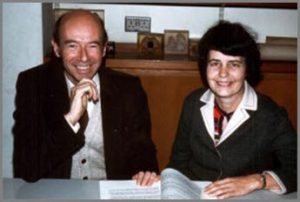
by Patrick Jerome

In 1957, Michel Gauquelin published his first statistical study of astrology. Using horoscopes from thousands of French professionals, including athletes, actors, doctors, and scientists, he found measurable correlations between specific planetary placements and professional success. Gauquelin then replicated his results with German, Italian, Belgian, and Dutch professionals. Throughout the 1960s and 1970s, his studies consistently produced statistically significant associations between certain planets and particular professions.

Gauquelin’s work approached a significant milestone in astrology, as validating astrology’s claims would represent a fundamental shift in long-held scientific perspectives.

Members of the Committee for the Scientific Investigation of Claims of the Paranormal (CSICOP) understood this and were obsessed with disproving Gauquelin’s findings. Founded in April 1976 by 25 “humanist” university professors  and one magician—the Amazing Randi—the CSICOP’s stated goal was “to not reject on a priori grounds . . . any or all such claims, but rather to examine them openly, completely, objectively, and carefully.” 

While CSICOP’s stated intent was to conduct objective investigations, critics argue that the organization’s actions often focused on debunking paranormal claims, and Gauquelin’s research became a primary focus for scrutiny.

What is interesting is that Gauquelin himself had begun his work as a skeptic. Although he had loved astrology as a boy, making so many predictions that his classmates called him “Nostradamus,” when he entered the Sorbonne, he became ashamed of those interests. He staged elaborate tricks to make believers appear foolish. He once, for example, put an ad in a newspaper, “Get a free horoscope,” and then asked those who responded to rate how accurate the reading was. The overwhelming majority responded “very accurate” or “extremely accurate” when, in fact, every single person had received the same print-out, which was based on the birth information of a serial killer.

This approach mirrored some methods associated with CSICOP. Gauquelin stated that his initial goal in data collection was to test and evaluate astrological claims rigorously.

But unlike the leaders of the CSICOP, Gauquelin truly wanted to examine the facts ‘openly, completely, objectively, and carefully.‘ Even after he got results that contradicted his hypothesis, he dared to publish them. However, it must be made clear that Gauquelin did not prove the astrology you see in newspapers or astrology texts. He did not prove the validity of signs, houses, aspects, or other traditional techniques. Indeed, his tests of those factors were negative. What he proved was that, in the charts of prominent professionals, certain planets had either just risen or just culminated, depending upon which profession was being studied. This is where his findings validated tradition. Mars, the militant planet, was prominent in the charts of athletes and military leaders. Jovial Jupiter was prominent in the charts of actors and politicians. Sober Saturn was prominent in the charts of doctors and scientists. The profound congruence of all this was one reason why the CSICOP was so intent upon crushing him. In the mid-1970s, they issued Gauquelin a ‘challenge.’ 

The Challenge was a classic control experiment: isolate the sports ability variable by comparing the Mars horoscopic positions of the champions Gauquelin had already collected vs. the Mars horoscopic positions of all other persons (non-sports champions)—the “control” group—born about the same time and place as the champions. If the control group exhibits the same hit-rate (a “hit”: being born when Mars resides in celestial Sector 1 or 4) as the champions, 22 percent, then clearly sports ability has nothing to do with the Mars Effect, which is thus revealed as merely a by-product of purely natural influences. This is what the top CSICOPs expected to happen. 

However, when the results contradicted expectations, the subsequent handling of the data by CSICOP became a source of controversy. Although initial plans included publication of all results, some members expressed concern over how the findings were communicated, with member Dennis Rawlins publishing a critical analysis. 

Some astrologers, including Dane Rudyar, were critical of Gauquelin’s work, primarily because while Gauquelin’s research supported a new approach—sometimes called “neo-astrology”—it did not find evidence for traditional astrological concepts. This led to differing responses within the astrological community.

Rudyar represented a traditionalist perspective, contrasting with the views of skeptics, both of whom interpreted Gauquelin’s findings through their preferred frameworks.

Proving astrology is tantamount to proving the existence of God.

The skeptics didn’t want God to exist. This is why they attacked Gauquelin so ferociously. What Rudyar failed to grasp was that astrology had won. It wasn’t his brand of astrology, but it had won. This meant astrologers were under a moral obligation to restructure their tenets, taking the new information into account. That’s how science works. You have a hypothesis, experiment, and adjust your description of reality based on the results. But astrology didn’t do this—there was no adjustment. Gauquelin had proven a particular kind of astrology, but most astrologers continued to practice the old, discredited kind.

And it wasn’t just old school apologists like Rudyar. It was everyone. Even the great scholar Robert Hand, the “Francis Bacon of astrology,” who had written that Gauquelin’s findings are “one of the strongest threats to mechanist-materialism in existence,” continued to use interpretations that fly in the face of reality. Here is Hand’s description of the 12th house:

The Twelfth House [signifies]. . . things like “self-undoing,” imprisonment, secrets in general, secret enemies, seclusion, and generally being withdrawn from the world, and it is usually regarded as being one of the worst houses in the chart.

However, those familiar with Gauquelin’s research note that the 12th house (and the 9th) appears as prominent placements in distinguished horoscopes, contrary to traditional views. Even recognized experts, such as Robert Hand, who acknowledged Gauquelin’s work, continued to reference traditional interpretations.

And he isn’t alone. Here’s what four modern astrologers, from four different websites, have written about Mars in the 12th house:

DANA GERHART:  People with a 12th house Mars often have difficulty going after what they want.

THE ASTROLOGY PLACE: [Mars in 12th house people] find asserting themselves very difficult . . . The desire to put themselves first is lacking. . . . hide from confrontation . . . no reaction to conflict  . . .

ASTRO CHERRY: take all precautions to avoid confrontation . . . unresponsive during conflict . . . experience trouble with force and assertion . . . lack the “me-first” desire.

CAFÉ ASTROLOGY: Energy stifled . . . afraid to assert themselves . . . defeated before they start.

If it sounds like these writers are imitating each other, it is probably because they are, but they are not just imitating each other; they are imitating the ideas of pretty much every astrologer in history, from Ptolemy to Dane Rudyar.

These interpretations differ significantly from the evidence provided by Gauquelin’s research.

In addition to his professional studies, Gauquelin conducted a series of keyword studies aimed at establishing a link between professional success and temperament. Here are the results for the 9th and 12th house Mars:

Professions showing High: Athletes, Military officers, Doctors, Businessmen

Professions showing Low:  Artists, writers, musicians.
Related keywords:  Active, ardent, belligerent, brave, combative, daring, dynamic, energetic, fearless, fighting, lively, offensive, reckless, spontaneous, strong-willed, stormy, tireless, tough, valiant, and full of vitality.

Think about it: the most aggressive professions show rates above chance, and the gentlest professions show rates below chance—precisely the opposite of what tradition says—and the keywords bring the point home. Here are the results in a schematic:

Keywords for 12th House Mars

Gauquelin findings Astrological tradition
Active, ardent, dynamic, energetic Energy stifled
Daring, Combative Hide from confrontation
Strong-willed Lack the me-first desire
The two lists could not be more opposite. It’s like a car company whose Research and Development team has invented a solar car made entirely from hemp. Yet, the sales department continues to push metal gas-guzzlers. Astrologers should be using the Gauquelin data and forsaking outmoded techniques—it’s the only way astrology can move forward. It’s frustrating to see even great astrologers give such abominable interpretations, but in all fairness, there are good reasons for this.

1. Astrologers see mainly people with problems. It is often asked, “How can astrologers be so stupid? Don’t they have any powers of perception? How can they take the most aggressive aspect and say it’s a symbol of passivity?”  First of all, it must be understood that most astrologers are counselors, most of their clients are unhappy, and unhappy people are generally unhappy because they can’t express their true selves. So, it’s quite possible that many Gauquelin Mars people do have “stifled energy” and are lacking in a “me-first attitude.” Still, it’s not because they have a 12th house Mars — it’s because they’re not expressing their 12th house Mars, and it’s the astrologer’s job to help them find their inner warrior.

2. Astrology offers a psychologically satisfying view of human nature. Traditional astrology is fun, it’s elegant, it’s visionary, it’s rich with symbolism, it provides a complete view of human nature; it draws on traditions that go back thousands of years, and once you’ve learned the symbols, you can apply them in an infinite number of ways. What’s more, you can read astrology books, attend astrology conferences, talk shop with other astrologers, and become part of a fascinating new world. Astrologers are friendly people. They’re fun to be around. And once you’ve experienced the brotherhood, it’s challenging to let it go.

3. The Gauquelin data are not presented in an accessible way. Astrologers want to read charts, and when they encounter something new, they immediately seek ways to apply it, but that wasn’t Gauquelin’s orientation. He presented his findings in scientific language. He could never have defeated the skeptics if he had talked like Dane Rudyar, but although it’s nice to know that many athletes have Gauquelin Mars, what possible use is that information to a client who is overweight, hates sports, and has just had a knee operation? Yes, Gauquelin’s findings are inspiring, but they are not helpful.  Many intelligent astrologers would welcome interpretations based on Gauquelin if they existed.

Astrology is not a science. It could be. It should be. It can be studied in the same way sociology and psychology are studied, but it’s much more significant than sociology or psychology, because the implications are so much greater. Sociology and psychology involve the study of groups within the world, but if astrology is true, it means that human life is not limited to the physical world. We aren’t just a conglomeration of atoms and molecules; we are spiritual beings influenced by the stars, and looking at charts, if we look correctly, is like looking at God’s plan for the creation.

But we must look correctly. When tradition is wrong, we must discard tradition without regret, and when we get a glimpse of the truth, as Gauquelin did, we must dig like badgers to get to the bottom of it. The Gauquelin data is not the final answer. However, we must stop dispensing interpretations that contradict the facts. It’s not just thick-headed; it’s counter-evolutionary. It’s a failure to acknowledge our role in the creation.

____________________________________________

[1] http://www.answers.com/topic/committee-for-the-scientific-investigation-of-claims-of-the-paranormal

[2] One science professor, upon evaluating Gauquelin’s “Mars factor,” was heard to remark, “He has certainly proved his point, but I wish it were Venus.”  He meant this: The statistical validity of the Gauquelin data, although certainly compelling, represents only half its power. The other half comes from its eerie resonance with ancient symbolism—not the symbolism of the houses (which has been categorically refuted) but of the planets. Indeed, the data are making two statements: one, that astrology is statistically valid; and two, that those statistics are in accord with symbols that have been in use since before the birth of Christ. Gauquelin’s astrology is undoubtedly modern, but it has echoes of the ancient, which makes it that much more frightening to skeptics.

[3] http://cura.free.fr/xv/14starbb.html

[4] It’s weird how history becomes distorted—and it makes you wonder who is doing the distorting—because when I looked up Dennis Rawlins on Wikipedia, his brief write-up contained this sentence: “In 1976, as the only astronomer on the Committee for Skeptical Inquiry, he looked into and debunked the so-called Mars effect.”  This is, in fact, the exact opposite of what happened. Rawlins did not debunk the Mars effect; he upheld it and exposed the hypocrisy of the CSICOP members who pressured him to lie. Rawlins tells the story in great detail in “StarBaby,” which is listed in the bibliography of the Wikipedia article. However, the Wikipedia author clearly never read it, or, if they did, they chose to ignore it. Such blatant distortions can easily lead one to a paranoid worldview.  As Rawlins wrote in “starBaby:” “I USED to believe it was simply a figment of the National Enquirer’s weekly imagination that the Science Establishment would cover up evidence for the occult. But that was in the era B.C. — Before the Committee.  I refer to the “Committee for the Scientific Investigation of Claims of the Paranormal” (CSICOP), of which I am a co-founder and on whose ruling Executive Council (generally called the Council) I served for some years.”

____________________________________________

[i] http://www.stariq.com/Main/Articles/P0002166.HTM

[ii]  http://www.astro.com/astrology/in_dgtwehouse_e.htm

[iii]  http://astrolocherry.com/post/57787717408/mars-in-the-12th-house-the-portal-of-panic

[iv]  http://www.cafeastrology.com/natal/marsinhouses.html

Gauquelin Archives: http://cura.free.fr/gauq/17archg.html

© | Gloria Constantin | All Rights Reserved |

Need help or have questions? Contact Me

Translate »