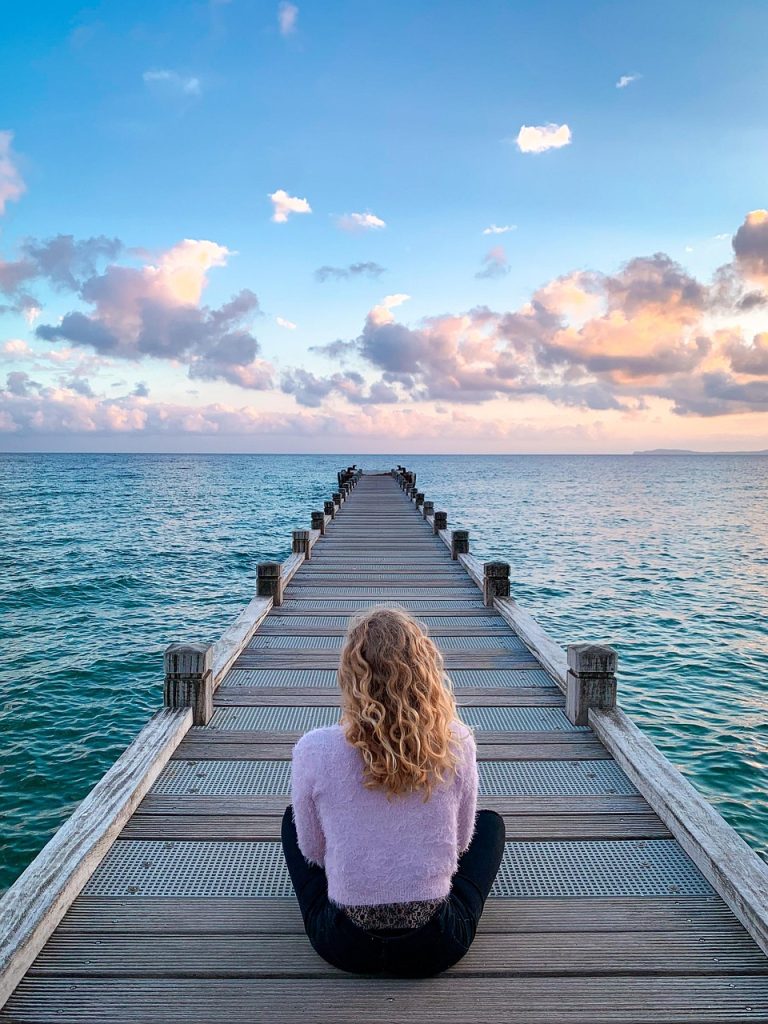
 Myths and ways of viewing one’s place in the world are always part of culture, and they shape how we view the world and our place in it. One of these is: “Are you living life too small?” I’ve heard it in the voices of coaches and teachers, in personal growth language, and in promises from those trying to help others find their purpose. Sometimes, the question is posed as encouragement; other times, it feels more like an accusation. It implies that if your life is quiet, modest, or hidden, you might not be fulfilling your talents. Maybe you are not being brave enough. Perhaps you are not living your purpose. Maybe you are holding back your greatness from the world.
It is a powerful message from a culture that worships scale.
We are surrounded by measurements. Numbers provide comfort. For many, visibility is reassuring (though not for everyone!). We know how to count income, followers, square footage, credentials, audience size, output, and acclaim. We celebrate lives that grow materially. We admire those who turn their talents into profit. Bigger is often seen as proof of credibility.
I’ve always believed this is wrong.
Can a life be small in the eyes of the world and still be immense in someone else’s view? What if a woman tending a garden, feeding homeless cats, making soup for her elderly neighbor, sitting beside a grieving friend, or writing for years in her own quiet company isn’t living below her purpose but within it? What if a life that never becomes glamorous, influential, or widely known isn’t failed greatness but simply right-sized truth?
I believe it’s a tragedy to think that without visibility, you lack value. Many of us oppose this idea and even despise it. The soul doesn’t view things in such material terms. How do I know this? Because the soul goes beyond material things. Although it expresses its dharma in the physical world, it isn’t defined by the physical. Material things are temporary and replaceable, but the soul is eternal.
The soul doesn’t care if its expression is marketable. It doesn’t need to compare itself to other souls or think it has failed because it hasn’t become impressive enough. It doesn’t mistake applause for acknowledgment that it’s on the correct path. It doesn’t judge purpose by income or social reach. It moves to a completely different rhythm.
That rhythm can be difficult to notice in a noisy world.
But if you become still enough, you discover that something inside you has always known what it longs for. I don’t mean ambition in the social sense, although that might be part of the picture for some. I mean the quieter, deeper currents: the yearning for beauty, love, strength, understanding, peace, service, structure, freedom, meaning, and the drive to create what you were born to create. These yearnings are not trivial. They are not just decorations to enhance your life. They are essential clues, messages from your soul about how to find the correct shape of your life, the one that belongs to you alone.
If you ignore those yearnings, you can still succeed outwardly but feel inwardly lost. You can create a life others admire yet still be a stranger to yourself. But if you follow your yearnings, your life takes on its own unique shape. It won’t be the one dictated by culture, nor the inflated silhouette of false aspiration.
A right-sized life is not restricted by fear or pressured to pursue greatness. A right-sized life finds its true measure because the person living it stops trying to fit someone else’s idea of success, and instead listens to what naturally wants to emerge.
Many believe that without public proof of their worth, they have none. They feel the need to justify themselves and turn their talents into measurable achievements so the soul can be a top contender in the marketplace.
So, what is your soul worth? What does the marketplace say about that?
The absurdity of the question is clear the moment it’s asked. What is the going rate for genuine love? For presence that heals? For recognizing the dignity of all beings? For caring for a dying parent? For nursing a troubled child? For writing something honest? For feeding the hungry, calming the frightened, listening without interruption, tending what is broken, and carrying beauty where there was none before?
How should we determine the price of sacred acts? How can we learn to genuinely see what is sacred?
Our noisy culture leads us to believe that the value of our purpose is based on our income, implying that a soul fulfilling its purpose makes a lot of money.
But a soul isn’t a business model.
The older I get, the less interested I am in arguments that equate worldly reward with spiritual truth. And I’m not interested in debating this, either. I don’t deny the material world. We live in it. We are mortal. Human beings need shelter, food, medical care, transportation, education, medicine, and the money to obtain these. Human beings need structures that support their lives and create and maintain conditions where they, and their souls, can flourish. The body matters. Practical matters matter. Being in the world matters. Everything arises from that, both good and bad.
II
Another phrase that has stayed with me is from a mother who wrote, after an unbearable act of violence, ‘No insurance plan will cover this kind of thing.’
The sorrow in that one sentence reaches far beyond just one family. It uncovers an entire landscape of experiences that our culture often refuses to acknowledge. The suffering of a single household can become too overwhelming for it to bear. Some burdens are too complex and demanding. Many crises can’t be managed by individual grit, good intentions, or love alone. These include mental illness, poverty, addiction, homelessness, despair, and disability. The long, unspooling aftermath of trauma, whether physical or psychological. These conditions aren’t solved just by pulling oneself up by the bootstraps or following simple moral stories. They don’t stem from a single cause, and they often can’t be fixed with just one solution.
And yet, we often rush to simplify them.
There must be a reason for these conditions. Someone failed to take responsibility. The blame is on them. We prefer to think that a struggling person simply missed an obvious step, made an avoidable mistake, or lacked discipline, focus, morality, and responsibility. We hold onto these explanations because they shield us from a frightening truth: life is fragile, human suffering has many layers and causes, and while we are all vulnerable, some of us are more vulnerable than others.
All of us depend on a complex system of services and mechanics much more than we realize.
None of us makes ourselves alone. None of us survives solely through private virtue. We live within networks of support so deeply woven into our lives that we forget they exist until they break down: paved roads, clean, running water, power, sanitation, agriculture, medicine, schools, transportation, caregivers, laborers, friends, family. We are upheld by visible and invisible structures every day. But when others fall through the gaps in these systems, we dismiss it as their personal failures rather than consider that they may have been abandoned by policies with limited vision and understanding, and by infrastructure that failed to provide adequate shelter.
This is one of the cruelties of our time: we romanticize self-sufficiency and then shame people for needing what all human beings need: care, resources, shelter, treatment, time, patience, community, and a chance to start over. We leave families alone with impossible burdens and call it responsibility. We underfund the organizations that hold society together and call their work charity. We talk about compassion as if it were a feeling when what is needed is structure.
If compassion is genuine, it should be reflected in policy and infrastructure. It must go beyond heartfelt feelings and become evident through policies, laws, institutions, priorities, partnerships, and shared responsibilities. It requires practical forms that address human needs and uphold dignity. Without these, human suffering in all its forms will continue to be widespread and visible.
III
I do not believe we are here solely to prove ourselves as individuals, nor are we here to be purely spiritual while neglecting our material needs. We are here to become more fully human. Part of becoming fully human is recognizing that your soul carries a unique signature, no soul develops in isolation, and your embodied soul is here to visibly manifest your unique message.
A meaningful life involves listening to our hearts. It invites us to understand our desires and be honest about who we are. It also calls for creating a world where everyone has the support to find and express their truth. It encourages us to expand our idea of family. It challenges us to imagine a society where care is not an afterthought and worth is not based on possessions or social platforms.
I keep coming back to what’s possible with a right-sized life:
A life not driven by grandeur or paralyzed by fear or shame. A life that truly fits the soul. A life where thought, word, action, and desire are in harmony. It can be public or private, influential or unnoticed, conventionally successful or simple. A life that doesn’t need to be bigger because it is already authentic.
IV
Perhaps a right-sized society, one that is just, would be built on the same principle: not obsessed with spectacle, competition, punishment, or proof of greatness. Not a society that abandons the vulnerable while blindly serving the interests of the powerful. How a society treats its weakest members—its children, elderly, sick, poor, and the marginalized—is a clear sign of its humanity. When a society favors the powerful over the vulnerable, it destroys the core values of justice, empathy, and social unity. Conversely, a society that recognizes that every life has inherent worth, that everyone deserves conditions to thrive, and that our collective well-being depends on what we enable for each other, avoids the pitfall of moral failure.
The soul can’t be valued in monetary terms. A peaceful life can genuinely be meaningful. Asking for help isn’t a sign of failure. None of us can become ourselves without the guidance and gifts of others.
What matters is whether a humble or visible life can become a faithful expression of the soul within. What matters is whether we can build a world that is loving enough, wise enough, and brave enough to protect that potential.
© | Gloria Constantin | All Rights Reserved |
Need help or have questions? Contact Me