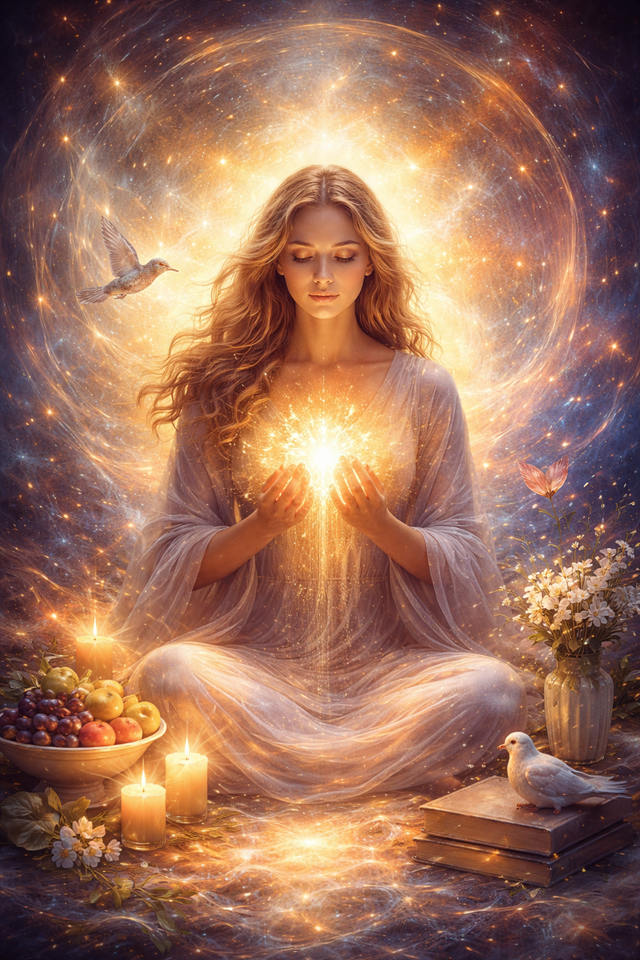
HONORING WHERE YOU ARE

It is important to honor what aligns with you and to follow what feels right. Even if it doesn’t inspire anyone. What is important is for you to honor your energy.

What do you need to have your life be like at this time?

Feel into what that feels like.

Is it OK for you to be where you are right now?

It is important to honor what aligns with you and to follow what feels right. Even if it doesn’t inspire anyone! What is important is for you to honor your energy. Where you need to be right now is not where you will stay. The most critical thing for you is to be honest about what you need at this time and what you need to let go of. It is really all right to let go of the pressure to make something happen. It is necessary. When we push and nothing changes, there is information here for you. What you are doing is not correct for you at this time.

First things first: take the time to check in with yourself. Are you feeling emotionally and physically nourished? Are you feeling well-rested?

It is paramount for you to stay in touch with the flow of your energy. When we push, we lose power. We lose our ability to discern what is correct for us. When we push, we are out of alignment with ourselves and what we need to sustain ourselves. When we push, we lose connection to our center and our self-awareness. In this state, it is hard to tell if what we are doing is helping us get to where we want to go and giving us what we need. Worse case, we start to feel afraid that we are losing our grip on life, on our ability to remain in control.

Sometimes it is time to just stop, to retreat, rest, and renew. When you no longer feel joy and excitement, when you are out of ideas or can no longer get behind the ones you had, it is time to re-evaluate what you are doing and how you are doing it. Perhaps it is not so much that what you are doing is not correct for you, as it is a matter of timing and the availability of your energy.

Only you know how long you need to be in retreat and what will rejuvenate you.  Retreating does not mean that you stop paying your bills. Do what you must to keep yourself together and do not take on any more. Please do not pressure yourself to be amazing or believe that you must do something right now to turn things around, ignoring the fact that you have been spinning your wheels for some time.

Your right plan of action will reveal itself when your vitality is restored and available to you. Your ideas and creativity will flow again.

We must always be our own advocates and allies; we are the highest authority for what is true for us at any time. Only you know what it feels like to be you and what you need. Find the pace that works for you at any given moment. It will shift from time to time and from project to project. Remember that how you do things and how fast you do them is unique to you and is influenced by how your energy naturally flows. You are not supposed to look like anyone else’s success or keep up with anyone else.

Please honor how you do things, and how you need to do them. You have a rhythm that is unique to you. How your energy flows is unique to you. It takes time and trial and error to truly know ourselves. Be patient with your process of discovering how you work and what works best for you. You will eventually find your personal rhythm of sustainability. You want to be in the flow that is your unique rhythm because this is where you feel good and where you are the most creative and productive. It is here that you are also at your most magnetic and radiant.

Did you enjoy this post? Like this article (below), and like this site (at right, above).

Subscribe to my newsletter!

Need help or have questions? Contact Me

Copyright © 2019 – present | Gloria Constantin | All Rights Reserved |

LET GO AND BE GRATEFUL FOR YOUR LIFE

Be grateful for your life! Appreciate your skills, gifts, talents, and the opportunities you’ve had. Reflect on what you’ve done with them and the creative and exciting things you will achieve in the future. How fun is that?

Embrace your current situation. Accepting reality will foster progress. There is beauty in the moments of your life, but don’t just take my word for it. Look within and discover for yourself.

Understand that your situation is constantly changing. Everything is temporary, and even when it doesn’t feel like it, energy is still shifting and guiding you to your next destination. When we face obstacles or encounter unpleasant or unexpected events, we often assume that these challenges are permanent. We may feel as though all our hard work has been for nothing. This can trigger a fight-or-flight response, leading to chaos and the potential loss of our original inspiration.

When unexpected situations arise, your role is to remain open and curious. Instead of trying to control the situation or direct it in a specific way, focus on following the energy of the moment. Remember that a higher intelligence is at work here.

You are part of a much larger picture. Allow yourself to step out of reaction and connect with the flow of life force energy that emanates directly from within you. This energy is powerful and will guide you toward your next steps.

Your ego isn’t in charge; it will try to convince you otherwise. Your Soul is. Surrender to its guidance, then apply and unleash all your glorious abilities in service to your purpose.

When we feel pressured by a situation, we often want to take immediate action to resolve it. When we anticipate the potential outcome of a current issue, we tend to problem-solve based on that expectation. For example, if I feel that I don’t have enough money coming in, I may worry that I will eventually lose my house. As a result, I might think, “I need to make a lot of money right now to prevent this terrible thing from happening!” This can lead me to work harder to get clients, ignoring my exhaustion and possibly coming across as desperate or unappealing. Alternatively, I might throw myself into a demanding job, hoping to push through without needing much recovery time until I achieve my breakthrough.

Ask yourself: Is this truly an emergency? Misinterpreting a situation as an emergency can lead us to act in ways that hinder the natural progression of events. Instead of allowing situations to unfold, we often intervene and push them in specific directions. How can you be sure that things will turn out as you anticipate? That’s your panic influencing your judgment. Taking action without a definitive need in the moment can lead to undesirable outcomes and result in losses that could have been avoided.

Our standard methods of problem-solving tend to be logical, masculine, and even patriarchal in nature. They often fail to recognize the many factors involved in any given situation. There are multiple strands of causation at play simultaneously, leading to a variety of potential outcomes and expressions. The traditional masculine approach does not acknowledge these complexities, nor does it trust intuition or recognize the natural flow of creativity. It overlooks the fact that there is a nurturing, yin process that requires time to develop. In contrast, the feminine approach to problem-solving is open, adaptive, and follows its own timeline.

The key is to avoid getting caught up in trying to predict uncertain outcomes. Instead, focus on imagining new possibilities. Accept that you may not yet know how you will navigate this situation, and you may not have all the information or tools available to you right now. The creative process requires continuous adaptation and will demand different approaches at different times. If you have been following your true calling, you understand this principle and can trust the process.

If something is truly an emergency, knowing how to act will come naturally and automatically. However, when it’s not an emergency, that beautiful idea or opportunity that wants to emerge requires your patience and trust. During times of uncertainty, it’s important to relax into the unknown. Let go of the need to have all the answers and the urge to force things to happen. While we serve as channels for our creations and manifestations, these ideas are entities in their own right, each with its own process and timing. When you honor and support that process, everyone involved is nurtured toward success.


© | Gloria Constantin | All Rights Reserved |

Need help or have questions? Contact Me


WELCOME TO YOUR HERO’S JOURNEY

You have a destiny, and to discover it, you must embark on your own hero’s journey. At the start of this journey, you will likely feel pressure from societal norms that promise conventional success if you follow certain paths and remain on them.

To become your true self, you must follow your own path. If you want to discover who you really are, you can’t stick to someone else’s predetermined route. Even the yellow brick road can lead you astray. It could take you to the wrong city, school, or teacher. However, when you choose the path that resonates with you, the one that calls to you, you will come to know yourself and realize what you are meant to do.

You will discover who you are and what the world is made of through your experiences, experiments, and the lessons learned from making mistakes. You won’t know your destiny overnight, so don’t worry about taking a wrong turn. This is a journey filled with many unknowns, and you will encounter situations that you may not know how to handle. However, when you pursue what is fulfilling, you will gradually learn to correct your path. You’ll become more aware when you’ve taken a detour.

It’s not always possible to predict the outcomes of our actions, but we can’t achieve all our growth solely through classrooms, books, movies, or conversations. There are some things we must do ourselves because that’s the only way to discover what is true for us, what feels right, and what brings us joy and fulfillment.

Each of us carries an internal map and compass. But what is this map, and where can you find it? The map is within you; however, it’s as if it were drawn with disappearing ink, and it’s your task to make that ink visible. You do this by following the direction that resonates with you.

If nothing calls to you, take a moment to rest and enjoy your surroundings. Be patient. If you still feel restless, it’s perfectly okay to get up and move; take one step at a time. Trust your inner compass. Please don’t give up, because over time, you’ll find that you are aligning with your map, and new paths will begin to reveal themselves as you continue on your journey.

When the energy around you begins to stagnate, meaning there is nothing more to offer you spiritually, intellectually, or emotionally, it is time to move on. You are still charting your path! It’s essential to explore different situations to discover who you truly are. Through these experiences, you’ll gain a deeper understanding of yourself by interacting with various environments and the people within them. You will learn the limits of what each situation can provide, as well as what you can tolerate and what inspires, motivates, and nourishes you. You are always learning what resonates with you, so embrace that journey.

Practice patience with your journey. Embrace the experiences that provide you with clarity. As you gain more experience, your understanding of your purpose will continue to sharpen. Trust that you are meant to pursue what inspires you, fulfills you, and brings you joy. Your task is to connect with those passions. You are on an exciting exploration, whether you are just starting or have been on this path for years.

At the end of your life, you will possess a unique map that reflects your experiences like no other.

©  | Gloria Constantin | All Rights Reserved |

Need help or have questions? Contact Me

NO INSURANCE PLAN WILL COVER THIS KIND OF THING

Do they have insurance on us?

In the aftermath of the Sandy Hook tragedy, Liza Long’s poignant words, ‘No insurance plan will cover this kind of thing,’ encapsulate the profound challenges faced by families dealing with complex human problems. In her deeply moving account, she described the pain of raising a gifted yet severely troubled child, and the harsh reality that some families bear burdens far beyond what any single household can handle alone.

Her words point to something bigger than just one family’s crisis. They highlight a truth our culture often avoids: some human problems are too complicated, layered, and serious to be handled alone. They can’t be solved by individual effort only, nor can they be contained within the walls of one family, one diagnosis, or one policy.

In the days after the Sandy Hook shootings, President Obama spoke at an interfaith vigil in Newtown, saying, “These tragedies must end, and to do that, we must change.” He also recognized that the causes of such violence are complex and that no single law can prevent every act of evil. That is true. But complexity cannot be an excuse for inaction. If anything, complexity calls for a deeper, more honest response.

One of the major mistakes in our thinking is the desire to find a single cause for suffering. We look for one explanation, one failure, or one person to blame. However, human tragedy doesn’t work that way. Illness, violence, poverty, addiction, homelessness, despair, family breakdown, and social collapse all arise from multiple intersecting causes—psychological, social, economic, familial, cultural, biological, and spiritual. When we insist on reducing these complex realities to a single cause, we also limit our ability to respond effectively.

Our collective mindset directly influences the design and effectiveness of the systems we establish, determining whether they can adequately address society’s multifaceted needs.

As long as we see people who are struggling, such as the mentally ill, the poor, the homeless, the addicted, the elderly, the chronically depressed, the jobless, the undereducated, or the terminally ill, as individuals who should somehow have managed better on their own, we will continue to create weak and inadequate systems of care. If we believe that those suffering just need more discipline, more willpower, or more personal responsibility, then we will never build the support structures that real humans need.

But human beings cannot recover, stabilize, or flourish without resources. They cannot climb out of despair without help. They cannot build sufficiency out of emptiness.

People need housing. They need food. They need access to treatment. They need transportation, education, community, clothing, safety, and time. They need structures that support healing and participation. They need more than just moral instruction. They need conditions that make human dignity practically attainable.

This should be easy to understand. None of us could last long in the desert without water, shelter, and supplies. None of us is truly independent of support. We depend daily on visible and invisible systems that keep us alive. Yet, when others fall outside these systems, we often quickly see their suffering as a personal failure.

That perspective is not only incomplete; it risks perpetuating systemic failures and exacerbating the suffering of vulnerable populations.

As long as the burden of caring for our most vulnerable people falls mainly on individuals and families, we will keep failing them. Families are important, of course. Their love matters. Their effort matters. But families have limits. Their resources are only so expansive. There are types of suffering that go beyond private capacity. When that happens, the lack of meaningful collective support becomes a form of violence itself.

Mental illness, like poverty, disability, accidents, and loss, is part of human life. It is not an anomaly that we can simply wish away. Nor can we afford to interpret justice through the harsh logic of blame, polarity, and division. If we are serious about creating a more humane world, then compassion must become structural. It must go beyond sentiment and into systems.

That means expanding our understanding of responsibility.

We are not only responsible for those related to us by blood. We are morally and genuinely responsible for one another. A civilized society must be founded on more than personal loyalty and acts of charity. It must be based on the understanding that we are connected and that the overall well-being depends on how we care for those in greatest need.

Addressing these challenges requires a blend of imaginative solutions and compassionate policies that prioritize human dignity and interconnectedness.

If what we have built is not enough, then we need to build differently. We must be willing to move beyond inherited assumptions and create new models of care, new legal structures, new partnerships, and new social priorities. We must think beyond the limits of the systems we know. We should ask not only how to fix the failures, but also how to reimagine community in a radically more life-affirming way.

What would it be like to create a society that truly reflects the values many people say they hold?

If we truly believe that everyone deserves shelter, we must create systems that make shelter accessible. If we think every person should have access to education that unlocks their innate abilities, we organize society accordingly. If we believe healthcare is a human right, we design structures that treat it as such. If we believe no one should be abandoned to mental illness, despair, or poverty, we stop treating support as optional, marginal, or charitable.

And while we strive for broader systemic change, we must also recognize the organizations already doing this work. Many nonprofits, community groups, clinics, shelters, and service organizations are holding together the fragile edges of our society. Too often, they are compelled to operate as underfunded charities rather than acknowledged as vital social infrastructure. Perhaps part of the shift we need is to elevate these efforts into the heart of our cultural vision—not as side projects, but as central initiatives.

We need our best minds, deepest compassion, and strongest strategic thinking to create a more just and beautiful world. We need collaboration, cooperation, and a broader moral imagination. We need structures that recognize support is not weakness, interdependence is not failure, and care is not an afterthought.

In truth, the only safeguard against such complex societal issues is a robust system of mutual care and support that transcends individual efforts.

That is the deeper vision: a society where every person receives the support needed to reach their highest and best potential; a society where contribution isn’t limited to the already fortunate but accessible to everyone; a society where humility replaces judgment, and compassion replaces indifference.

None of us got to where we are without assistance. Each of us has relied on some form of support, visible or unseen. Remembering that could be the start of wisdom.

And through that wisdom, maybe we can start building something better.


© | Gloria Constantin | All Rights Reserved |

Need help or have questions? Contact Me

HOW MUCH IS YOUR SOUL WORTH?


This conversation is a continuation of a previous discussion titled Are You Living Life Too Small?. In that essay, I challenged the notion that living a “small” life means not living your purpose. In this reflection, I address the confusion many of us feel about the connection between the money we earn or have and how it is often held up as a mirror of our value.

We live in a time of constant pressure. Everywhere, voices urge us to question whether we are living too small, hiding our talents, or not claiming the greatness that is supposed to be ours. This message is especially common in the worlds of coaching, mentoring, and self-development, where the question, “Are you living your life too small?” feels like an accusation.

The message is clear: if your life feels quiet, simple, or seemingly ordinary, you might be missing your true purpose. If you’re not highly visible, successful, influential, or profitable, then you probably haven’t yet become the person you are meant to be.

But is that really true?

What if a life doesn’t have to be large to be meaningful? What if a life can be simple, private, even seemingly unremarkable, and still be a full and authentic expression of the soul? What if the real question isn’t whether your life is big enough, but whether it is aligned enough?

Before we can discuss greatness meaningfully, we first need to ask what greatness truly is.

Is greatness about fame? Influence? Money? Public reach? Is it the ability to impress others? Is it a visible, celebrated life that earns admiration and status? Or could greatness be something quieter and more fundamental, something that emerges when a person lives in true alignment with their own truth?

A life of greatness can, for some, be lived openly in the public eye. It might include recognition, leadership, or broad influence. But for others, greatness could be demonstrated through quieter acts: tending a garden, caring for an aging parent, feeding animals, listening deeply to someone in pain, making soup, writing in obscurity, or offering kindness precisely when it’s needed.

Humans often interpret significance literally. We assume that bigger size means better, greater visibility equals more value, and wider influence signifies a larger impact. However, this isn’t how the soul measures things.

A glass of water given to the thirsty matters. A meal offered to the hungry matters. Being truly seen matters. Being cared for as a child matters. Being accompanied in grief matters. The person who brings steadiness, tenderness, shelter, or understanding into another’s life is not living a lesser purpose just because the act is small in scale.

The soul does not confuse visibility with worth.

Each person has a unique purpose: an inner pattern, an encoded intention, a specific way of expressing life. That purpose isn’t just about what someone does for work, nor is it necessarily connected to career, status, or income. Purpose also relates to presence. It involves the quality of being we bring into the world. It’s about the light we embody, the gifts we have, and how those gifts naturally serve life.

Not every lifetime is meant to be dramatic. Not every life is built for public achievement. Some lives are quieter, some are restorative. Some focus on healing, integration, caregiving, study, or rest. Some are designed to refine the inner self. Others are meant to anchor love in simple ways.

The problem begins when we let the ego define our purpose. The ego craves applause, proof, status, and worldly validation. It believes that more attention equals greater worth. However, the soul does not operate based on those values. The soul is not here to prove itself to others; it is here to express its true nature.

Your task isn’t to meet someone else’s standards. Your goal is to stay true to yourself.

This is why it is dangerous to listen too closely to those who claim that your soul’s worth depends on your success or how much you earn. Such thinking confuses market value with spiritual value. It mistakes external rewards for internal harmony. It encourages people to betray their true nature to conform to an image of what a meaningful life should be.

But the soul has its own rhythm. It possesses its own timing, texture, and signature.

Everything in existence functions according to its nature. A bird doesn’t need to become an ocean to be valid. A rose doesn’t need to become a mountain to justify its existence. Each thing fulfills itself by being what it is. Human beings are no different.

You are a unique expression of the Tao, a singular current within the larger whole. And from that uniqueness comes a real question: what is yours to be and do? What feels natural to you? What calls to you from the heart? What brings a deep sense of rightness, fulfillment, aliveness, and peace?

Perhaps your soul yearns to create something. Perhaps it wants to teach. Perhaps it longs to write. Perhaps it desires to care for children, animals, land, or community. Perhaps it seeks contemplation. Perhaps it longs for beauty. Perhaps it craves discovery. Maybe it prefers a quieter life than what the surrounding culture would approve.

None of this is too insignificant.

The issue with the command to “live your greatness” is that it’s often surrounded by illusions. It entices people to believe they must become more impressive first before they can be more authentic. But authenticity doesn’t come from becoming bigger. It comes from connecting with your true self. A person becomes whole not by enlarging their life, but by living it fully.

When you express your unique spiritual signature, your life truly reflects who you are. The size of that life—whether large or small, public or private, prosperous or simple—will align with your soul’s intentions. That size may evolve over time, through seasons of growth and retreat. Seasons of service and renewal. Seasons of visibility and hiddenness. However, these changes should come naturally from within, not through force, comparison, or spiritual marketing.

One of the most dangerous modern misconceptions is the idea that how much money you make reflects how connected you are to your purpose. This belief has become so widespread that many people no longer question it. However, it is based on a serious misunderstanding.

Saying that a person’s income reflects the worth of their soul’s expression is like assigning a monetary value to the soul itself.

Let’s follow that logic to its absurd conclusion.

What, then, is a soul worth? Is it worth fifty dollars an hour? Five hundred? Five million a year? What number would truly reflect the value of your deepest truth? What invoice should we send for love, presence, healing, wisdom, devotion, integrity, beauty, or grace?

And if we are expressions of the Divine, what is God worth? What compensation should be given for sustaining the universe? What reward is owed for creating stars, oceans, forests, creatures, and consciousness itself?

The questions collapse due to their own absurdity.

The soul cannot be bought or sold because it isn’t part of the marketplace. Its value is inherent, not determined by transactions. Its purpose is sacred, not for profit.

This doesn’t mean money is bad, irrelevant, or unspiritual. Money can definitely be part of a person’s journey. Some individuals are meant to generate wealth. Some are meant to build businesses, lead publicly, and create material abundance through their talents. There’s nothing inherently wrong with that. However, money is a result in the physical world, not the ultimate measure of spiritual truth.

The main question is simple: Does your life satisfy your soul?

Does it allow you to stay true to who you are? Does it bring a deep sense of rightness that comes from living in harmony with your own nature? Does it permit the natural flow of your gifts? Does it create real benefit, however quietly, for others? Does it bring genuine fulfillment—not the excitement of ego, but a steady feeling of inner congruence?

When you are aligned with your soul’s intentions, you stop comparing your life to others’. You cease pursuing forms that aren’t truly yours. You no longer try to create significance through quantity. Instead, you start to realize that your very presence has value. Your way of being becomes an essential part of your offering.

That’s why being present is so important.

When you are fully present, you become more open to life. You’re better able to hear what needs attention, sense what is true, and respond according to your dharma. Presence shifts your energy away from fantasy, comparison, anxiety, and performance. It brings you back to the core of your own being.

From that point, actions feel more natural. Giving becomes automatic. Purpose shifts from just an idea to something actively felt.

You don’t have to push for greatness. You need to cultivate congruence.

Congruence is the alignment of thought, word, and action. It describes a state where who you are, what you say, and how you live are in harmony. As this alignment deepens, your energy becomes accessible in a new way. You are no longer splitting yourself trying to become someone you’re not. You are no longer operating under borrowed ideas of success. Instead, you stand fully inside your own life.

And that is true power.

So perhaps the better question isn’t, Am I living too small? Maybe the real questions are these:

Am I living authentically? Am I honoring my true nature?
Am I giving what I am meant to give?
Am I allowing my soul to express itself through the form, rhythm, and scale that are truly its own?

A soul is not more valuable just because many recognize it. It’s not more sacred because it earns more money. It doesn’t become more legitimate just because the world applauds it.

Its value is innate.

Your task isn’t to prove your greatness. Your task is to embody your true nature so completely that your life becomes a genuine reflection of the sacred pattern you were meant to live.

That may look grand, ordinary, quiet, or powerful.
It may change many times over a lifetime.

But when it is true, that is enough.

And when it is true, it is great.


© | Gloria Constantin | All Rights Reserved |

Need help or have questions? Contact Me

ARE YOU LIVING LIFE TOO SMALL?

I’ve been hearing a lot about living life “too small,” a phrase that struck me deeply when my mentor first mentioned it during a pivotal conversation. It’s often presented as a challenge, but it can also feel like an accusation. Beneath the question “Are you living your life too small?” lies an implied judgment: that if your life is quiet, modest, or not visibly impressive, then maybe you aren’t fully living your purpose.

The suggestion is hard to miss. A life that is big, visible, influential, and financially successful is seen as a life of courage, alignment, and significance. A life that is smaller, simpler, less public, or less ambitious is quietly regarded as lesser, as if it reflects timidity, lack of drive, or failure to become all that one could be.

This assumption should be challenged.

We live in a culture that tends to value more over less, bigger over smaller, and louder over quieter. Visibility is often mistaken for value. Power over many is admired. Financial success is regarded as proof of legitimacy. In this environment, it’s easy to internalize the message that if your talents are not generating a large income, attracting a broad audience, or creating a visibly expansive life, then you must be falling short of your true purpose.

But is that really true?

A so-called “big life” is usually defined by external markers: status, influence, productivity, recognition, money, and the ability to attract attention. It often involves constant striving, self-promotion, and ongoing visibility. It can indeed be exciting. It may be the right choice for some people. But that doesn’t make it the right choice for everyone.

What about the person who has no desire to build that kind of life? What about someone whose nature is quieter, deeper, more private, more contemplative, or more intimate in scale? Is such a life necessarily too small? Or is it possible that a life can seem small from the outside and still be a full, faithful expression of dharma?

I believe the real question isn’t whether your life is big enough. The real question is whether your life is authentic.

Reflecting on my own journey, I realized that my life’s meaning came not from grand achievements, but from moments when my actions aligned with my deepest values.

To understand what that means, it helps to pay attention to your yearnings. Our yearnings carry important information. They reveal something essential about who we are and what our souls desire. A yearning for love, beauty, strength, creativity, adventure, structure, service, freedom, belonging, excellence, rest, or understanding is not trivial. These are not random preferences. They are clues.

My own yearnings have often pointed me towards what brings genuine vitality and emotional fulfillment, like the quiet satisfaction of a well-spent day. Your yearnings reveal what kind of life sustains you, what experiences are essential to your growth, and what qualities your soul seeks to express through you.

If you ignore your true aspirations, you might end up building a life that seems impressive from the outside but feels empty inside. If you pursue them honestly, however, you begin to move toward the life that is truly meant for you.

This is why following your desires matters so much. When you give them space to speak and take them seriously, they gradually shape your life from within. They draw you toward the people, experiences, types of work, ways of being, and forms of expression that align with your soul’s intentions. They bring you into harmony with your own true measure.

That measure is unique.

For one person, a right-sized life might be large, public, and influential. For another, it could be small, quiet, rooted, and largely unseen. For one individual, soul expression may require leadership, expansion, and visible impact. For another, it might involve depth, devotion, craftsmanship, service, contemplation, or care offered in a smaller sphere.

Neither one is superior. Neither is more spiritual. Neither is naturally more aligned.

The problem begins when we assume that the outer scale is the same as the inner truth. It isn’t. A large life can be very false. A small life can be very true. And a life that is true will have its own natural size.

This is why I believe we shouldn’t give in to the cultural pressure to “make life bigger,” as if size alone determines purpose. A life shouldn’t be forced into growth just because society values visibility, ambition, and monetization. Doing so might steer us away from what we most need to honor: the true essence of our soul.

When you follow what truly calls to you, what feels genuinely right, what brings real satisfaction, what asks for your presence and energy, you start living more in harmony with your soul’s intentions. Over time, the shape of your life aligns more closely with who you truly are. Its scale becomes more appropriate. Its form feels more natural. Its “size” becomes less about performance and more about revelation.

In that sense, the right life isn’t too small or too large in any absolute sense. It is appropriately sized.

A right-sized life is one where your inner truth and outer expression align. It’s a life where what you do, what you love, and how you live become interconnected. It’s a life not driven by comparison, pressure, or borrowed ideas of success, but by an honest response to what your own soul is asking of you.

That response may change over time. The soul might seek growth during one season and simplicity in another. It could make you more visible for a while, then lead you into privacy. It may ask you to create and, later, to rest. But if you listen closely to your deeper nature, you will be guided toward the right form.

So perhaps a better question is not, “Are you living life too small?”

Perhaps the better questions are:

Are you listening to your true yearnings?

Are you allowing them to express themselves?

Are you shaping a life that genuinely fits your nature?

Are you living in a way that feels emotionally authentic and spiritually aligned?

If you follow your true desires and trust what calls to your heart and give it space to blossom, you’ll gradually discover the life that belongs to you. Its boundaries will be your own. Its rhythm will be your own. Its greatness won’t depend on how it looks to others. It will be great because it’s authentic.

 © | Gloria Constantin | All Rights Reserved |

Translate »