RESILIENCY IN TOUGH TIMES: BREAKING THROUGH DESPAIR

Father Mother God, Creator of all beings —

Unparalleled Lover from Whom emanates the boundless capacity for love
and for eternal care;
from Whom issues all balms to soothe and heal all wounds,
Who has known and suffered through us and with us all wounds that are possible –
that have ever been –
and Who has received these many hurts into His-Her Heart, speaking peace to them
holding them
caressing them
acknowledging them
accepting them
feeling their pain with them
suffering the deepest of nameless agonies with them.
Offering them up and into His-Heart to be healed.

Father, Mother God, Creator of all beings, release us to our most profound truths,
and to our highest, most majestic expression of all that is good, and right, and beautiful.

In the name of Father, Mother God, we pray that all that is wounded is healed, now and forever. Amen.  ~ GC

We may not want to accept it, but the unexpected is part of our daily lives. The unexpected is regularly woven into the routines of our organized lives. It appears, again and again, inserting itself into our spreadsheets and carefully maintained portfolios. And just as the unexpected reminds us that we cannot escape the cycles of chaos, the weather, or the seasons, it also reminds us that change is an inescapable fact of life. We are only fooling ourselves if we think otherwise.

What is resiliency? It is the ability to recover. From profound fatigue, from loss, from disappointment, from change, from shock, from trauma. From having your life inverted and turned upside-down without your permission. There are many things to recover from as we move through our lives. Not all of them are equal in intensity, but they all require that we adapt.

Again, resiliency is the capacity to bounce back from despair and vulnerability, yet still embrace life and move forward. We need the willingness to accept change, to surrender to the unknown, and be willing to meet the demands of change if we are going to allow resiliency to flow through our lives.

But how do we get there?

II. Situations and circumstances that lead to the need for resiliency

When you’ve lost your job, your spouse or boyfriend or girlfriend, your house, your child, your beloved pet, when you’ve been forcibly and permanently separated from who you loved and what you need to live, the grief and shock can be overwhelming. When we no longer have the support systems of financial flow, shelter, and/or we’ve lost persons and pets who provided us with emotional connection and support, we’re not having a debate with despair, loneliness, or terror – we are those things.

When change comes, particularly change that overturns our well-laid plans and cracks the foundations on which we built them, we never fail to feel betrayed. Or victimized and or outraged. Or wonder whose fault it is and where to place the blame. Or perhaps wonder what the heck karma is still dogging us, demanding payback. Then we give in to our suspicion that the universe is a rigged system and always has been. Sometimes the system benefits you, and sometimes you’re just irrelevant. If causes always had clear-cut and logical effects, and we knew that taking certain actions always led to specific results, life would be much simpler. And kinder.  

Change can be so immense and irreversible that we have no idea how to start rebuilding. And looking at the blasted wasteland of what was our life, it doesn’t appear that we can rebuild. We have neither energy nor resources.

So what now? How do we navigate something for which we have no precedent? How can we wake up each day and still choose to move forward?

III. So who am I to talk about finding resiliency when the going gets really, really tough?

A few brief highlights

My parents were immigrants. My mother was born and raised in Ceiba, Puerto Rico. Her mother died when she was barely an adolescent, and she stayed home to raise her 12 siblings. Years later, she joined her sister in the Bronx. After permanently leaving Havana, Cuba, my father walked from Florida to the Bronx, New York City. He slept on park benches and ate out of garbage cans, but this was nothing new for him. His mother, the only person who ever cared for him, died when he was very young, leaving him to be starved and beaten by his father, and mistreated by his cruel step-brothers. He was not sent to school. He ran away from his home, which was not much more than a shack with a dirt floor, and became a child laborer under brutal conditions. After he became a father and husband, he revisited his family with the abuse and neglect he had suffered.

This is the legacy and the reality I inherited, which affected how I perceived the world and my own value. I grew up in the South Bronx, where landlords had abandoned the tenements to poverty and crime. The inhabitants of that time and place were powerless in nearly every way a human being can be powerless. Most were on welfare; those who were not worked at jobs that paid very little; most were victims of domestic violence. Most had only a rudimentary education. They did not know how to find help or stand up for themselves. I grew up in the South Bronx, where there was constant gang warfare. Homeless and abandoned cats and dogs faced agonizing deaths from starvation and cruelty. 

Years later, disconnected and steeped in naïveté, I lost my best friend and the most faithful ally I’ve ever known. This loss has been an irretrievable thorn in my heart that reminds me every day to never, ever, ever take another human being for granted.  

After an unexpected physical breakdown in 2008 — the meniscus in both of my knees mysteriously ripped to shreds, and I was in a wheelchair for months — I lost an excellent job that I had managed to hold on to for 8 years. I did not find another until 9 months later. Towards the end of 2010, I lost that job when the company moved its offices. I was unemployed for a period that turned out to be 14 months long. Also in 2010, the guy that I was nearly engaged to went on a trip to Ireland and never returned, having decided to focus his affections elsewhere. Over the course of 14 months, I applied to over 300 jobs, all of which I could reasonably fulfill—at least from the descriptions. Out of those 300+ applications, I landed two interviews. The first attempt did not result in a job offer, but the second was successful, and I secured a position at a law firm. As it turned out, the advertised job description and the actual job duties bore no resemblance to each other. The downgrade in job duties was not to my liking or a benefit to my resume, but after 14 months of diminishing resources, I was grateful for what I had.

After a little over a year, I was laid off, ostensibly due to the firm’s economic restructuring. It was my last “official” job. Three of my precious cats had died within the previous year and a half. I lost my Colorado home of 31 years and left Colorado’s unique beauty. I left behind family, friends, and contacts; beloved parks and lakes, and my secret, treasured places. I was numb with shock and fatigued to a depth I was not even aware of. The impact on my body in the form of an aggressive autoimmune condition gradually unfolded.  

~~~~~~~~~~~~~~

For five years, I lived in a city that broke my heart every day. I was a foreigner here, a stranger not to be trusted. This city was ugly to me, devoid of beauty and kindness, and the stench of the ubiquitous dumpsters with their open lids and spilled garbage was relentless. The poverty, the unemployment, the crime, the homelessness of people, and the abandoned pets overwhelmed me with sorrow. For nearly every day of those five years, I sobbed out loud as I stood in the filthy arroyo where I had set up my feline rescue feeding stations. These stations were repeatedly destroyed, and I repeatedly rebuilt them, refusing to give up on my mission to rehabilitate and re-home these precious discarded beings. I yelled at my guides and I demanded that the feline devas do their part to protect their own. I eventually realized that they were protecting their own — through me. There was no more help to be had.

How could I have come to this, to these circumstances, to this life after my years in beautiful Boulder, Colorado? I often recalled the dangers, poverty, and helplessness of my childhood in the South Bronx. My long journey to what I believed was my final haven did not end with that haven. But I had always known that my fortune was tenuous and fragile, utterly dependent on the linchpin of continued employment. When that pin got pulled for the last time, a cascade of consequences, like an avalanche, buried me.   

IV. Going deeper into the experience of shock and loss

When we face situations that we did not choose, we often feel powerless, angry, and betrayed. We begin to question ourselves: Did I ask for this? Or perhaps we wonder if we deserve it because we have been “bad” — is this my karma catching up with me? If that is the case, please show me what I need to do to restore balance. Without such guidance, I might feel tempted to lie down and die.

In the 2000 film Cast Away, starring Tom Hanks, the protagonist, Chuck Noland, faces a profound survival crisis when he is stranded on an uninhabited island after his plane crashes in the South Pacific. At the time of the incident, Chuck was a federal express employee with an established life. He has a girlfriend whom he plans to marry, and his network of co-workers, family, and friends is solidly in place. Suddenly, he is cast into utter isolation, cut off from his loved ones, and utterly dependent on his personal resources to survive. Whether or not there was a higher force that guided the protagonist to the island shore, he still had a choice to make. He could continue living, find a way to survive on the island, or he could make an exit.

Although the horrific experience of ripping Chuck out of his life was not planned, he was nonetheless confronted with the urgency to do something about it if he wanted to live. He was being asked, should he choose to do so, to continue the act of his own creation by creating his life without the support of community, peers, or comfort. He was on his own, absolutely and irrevocably. If he were to live, he would have to become the Creator and stand in the place of God. He ultimately chose to fight for his life, but there was no way he could know that this period of his life would last an eternity of four years.

When we find ourselves stranded and isolated, we are constantly faced with the choice to give up or to fight for our lives, applying everything we are to unfamiliar and hostile territory. Isolation and limited resources are daunting circumstances, and they can either crush the faint-hearted or catalyze your courage to reach for new life. It doesn’t matter that you have no clue what that life will now look like, or how you make it happen. What matters is that you choose to live.

V. What makes the difference between giving up and persevering despite the odds?

A deeper look at what’s really happening when you’ve lost it all

When you’ve been stripped of everything you relied on for support, you are in the space between the stories of your life. This is the Liminal Zone, a place that’s neither here nor there. In a very real spiritual sense, you are neither dead nor alive. When we’re in that space, we don’t know if we will ever get back to our former life, to our worn but comfortable story, or if we will get back at all. If we do, it will be with a new identity and a new story. And therein lies the invitation of the Liminal Zone. It is here, at the threshold of the terrifying unknowable, that we have the opportunity to be reborn.

Stamina must be at the foundation of our lives. It’s not only a physical attribute, but also a mental one. As our world changes, we must adapt to these changes. We must press on, ever optimistic that we will rebuild our lives. Stamina is grit and hope and idealism, all rolled into one.

There you have it. The story of your life as you knew it is over. Your old familiar comfort zone is gone, but there is an opportunity to make a new one.

When you’re in the Liminal Zone, without a story and without an identity, time is experienced differently. In a sense, there is no time. No schedule tells how long it will take you to break the trails that will get you back to your new home. But if you choose to live, you will create a new story and a new life. It can take weeks to years. Forget about your old track record. It doesn’t work here. Your body and your will are the gifts and tools that will sustain you.

Do not underestimate what this will ask of you. As long as there is an option to exit comfortably, the likelihood is great that many will take that exit. But the choice is really between these two things: taking on the terrors of the unknown or giving up despite knowing that you might live. This is the gift of the Liminal Zone – comfort may be hard to come by while you’re in it, but you are nevertheless offered the possibility of a new life.

Now you must put yourself back together, acquire a new body, a new identity, and a new story.

VI. How do you navigate all this?

We seek out those things that encourage and develop emotional resilience. There are things we can do to build resiliency. Some of it will arise naturally because your body wants to live.

IDEAS AND TOOLS TO GET YOUR RESILIENCE KICK-STARTED:

 • You cannot define yourself by your losses.  

 • In the same way, you are not defined by your experience of loss and trauma. You are not your trauma.

 • You cannot define yourself by the things you are attached to or no longer have. You were never those things in the first place. They were impermanent interior decoration and landscaping, subject to change.

 • Stay in the present moment. This will help you deal with fear.

 • Don’t isolate yourself. It’s deadly. Get with your tribe, or find one! If you can’t do this in person, there are options such as phone and online video conferencing.

 • REST! A rested body is a resilient body; a rested mind is a resilient mind. A resilient mind is a creative force.

 • You are still connected to everything; don’t believe that because you have lost something that you are not connected. Your anchor is your desire to live.

 • Develop a conscious relationship with your mortality. It will deepen your awareness of your eternal self.

 • When you’re hungry, eat! Taking in nourishment will ground you.

 • Allow yourself to grieve and scream, as needed. Go ahead, curse God and your Guides. They will not retaliate, and you will get your anger at them off your chest.

 • Use this time of heightened sensitivity to access awareness of your connection to all things.

 • Believe in yourself. I don’t care if you don’t or never did. Choosing to do so will empower you.

 • Calm your body, soothe your heart. Let your heart guide you towards what nourishes you. It knows. You know.

 • Trust your intuition. Don’t second-guess yourself. You know what’s right for you.

 • It’s OK not to know the outcome or the answers or how you will get from here to there. Allow spirit and your creativity to find solutions. There’s more than you acting here. Really.

 • Focus on what is working/focus on what you can change/ focus on your strengths.

 • In other words, fix what you can fix; let the rest go.

 • Surround yourself with beauty. There is still beauty out there!

 • You are always inside a bigger picture, a greater context. We do not know what the whole story looks like, and what part we are writing. It is always being written. You are the next great novel, telling a tale of ferocious courage. Live to inspire us.

  • Identify your core essential truth.

 • Connect to people who don’t give up.  

 • Hold your vision for what you know to be true.  

 • Connect with the people who believe in YOU, who see what you’re capable of.

 • Be aware that you are not alone; that many, many others share your vision for what’s possible for humanity, and who are actively working towards it. So what are you giving up for? Be with them.

 • Look for the victories. They’re out there. People everywhere are uniting in the cause of supporting life, and they’re winning.

 • Stop keeping it a secret from everyone, including yourself, that you are a winner.

 • Get a trainer/ get a teacher/ get a mentor.

 • Treat yourself with love and respect.

 • You have a unique legacy. Work with it

  • Deepen a friendship.

 • Thrive through inter-connectivity – join an organization that you can get your body, heart, and soul behind.

 • Surround yourself with life and living things.

 • Offer someone hope when they have none.

 • Stay connected to your purpose.

 • Play.

 • Engage the heart: love what is easy to love. It will keep your heart open. (My cats keep my heart open. Rescuing cats keeps my heart open.)

 • See the apparently insurmountable force as your great Ally. See it as a Mentor who encourages you to be courageous, to reach higher levels of mastery.

 • Resiliency comes from authenticity – above all, be yourself. (If you don’t know who your authentic self is when catastrophe comes knocking, you will find out!)

 • Learn the stories of others who have dealt with horrific circumstances and lived to teach about what it really means to be alive and cherish every moment.

VII: More on How to Navigate

From his book: Deep Survival – Copyright (c) 2003 by Laurence Gonzales

As a journalist, I’ve been writing about accidents for more than thirty years. In the last 15 or so years, I’ve concentrated on accidents in outdoor recreation, in an effort to understand who lives, who dies, and why. To my surprise, I found an eerie uniformity in the way people survive seemingly impossible circumstances. Decades and sometimes centuries apart, separated by culture, geography, race, language, and tradition, the most successful survivors – those who practice what I call “deep survival” – undergo the same patterns of thought and behavior, the same transformation and spiritual discovery in the process of keeping themselves alive. Not only that, but it doesn’t seem to matter whether they are surviving being lost in the wilderness or battling cancer, whether they’re struggling through divorce, or facing a business catastrophe – the strategies remain the same.”

” Survival should be thought of as a journey, a vision quest of the sort that Native Americans have had as a rite of passage for thousands of years. Once you’re past the precipitating event–you’re cast away at sea or told you have cancer–you have been enrolled in one of the oldest schools in history. Here are a few things I’ve learned that can help you pass the final exam.”

1. Perceive and Believe.  Don’t fall into the deadly trap of denial or of immobilizing fear. Admit it: you’re really in trouble and you’re going to have to get yourself out.

2. Stay Calm – Use Your Anger. In the initial crisis, survivors are not ruled by fear; instead, they utilize it to their advantage. Their fear often feels like (and turns into) anger, which motivates them and sharpens their focus.

3. Think, Analyze, and Plan.  Survivors quickly organize, establish routines, and implement discipline.

4. Take Correct, Decisive Action.  Survivors are willing to take risks to save themselves and others. But they are simultaneously bold and cautious in what they will do. They handle what is within their power to deal with from moment to moment, hour to hour, day to day.

5. Celebrate your success.  Survivors take great joy from even their most minor successes. This helps maintain high motivation and prevents a fatal plunge into hopelessness. Viktor Frankl put it this way: “Don’t aim at success – the more you aim at it and make it a target, the more you are going to miss it.”

6. Enjoy the Survival Journey. It may seem counterintuitive, but even in the worst circumstances, survivors find something to enjoy, some way to play and laugh. Survival can be tedious, and waiting itself is an art.

7. See the Beauty.  Survivors are attuned to the wonder of their world, especially in the face of mortal danger. The appreciation of beauty and the feeling of awe open the senses to the environment, allowing us to experience it more fully. (When you see something beautiful, your pupils actually dilate.) When Saint-Exupery’s plane went down in the Libyan Desert, he was certain that he was doomed, but he carried on in this spirit: “Here we are, condemned to death, and still the certainty of dying cannot compare with the pleasure I am feeling. The joy I take from this half an orange which I am holding in my hand is one of the greatest joys I have ever known.” At no time did he stop to bemoan his fate, or if he did, it was only to laugh at himself.

8. Believe That You Will Succeed.  It is at this point, following what I call “the vision,” that the survivor’s will to live becomes firmly fixed.

9. Surrender.  Yes, you might die. In fact, you will die – we all do. But perhaps it doesn’t have to be today. Don’t let it worry you.

10. Do Whatever Is Necessary.

11. Never Give Up.  If you’re still alive, there is always one more thing that you can do. Survivors are not easily discouraged by setbacks.

Copyright (c) 2003 by Laurence Gonzales

 VIII. Examples of historical figures who went through hell with resiliency in hand: Harriet Tubman, Martin Luther King, Jr., Elie Wiesel, Nelson Mandela, and Mohammad Alaa Aljaleel

Harriet Tubman, c. 1822 – 1913

Harriet Tubman became famous as a “conductor” on the Underground Railroad during the turbulent 1850s. Born a slave on Maryland’s eastern shore, she endured the harsh existence of a field hand, including brutal beatings. In 1849, she fled slavery, leaving her husband and family behind to escape. Despite a bounty on her head, she returned to the South at least 19 times to lead her family and hundreds of other slaves to freedom via the Underground Railroad. Tubman also served as a scout, spy, and nurse during the Civil War.

Early in life, she suffered a traumatic head wound when an irate slave owner threw a heavy metal weight, intending to hit another slave, and hit her instead. The injury caused dizziness, pain, and epilepsy, which occurred throughout her life. It didn’t stop her.

She said: “I had reasoned this out in my mind, there was one of two things I had a right to: liberty or death; if I could not have one, I would have the other.”

Martin Luther King, Jr., 1929 – 1968

Martin Luther King Jr. (born Michael King Jr., January 15, 1929 – April 4, 1968) was an American Baptist minister and activist who became the most visible spokesperson and leader in the Civil Rights Movement. He is best known for his role in advancing civil rights, utilizing tactics of nonviolence and civil disobedience based on his Christian beliefs and inspired by the nonviolent activism of Mahatma Gandhi.

In 1968, King was planning a national occupation of Washington, D.C., to be called the Poor People’s Campaign, when he was assassinated by James Earl Ray on April 4 in Memphis, Tennessee. King was posthumously awarded the Presidential Medal of Freedom and the Congressional Gold Medal. Martin Luther King Jr. Day was established as a holiday in numerous cities and states beginning in 1971, and as a U.S. federal holiday in 1986. Hundreds of streets in the U.S. have been renamed in his honor, and a county in Washington State was also renamed in his honor. The Martin Luther King Jr. Memorial on the National Mall in Washington, D.C., was dedicated in 2011.

I’ve Been to the Mountain Top speech excerpts. 1968, shortly before his death:

“Nothing would be more tragic than to stop now. We have to see it through. We go up together, or we go down together. Well, I don’t know what will happen now. We’ve got some difficult days ahead. But it really doesn’t matter with me now, because I’ve been to the mountaintop.

And I don’t mind.

Like anybody, I would like to live a long life. Longevity has its place. But I’m not concerned about that now. I just want to do God’s will. And He’s allowed me to go up to the mountain. And I’ve looked over. And I’ve seen the Promised Land. I may not be able to get there with you. But I want you to know tonight that we, as a people, will get to the promised land!”

Elie Wiesel, author of Night, 1928 – 2016

Eliezer “Elie” Wiesel (September 30, 1928 – July 2, 2016) was a Romanian-born American Jewish writer, professor, political activist, Nobel Laureate, and Holocaust survivor. He was the author of 57 books, written mainly in French and English, including Night, a work based on his horrific experiences as a prisoner in the Auschwitz and Buchenwald concentration camps.

Wiesel was awarded the Nobel Peace Prize in 1986. At that time, the Norwegian Nobel Committee called him a “messenger to mankind,” stating that through his struggle to come to terms with “his own personal experience of total humiliation and of the utter contempt for humanity shown in Hitler’s death camps,” as well as his “practical work in the cause of peace,” Wiesel had delivered a message “of peace, atonement and human dignity” to humanity. He was a founding board member of the New York Human Rights Foundation and remained active throughout his life.

He said: “Our obligation is to give meaning to life and in doing so to overcome the passive, indifferent life. We have to go into the despair and go beyond it, by working and doing for somebody else, by using it for something else.” He also said, “When a person doesn’t have gratitude, something is missing in his or her humanity. A person can almost be defined by his or her attitude toward gratitude.”

We should never lose gratitude for the life we still have, the life we are constantly making.

Nelson Mandela, 1918 – 2013

Nelson Rolihlahla Mandela (18 July 1918 – 5 December 2013) was a South African anti-apartheid revolutionary, political leader, and philanthropist, who served as President of South Africa from 1994 to 1999. He was the country’s first black head of state and the first elected in a fully representative democratic election. His government focused on dismantling the legacy of apartheid by tackling institutionalized racism and fostering racial reconciliation.

In 1962, he was arrested for conspiring to overthrow the state and sentenced to life imprisonment in the Rivonia Trial. Mandela served 27 years in prison, initially on Robben Island, and later in Pollsmoor Prison and Victor Verster Prison.

Quotes from Nelson Mandela:

“Difficulties break some men but make others. No axe is sharp enough to cut the soul of a sinner who keeps on trying, one armed with the hope that he will rise even in the end.” “It always seems impossible until it’s done.”

 “I learned that courage was not the absence of fear, but the triumph over it. The brave man is not he who does not feel afraid, but he who conquers that fear.”

Il Gattaro D’Aleppo — Mohammad Alaa Aljaleel (late 30’s – early 40’s; still active)

Mohammad Alaa Aljaleel is a Syrian ambulance driver and rescuer, and until December 2016, he lived in East Aleppo, Syria, where war has been raging since 2011. 

While driving his ambulance, Alaa noticed all the strays that had been left behind when their owners left the bombed-out city. He began to feed them. At the end of 2015, thanks to donations, Alaa opened Ernesto’s House of Cats. It also contained a playground for children. The sanctuary fed nearly 200 cats and a few dogs. On November 16, 2016, the sanctuary and playground were bombed. The group’s ambulance and Alaa’s home were bombed. As the bombing continued, many of the cats were killed.

He could have fled the country, together with his wife and his three children. Instead, he decided to stay out of love for his country, his people, and the animals. Before the war, he worked as an electrician; now he is a rescuer and drives an ambulance. Every day, he helps the neediest people of Aleppo – children, the elderly, the disabled, and orphans. 

With the help of donations, Alaa rebuilt the sanctuary and children’s playground, added a veterinary clinic, and continues to take in cats, ensuring orphans are cared for, all while the bombs are still falling. He is not a 501(c)(3). He is 100% dependent on donations. And the bombs are still falling. But as long as there are people and animals to feed and care for, Alaa will be there for them.

IX. The Gifts of Finding Your Resiliency

GIFT: You will find your Core Essential Truth

YOU HAVE A CORE ESSENTIAL TRUTH. IDENTIFY IT, AND START LIVING BY IT.

There is something that endures and exists within your core, unaffected by time or place. This is what gets revealed after everything has been stripped away. This truth is what your life is anchored in. It is unwavering and immovable. Stay connected to this truth, and it will sustain you.

What is happening to you right now is not the ultimate truth. It is not YOUR ultimate truth. This is because you are much, much bigger than this moment, this circumstance, this issue, this problem, this time and place.

When you realize how big you are and how powerful, your current awful circumstances won’t be able to compete.

But how do I tap into that – access that power?

Ask Yourself: What is my core essential truth in the face of the insurmountable? Identify it and articulate it. This truth will anchor you when things seem hopeless.

What are your core values and beliefs? Do they hold up under deep stress? If so, they will sustain you.

The author’s essential truth: Life matters. No matter what, I support life to the end.   No matter what, MY life matters and YOUR life matters.

You have to be willing to master the core knowledge that drives the Universe’s existence. The core knowledge of the Universe is that selfless consciousness rules the Universe. Selfless consciousness recognizes at all times that it does not exist for its own sake. Selfless consciousness knows that it exists only in relation to others and that others are part of its existence.

You are bigger than your experience of loss and trauma. You exist in relationship to all things. You are universal. And therein exist infinite possibilities to get what you need to create your new life.

GIFT: You will find your Life Purpose

Digging deep into your personal resources to get yourself out of uncomfortable or difficult circumstances will unearth treasures that reveal what you’re truly made of. From this, you will find your calling. Because you will have found yourself through:

 • self-reliance.
 • the courage to persevere in the face of an unknown future.
 • the courage to persevere without external aid from tools or others.
 • the courage to tend your own wounds.
 • profound creativity in designing new applications to deal with what you’re facing.
 • learning to deal with, and accept, severe restrictions and limitations.
 • learning new skills that will take you farther than you’ve ever been.

GIFT: You realize that your soul has always told you what it wants. You need to listen! There are directions, a map, and instructions to guide you.

What does the soul want? The soul wants to be fully present and engaged. The soul needs to have experiences that challenge it to expand and develop new aspects of itself. Don’t be surprised when change happens. It is inherent to the soul to be creative and to be dynamic. As sparks of God, we are each a god in our own right. God is the mastermind par excellence of Exploration and Creation. 

XI. Life on the other side of loss, or the new story

The protagonist in Cast Away would not have made the effort to reach deep within and begin to cultivate new skills, nor would he have had any incentive to step into becoming the person he now needed to be, if his life had not been at stake. The person he needed to evolve into, if he were to live, required a new mindset, new tools, and a new perspective on what his life—and Life itself—was about.

When Chuck got back home, he had a medicine bag bursting with new skills and self-knowledge. With these hard-won and intrepid tools under his belt, his capacity to handle whatever life brought him had increased by magnitudes. Whether or not he had asked for training in new levels of mastery, he was nonetheless given a stark and unprecedented opportunity to do so. And he would need to apply these tools because the life that had been taken from him was not restored. His losses were real and they were permanent, and he had to live with that and still make a new life.

WELL, HERE YOU ARE! YOU MAY AS WELL LIVE THE MOST MAGNIFICENT LIFE YOU CAN LIVE, WHILE YOU LOOK FORWARD TO CREATING WHAT’S NEXT.

XII. Resiliency is a Practice, a Way of Life

None of us knows what’s around the corner. None of us knows what the future holds. We need to be prepared for the unexpected. We need to stay vigilant, and rather than resist, cultivate our capacity for resilience at every opportunity. You have no idea how resilient you are, and perhaps have not considered that your spiritual power is greater than your fate.

Resiliency is Your Calling

You are not your limitations.
You are not your fears.
You are not the projections of others,
nor are you defined by others.
You are uniquely YOU.
You know who that is.
Wake up. Get up. Get moving. Step out, step up!
Claim your birthright. Draw down your blueprint.
All of it. ALL OF IT! Don’t leave anything behind.
Hold nothing back!
As long as you’re still here, as long as you’re alive,
As long as your boots are on the ground,
your creative capacities to remake yourself and your world
in the image of all that is good and beautiful, and what you
know, in your heart of hearts, to be just and true
is completely available. To you. And from you,
to everyone and everything else.
Do it. Re-make yourself. I dare you. The Creator was only
just getting started when you were made.
The Creator was never prouder than when you said,
“I’m here now, and I’m taking over.”
The two cents in your pocket have nothing to say about that.

~**~**~
 Without change, challenge, and struggle, there is no resiliency. Without resiliency, there is no evolution. Without evolution, there is no you.

 © | Gloria Constantin | All Rights Reserved |

Need help or have questions? Contact Me


WORKSHEET ON HOW TO IDENTIFY YOUR SOUL’S PURPOSE

SOUL INTENTIONS ARE THE ONLY REASON TO INCARNATE

Soul intentions shape your purpose. These are agreements you made before incarnating—your soul’s agenda. They include dharma, karma, and promises to yourself and others. You’ll know your purpose by deep desires that call you. Notice what resonates most; it points you to why you are here.

Your soul’s purpose isn’t about material achievement or ego. It’s about sharing, giving, and receiving love, and being fully present. Life’s purpose is ultimately to learn to give and receive love.

Your purpose is not necessarily tied to a career; its focus may not be about making lots of money or being famous — at least, not for most of you. Maybe your life purpose is to make money, or maybe your life purpose will have the outcome of making money, but don’t assume that making a buck is your soul’s primary purpose for being in a physical vehicle. Rather than focusing on what vocation will make you the most money, focus instead on creating a life that gives you joy and provides you a forum to be of service. If you allow logic to overrule your heart’s desires, you will miss the boat.

Your soul seeks to be fully present and engaged. Whatever drives you to be involved and present is likely a part of your life purpose. By being present in your life and following what calls you, you fulfill your purpose.

TO BEGIN, STATE YOUR INTENTION TO CONNECT TO YOUR SOUL’S PURPOSE:

I am now connecting with my soul purpose. I am worthy of my soul’s purpose. Without me, my soul cannot execute or complete its plan. Through expressing my soul purpose, I bring great clarity and joy to myself and to others. By expressing my soul’s purpose, I support the continued unfolding of my soul’s plan. By expressing my soul purpose, I support the ongoing unfolding of all creation. I now allow my soul’s purpose to come forth and call me to live it.

TO HELP YOU IDENTIFY YOUR SOUL’S PURPOSE:

• What experiences have been profound and meaningful?

• What do you love to do?

• What types of activities or situations bring you so much joy that you forget your troubles?

• What did you love to do, but have essentially forgotten about or given up on because it didn’t work out at the time or made no sense?

• What are you naturally good at?

• What are you really passionate about?

• What are you passionate about sharing or teaching others?

• What are you here to contribute? Don’t think about it. Just say it.

• What have you really been training for all your life?

• What have you acquired much knowledge in just because you enjoyed going there?

• What experiences do you desire to have? List them.

• Why do you desire these experiences?

• What do you need to do or have to get these experiences?

COMMUNITY and LOCATION: where and with whom you feel aligned gives you important information on your soul purpose.

• Who are your people (who do you feel accepted by, at home with, comfortable around)?

• Who are your people (who do you feel accepted by, at home with, comfortable around)?

• What organizations and environments do they tend to be in?

• What type of work do they do?

• What work environments attract you? Indoors? Outdoors?

• Do you like to be around a lot of people? A few?

• Do you prefer big cities, small towns, or rural settings?

CHOOSE YOUR TOP VALUES, starting with the following list of ten. Identifying what you value will help you discover your soul’s purpose.

• Achievement – mastering goals

• Aesthetics – working with beautiful things, being surrounded by beauty

• Affiliation – working with people like you

• Authority – managing or directing other people’s work

• Creativity – ability to innovate, to try new approaches

• Ethics/Morals – free to work with your values

• High Pay – commanding a large salary

• Independence – free from other people’s direction and control

• Recognition – becoming known for your expertise

• Status – having a high prestige job

YOUR INFINITE SELF

Your Infinite Self is your Higher Self, your Super Wise Self, which sends aspects of itself out into the dimensional world to experience a new way of being. 

HOW TO CONNECT TO YOUR CALLING

Believe that you can create what you need. When you allow those things that are not yours to do to fall away, what you are here to do becomes much clearer. Here are some processes to help you let go of behaviors that lead to taking on responsibilities and obligations that aren’t truly yours:

• Get back inside of your own truth. This will reconnect you to your center.

• Re-engage your creativity.

• Do those activities that bring you joy and pleasure.

• Connect with people who truly see and appreciate you.

• Take breaks and rest!

• Have genuine, innocent fun.

• Reconnect with what is beautiful to you.

• Engage the rich world of your imagination.

• Remember that you are truly resilient.

• You are lovable and deserve love.

• You do have the power to call in and create your right life.

• Remember that you have a track record of courage and having made correct decisions despite how hard it was.

• You have a unique wisdom that has been built brick by brick from your life experience, which you can share.

• Trust yourself to act in your own best interests.

• Strive to be real, that is, authentic to yourself and others.

• Value yourself. Understand that the time you have is precious and needed for your evolution and joy, and for that of others.

• Get to know and respect your energy capacities and learn to work with them sustainably.

When you apply these actions, what belongs to you will remain, and what does not belong to you will fall away. In this way, your purpose and calling can emerge freely. The gifts and challenges of your journey and the hard-won insights and knowledge you have acquired are too precious, too necessary, and too much fun to be allowed to be buried or put off by energy-consuming false callings (including wrongly assumed responsibilities) that distract from and are not in alignment with your authentic nature or purpose.

You have to do your calling. And that doesn’t mean you become selfish and unavailable. When you act out of integrity and faithfulness to your purpose, your responsibilities to others become much clearer.

NEXT STEPS

• Allow yourself to feel into your desires. Your desires contain your truths. Identify your truths so that you can live from them.

• Listen intently and deeply to your heart.

• Say yes to whatever causes your heart to zing. Your truths will make your heart zing.

• Let go of thoughts that say you’re not good enough. You can do this by facing your fears. The act of facing your fears will take you to the very edge of your courage. That edge is a place from which you can launch who you are.

• Become willing to be in the journey (letting go vs. striving).

• Live each day as if it were your calling.

• Take action on what seems most right or most important.

YOUR SOUL’S PURPOSE IS THE MOST SACRED THING THERE IS!

Need help or have questions? Contact Me

 © | Gloria Constantin | All Rights Reserved |

THE FORCE AND FIELD OF LIFE

The Force and Field of life is the energy of love that surrounds you. This Quantum Field surrounds all things animate and inanimate; all things present and unseen, all things that have not yet come into being, and all things that have transformed.

This Dynamic Field of Original Consciousness gave birth to us. We are child-sparks of that Consciousness and so hold Its original blueprint. This extraordinary blueprint can be activated by us in whole or in part. Most of us only activate a tiny portion, just enough to ensure our survival and to move ahead in life. And, we activate only that portion that addresses what we see immediately in front of us, and what we think we need to do to survive. But what we see is only a shadow of a much, much larger multi-dimensional reality that we exist in at all times. The multi-dimension is really where we reside, but the habit of relying on the limitations of our physical senses to give us the big picture of what’s going on and to tell us what’s real, has tricked us into not being able to perceive beyond third dimensionality, and to believe that what we see is what we get, what we can ever hope to get, and nothing more.

This is the illusion that many of us sit inside of, and which limits our capacity to access and activate the more profound aspects of our consciousness. We have the ability to heal ourselves. We have the ability to create a world that loves justice and honors life. We have the ability to express our dharma to its fullest, allowing our souls to unleash their gifts in all their beauty and magnificence. We have not yet seen anything quite like this. We don’t know what we are truly capable of. We have been treated to concepts, images, and tiny tastes of this possibility, but we have not gone where we can go. Not anywhere near that. Perhaps because we have not known we could.

You have access to a powerful, transcendent consciousness that exists outside of space and time, and from which anything that has ever been created has been created, good and bad. It is an illusion that our ability to create is subject to the limitations of the physical plane. On the contrary, the physical plane is simply an expression of how we have chosen to limit ourselves. There is so much more we can do to create the world that our hearts are yearning to manifest. A world where justice shines like the sun on all beings, where everyone’s needs are met such that they are able to come into the fullness of their gifts and do what they came here to do. When everyone is doing and being who they are, the capacity of this world to create love, beauty, and energy will leap exponentially. I can only personally begin to imagine what that could look like.

The truth: here, at the level of transcendent consciousness – which perpetually swirls in a ceaseless dynamic of the potential of everything – we have the capacity to create beyond our wildest dreams. We can create everything we need, because everything we need exists here.

Close your eyes, and see yourself stepping into the quantum field of what’s possible, where creativity and imagination know no bounds. Open your heart and allow pure desire to spread deep into this field. Wrap your desire around each and every component you need to create the stories, the poems, the health, the courage, the gardens, homes, schools, and communities that will take your life to a completely different level. This rich and full life has eluded you because you have forgotten your Self. You have forgotten you can unleash your heart’s desires from the farthest reaches of your imagination and your deepest need to connect. You have forgotten that Source never left because you are Source! You came from the Quantum Field of Life, and you are still immersed in it, indivisible and inseparable, always and forever. Everything you need is here. Here, everything is love.

Did you enjoy this post? Like this article (below), and like this site (at right, above).

Subscribe to my newsletter!

Need help or have questions? Contact Me

Copyright © 2017 – present | Gloria Constantin | All Rights Reserved |

WHAT IS ABUNDANCE?

Is it possible for someone who identifies with the underdog to have abundance?

There’s an assumption in the question that if we place our attention and efforts on giving a helping hand to the underdog (defined here as the disenfranchised, the voiceless, the ones who lack advocacy, the ones who need justice, etc.), that we will not have sufficient time and attention to create abundance for ourselves. If we are defining abundance as LOTS OF MONEY, then taking the path of service to others usually doesn’t lead you there. This is not a naive perspective given that our society – our world culture – does not yet place much importance on, or truly value, the gifts of the heart.

When you think about what social workers and public school teachers are paid, and what people who work in human or animal shelters are paid, you can see that there is not much monetary value placed on those who perform these  profoundly needed services, and there is even less value placed on the tenants of shelters.  Those who  are called to minister in these places do so because they are called to it. To be sure, there are those who have started successful projects from service-to-others, so it doesn’t always mean that your calling won’t result in material abundance.

In his book, The Genius Myth, Michael Meade says, “Because each soul is unique, calling comes differently to each person. There is no pattern into which we must fit, because it is the unique pattern at the core of each soul that is the aim of the calling. Because what calls to us is timeless, the calling can come at any time. At each turn in the road our life’s work awaits us; thus, our calling keeps calling no matter our age, position, or condition in life.”

What does abundance feel like?

I think we need to be really honest and ask what does abundance feel like for me? What does abundance look like in my life when I am having an experience of abundance? And how is my personal abundance tied to my calling?

Does having abundance make you feel like your contributions are indispensable and valuable? When you are experiencing abundance, does your heart sing for joy? Are your senses heightened such that you feel connected to all things? Does abundance make you feel like you are an integral part of the dance of the cosmos?

Maybe I’m reaching here. But what I’m really reaching for is the ESSENCE of abundance. We do think of it as money. We do think of it as having enough money to have a decent life where we can pay the bills and have enough left over to maybe give away and to purchase the things that will continue to enhance our lives – and hopefully, our evolution. And we think that when we have enough money we have abundance. We may not always have joy, but we might experience a lot less anxiety about what tomorrow may bring.

The Essence of Abundance

I agree that there is a type of abundance in having plenty of money. There is a certain security tied to that. There is power that comes with having money, and it can boost your confidence, your self-esteem, and even shift your identity.  But what is at the core of abundance? Is it, perhaps, finding that place of acceptance that, no matter what, we always have value, we are always worthy, and we are always worthy of love. No matter what. Is it, perhaps, also the deep knowledge that, no matter how much we have materially – and that can come and go – that our abundance is somehow tied to what calls to us. I believe that we find our abundance when we find our calling and live it. When we live our calling, we live in alignment with ourselves. We live from authenticity. That is, we are not being someone we are not. We are being who we are. We are being the person who was made for our calling.

Abundance comes from allowing love to flow through you. That flow is endless because it comes from the source that brought us here and started the inexorable dynamic of creation that pours through us endlessly as long as our hearts are open to receiving and releasing it. Releasing love into this tired and hurting world through our unique calling and authentic way of being has no identifiable price tag. If we are not doing our calling, if we ignore what is authentic to us, what causes our hearts to open and gives us joy, I do not see how we can have abundance. Think of how much you love your children and your pets, and your family, how indescribably abundant it feels when you hold a precious being to your heart. The feeling of connection and love is overwhelming. This feeling is very big joy. That, to me, is the essence of abundance. Joyful connection to others and allowing love to flow through us is to experience a cascade of abundance.

The Cost of Seeking Material Abundance

What is the real cost of seeking material abundance that does not flow naturally from your soul? To be sure, we all need a financial foundation to support our being in this world, so we each have to determine what that is, and we also need to understand what the cost of putting time and energy into attaining certain levels of materiality will be if it undermines our ability to be true to who we are. This is not information that we are going to glean overnight. It is a trial by fire for many of us, and it is a trial that can take years, but it is also how we come to know what is right for us.

We do not yet live in a world that rewards kindness, compassion, and authenticity. These qualities are often praised in the media as the exalted attributes of the heroine, an unusual and eccentric someone who has thrust herself into the trenches at the possible cost of her life (and material abundance) in order to save many lives. That love of others is seen as heroism (!), and the undertaking of significant challenges on behalf of others is portrayed as humanitarian tells you a lot about how abundance is more or less universally perceived. Many of these folks – let’s use historical figures – e.g., Abraham Lincoln, Harriet Tubman, Susan B. Anthony, Martin Luther King, Jr., Gandhi, Nelson Mandela, and Mother Theresa – the ones who followed their calling and in so doing found their abundance, did not make it in the material sense. But at the end of their lives, they surely did not regret that they responded to their calling and did what was right for them, and what was theirs to do. Had they not done so, no doubt they would have felt they failed their purpose. Where is the abundance in that?

Empathy and identification with others are traits that come from the soul’s abundance. Your soul is the most sacred aspect of your being, and the most capable of understanding and demonstrating abundance. Abundance, at its core, is a spiritual, not material, matter. When your heart is open, your soul can speak to you and guide you towards your dharma and your destiny.

In this lies your abundance: follow the calling of your heart.


Did you enjoy this post? Like this article (below), and like this site (at right, above).

Subscribe to my newsletter!

Need help or have questions? Contact Me

Copyright © 2016 – present | Gloria Constantin | All Rights Reserved |

THE OCCUPATION OF MALHEUR NATIONAL WILDLIFE REFUGE

At the Refuge
At the Refuge

At the heart of the dispute of the Bundy family and their occupying group of ranchers and sympathizers is a strongly-held belief that they are entitled to a “Western Way of Life.” It is not entirely clear what a Western Way of Life really means, but we might infer some meaning from the manner in which the armed occupiers entered the Wildlife Refuge. This belief is further underscored by a steadfast understanding that this Way of Life is a sacred and God-given right, and supersedes all others. The Bundys and their supporters appear to genuinely believe that they have God’s mandate to use the land for what they perceive as their highest good. By implication, this perspective may not always take into account the other species, plant and animal, that comprise these lands, or the ancient history belonging to the Paiute Indians. This understanding primarily values the Western Way of Life as interpreted by the Bundy family.

The ranchers’ perceived rights are rooted in a consciousness that believes some people are more entitled than others, and that some ways of life are more sacred and godly, regardless of the impact and consequences on other people, animals, and ecosystems, as well as the land’s actual ancestral history. Whether you believe that raising and slaughtering cattle for their meat is conscionable and/or ecologically appropriate, and/or abetted by the Almighty or not, the facts are indisputable. Cattle ranching, which requires thousands of acres of land,  has not been sustainable for quite some time. Cattle ranching will continue to disrupt the lives of species whose habitats have been taken from them, and will also harm the ecosystems that comprise those habitats. The manifesto behind these deeds observes no universal consensus; it is merely a private agenda. There are other costs as well – American taxpayers are subsidizing the grazing of these lands. From whence issues this magnitude of hubris that can demand such tribute?

The History of Ranching is Violent
The history of ranching in this country has often been marked by violence and bloodshed. Ranchers have been at odds with anyone and anything that deliberately or innocently stood in the way of their right to graze cattle on federal lands. And yet, they have been legally aided and abetted. And yet, they continue to force access to Malheur National Wildlife Refuge in Oregon illegally. Remember 2014’s standoff with the United States Bureau of Land Management (BLM), courtesy of Cliven Bundy? That standoff was an armed confrontation between protesters and law enforcement that developed from a 20-year legal dispute between the BLM and cattle rancher Cliven Bundy over unpaid grazing fees on federally owned land in southeastern Nevada. Cliven Bundy still owes over $1 million in costs. Moreover, the land, which Cliven Bundy claims is his to use as he pleases, is said to have been originally inhabited by the Moapa Paiute people, who hold ancestral rights to the area. At Malheur, the Paiute Indians’ claim to sacred, ancestral land dates back 15,000 years, long before the Bundys and their kin arrived. Yet, the Bundys insist that these lands belong to them.

The Bundy family states that the federal government behaves oppressively by not transferring public lands—such as national parks and wildlife refuges—to their stewardship. Some observers note irony in these claims of oppression, considering that the Bundys and their community have benefited from federal business loans, below-market grazing fees, federal agricultural subsidies, and social security programs.

Dwight and Steven Hammond Incinerate Federal Land
Some of the occupiers at Malheur also disagreed with the imprisonment of a father and son, Dwight and Steven Hammond, who intentionally set fire to several acres of federal land, resulting in harm to local wildlife and habitat. The Hammonds, like the Bundys, framed their actions as a protest against what they view as federal overreach in land management.

Meeting the Needs of a Few Humans At Everyone’s Expense
Those occupying the refuge have expressed priorities that do not focus on ecology or riparian habitats vital to other species. Their concerns center on meeting their own needs, sometimes resulting in actions such as dismantling fences at Malheur to facilitate access for local cattle ranchers. This approach reveals a distinct set of values regarding land preservation efforts at the Malheur National Wildlife Refuge. The practice of cattle ranching on federal lands has raised sustainability concerns and is viewed by some as not fully addressing the needs of other people, animals, plants, or ecosystems. There are also debates surrounding whether wild horses contribute to land degradation; some argue that cattle have a more significant impact in this regard. Additionally, questions persist about the broader environmental consequences of commercial beef production, including its effects on other species and the cattle themselves.

Supporting the Destruction of Other Species
The Bundys and other ranchers benefit from the “animal damage control” program in which federal employees kill off nearby predators that allegedly present a danger to cattle. The livestock predation myth is another big lie. The myth is that black bears, mountain lions, bobcats, foxes, wolves, and coyotes kill a large number of cattle. The truth is that less than a quarter of one percent of the American cattle inventory was lost to native carnivores and dogs in 2010, according to a Department of Agriculture report. The government’s own data shows that the real killers of cattle are not a few endangered wolves or other wildlife; it’s illness and weather. Yet, the predation myth has directly contributed to a federal, 100-year, paramilitary assault on millions of native carnivores. This taking of animal life is outrageous, all the more so because it is in support of an extremely narrow band of self-serving interests.

In addition to the debated impact on wildlife, some estimates suggest that Western ranchers receive more taxpayer subsidies than those in other regions. For example, in 1994, the program reportedly cost $55.9 million nationwide, with approximately $22 million allocated to Western livestock operations.

All Beings Have a Right to the Tree of Life
All beings have the right to have their basic needs met. Human beings need shelter, food, water, clothing, education, medicine, and opportunities to develop their gifts, so that each is personally fulfilled and able to contribute according to their unique skills and interests. Plant and animal consciousness have as much right as human consciousness to be here.

Their ecological contributions have been scientifically documented. Beyond that, the beauty, diversity, joy, art, and spirituality that animals and nature inspire are not measurable in material terms. There is an evolutionary contribution, both spiritual and physical, that animal consciousness offers. Shamans would argue that without animal consciousness, humans would go crazy and eventually cease to exist. With the death of every animal, we lose a vital aspect of universal consciousness. We lose multiple strands of evolution. This is further underscored when species go extinct.

Human Beings Need to Support Goals that Will Benefit Everyone
Human beings need to support goals that will benefit everyone, not just partisan interests. Until all beings have their needs met, conflict and violence will persist. This is where visionary leadership is called for. This is where grassroots communities come together – to understand the core principles of sustainability, the sacredness of life and the right to life, and the mandate to support this. There is an insidious and dark undercurrent at work in the occupation of Malheur – the fear that there is not enough for everyone; that everyone’s needs cannot be met.  That kind of thinking inevitably creates the myth that only some deserve access to resources – and who decides that? Armed militias? Terrorists? Wealth and privilege? Legislative cronyism?

What if it’s not true that global or local resources are insufficient to meet everyone’s needs? What if, collectively, each brought their unique talents to the table and agreed to focus on creating solutions based on the assumption that there is enough to go around? What if, by co-creating, we can innovate systems and methods that employ the spirit of cooperation to make that happen? What if we genuinely believed that everyone has a right to the tree of life and that any other perception was unthinkable and unacceptable? What if? To be sure, none of these questions is new or particularly insightful. We’ve been asking them for a long, long time. When do we plan to answer them?

© | Gloria Constantin | All Rights Reserved |

Need help or have questions? Contact Me

HUMAN DESIGN: SAME CHART, DIFFERENT SOULS, PART II

Fraternal Twin #1Fraternal Twin #2


In Part I (HUMAN DESIGN: SAME CHART, DIFFERENT SOULS, PART I), I shared my working reflections on how the same human design can manifest so differently in two individuals. I examined the various aspects that different souls bring to their human design, including their soul trajectory, unique dharmas, karmas, and life purpose.

Building on these reflections, in this conversation, I consider how different expressions can stem from the same definition.

Part II: Different expressions can emerge from the same basis
How does the same definition give rise to different expressions?

The Artisan Soul Archetype
Fraternal Twin #1 is extroverted, strong-willed, and argumentative. He takes a stand for his convictions and feelings, not always diplomatically, and sometimes in an offensive manner. He is creative and understands the mechanics of structure—how things are put together. He is interested in creating beautiful objects, both for their aesthetic appeal and functionality, and expresses himself through artistic and engineering pursuits. In his case, the drive for creativity and innovation directly impacts how his human design chart is expressed. Career-wise, he may be drawn to roles such as artist, inventor, writer, or athlete, where creativity and structure are central.

The Scholar Soul Archetype
Fraternal Twin #2 is introverted, avoids arguments, is studious, and keeps his feelings and opinions to himself. He is naturally inclined to seek knowledge and sees life as an experiment or classroom, constantly gathering and sifting information. This focus informs his self-expression in relation to his human design chart. Career-wise, he might be drawn to paths such as science, research, writing, mathematics, or academia, reflecting his inclination to study and observe.

By introducing the archetypes of Artisan and Scholar (among others), I aim to provide more food for thought on why the same chart can convey different meanings. Yet, our primary focus remains on utilizing our understanding of the human design chart as the basis for why Fraternal Twin #1 and Fraternal Twin #2 are so different.

With that in mind, remember that both Fraternal Twin #2 and Fraternal Twin #1 are very young. At age 12, they are children at the precipice of their lives and have many more experiences to incorporate, digest, and form beliefs and self-knowledge from. Therefore, who they will show up as later in life is far from solidified. In the meantime, we have a few evolving personality details and a permanent design to focus on.

Both fraternal twins, Fraternal Twin #1 and Fraternal Twin #2, demonstrate sensitivity and responsiveness to their environment. The 19-49 and the 39-55 Channels indicate high levels of sensitivity, creativity, and moodiness. Fraternal Twin #1 expresses his sensitivity defensively, and Fraternal Twin #2 expresses it by avoiding conflict. Fraternal Twin #2 also cries when conflict arises, again indicating his sensitivity to becoming easily imbalanced by external events in his environment. They have the 43-23, a channel known for its individuality, melancholy, genius, and sense of being an outsider. The 43-23 often finds it difficult to articulate their vision in a way that will be understood, and even better, supported by their community.

Variable Influence of the Centers
The open Head Center creates pressure to come up with answers to others’ questions, and to live out others’ ideas or inspirations. This can create confusion, especially in someone so young, about what they truly consider inspirational and what questions they are personally interested in getting answered.

Their open Identity Center leads to a fluid sense of self. They naturally adapt and may unconsciously take on others’ identities. It will take time for each to connect to a firm understanding of themselves. The open G-Center’s adaptive nature can cause outbursts (Fraternal Twin #1) or withdrawal (Fraternal Twin #2) as they struggle to establish their identity. At times, they may not recognize themselves, having drifted from a comfortable self-expression. At their age, trying out personalities is natural. Fraternal Twin #2 will likely research his interests and gradually understand himself. Fraternal Twin #1 will learn through his creations and how others respond to them.

Not much is noted in the information provided regarding how the 44-26 is being expressed, but what we know about these boys hints at, particularly in Fraternal Twin #1, the drive to take ideas and give them physical form.

The defined Will Center shows in Fraternal Twin #1 as defiance, tied to being right or proving himself, perhaps masking insecurity. Fraternal Twin #2 seems to express the not-self side—being more reserved about his value, possibly due to uncertainty. Fraternal Twin #1’s interest in creating material things also suggests business talent.

The Impact of Emotional Authority
The twins have complex emotional authority. They have two distinct wave types, tribal and individual. The individual wave needs time to experience the length of its entire wave at least once before it can arrive at sufficient clarity. The tribal wave is not as long or as intense, except in cases involving personal and family connections. The emotional wave is melancholic, which can come off as anger and withdrawal. Its penetrating emotional depth can be confusing and overwhelming, even for adults. It takes observation to learn that you cannot resist this wave, and to understand how it operates in you. It is necessary to surrender to its highs and lows before you achieve clarity on how you feel about something and what you really want to do. This long, individual wave is designed to make life-changing decisions by taking its time before committing. Forcing the “hand” of the 39-55 can have negative consequences. Each individual will have their own way of expressing this wave, and none will be wrong, but their duration and cycle can be very different.

Elements of the Chart
Each twin is working on self-empowerment and self-love (Gate 10) in their own way. Each expresses ideas (Gate 11) in their own way, and each brings inspirational downloads (Gate 64) that they will apply to their insights and creations in their own unique way.

In gate 44, we can see the patterns that aren’t working and how to transform them so that our patterns can be aligned with our purpose. Our awareness of what’s possible shifts when we break free from the old patterns or paradigms that have kept us stuck in our thinking. Gate 44 also inspires us to create beautiful environments. Each twin will be drawn to creating a venue that others will benefit from.

Their conscious Sun (Gate 9) is the gate of focus. Gate 9 has the potential for obsessive behavior and thinking. We see this in Fraternal Twin #1, and perhaps in Fraternal Twin #2 as well, although not much has been said about his need to develop an intense relationship to his passion, other than what might be hinted at via his tendency to be studious.

Their Profile, 2/4, the Hermit Opportunist, expresses as both shy (2) and social (4). Hermit Opportunists bond through a strategy of both shyness and boldness. We observe the shyness expressed more overtly in Fraternal Twin #2 (and perhaps solely at this time), while Fraternal Twin #1 exhibits boldness, with less apparent emphasis on being shy and withdrawn (2). Both of these boys are currently being called upon (and will continue to be called upon) to share their talents, and they will depend on their network of close friends and associates for mentoring and opportunities.

Insufficient information is available to comment on how they express their Incarnation Cross, the Right Angle Cross of Planning.

This concludes Part II.

In Part III (HUMAN DESIGN: SAME CHART, DIFFERENT SOULS, PART III), we will look at how soul or life purpose is identified in the twins’ design charts.

 © 2015 | Gloria Constantin | All Rights Reserved |

Need help or have questions? Contact Me
HUMAN DESIGN: SAME CHART, DIFFERENT SOULS, PART I

Fraternal Twin #1Fraternal Twin #2


I’m reaching out for clarification: My friend has fraternal twin boys, born a minute apart via C-section. Although their human design charts are identical, they present themselves in very different ways in the world. Can you offer some insights into why this is the case?

Fraternal Twin #1 is very strong-willed and argues with his mother frequently and intensely. He is very creative and mechanical. He is constantly building things out of wood, paper, and connect toys. Fraternal Twin #2 is tranquil and compliant. I have never heard him argue with anyone in the house except with his brother. Fraternal Twin #2 likes to read, and if he disagrees with something his mother says, he may walk away, or he may go to his room and cry, but he never yells at her. Whereas Fraternal Twin #1 will stand there and speak his mind louder and louder, telling his mom that she is wrong, it’s not fair, and she is lying to him…As I said, he is very strong-willed.

As you can see, they are complete opposites in how they show up in the world. As infants, their personalities were opposite to who they are now. Fraternal Twin #2 screamed and cried for the first 6 months of his life; his mother said she didn’t know if his hair was on fire or if he didn’t like the wallpaper! Fraternal Twin #1, on the other hand, was tranquil and content as an infant, just observing everything around him.  

Here are my working reflections on why twins with the same Human Design chart can express themselves so differently in life.

Part I: Why Charts Express Differently
This discussion examines why Fraternal Twin #1 and Fraternal Twin #2 may exhibit dramatically different traits, despite having the same Human Design chart.

Fraternal Twin #1 and Fraternal Twin #2 are each unique, with distinct soul trajectories. Each has their own history of experience, dharmas, life purposes, and unresolved issues or karmas.

Their soul profiles, separate from their Human Design profiles, are unique. Each twin will find their own path, which will be expressed differently through their identical human design.

Twin’s charts, charts of triplets, quintuplets, etc., are great ways to deepen our understanding of how Human Design actually functions in the real-time, real lives of human beings.

The Chart is not the person or personality. Human beings are far more complex than what a Human Design chart can convey. The Chart reflects the themes and curriculum relevant to the birth moment, offering only a mechanical outline.

Our Design describes how our energy is intended to flow in this life, highlighting strengths, decision-making tools, and focus areas. These help us pursue our life plan, creative style, relationships, and meaning. Yet, how we embody purpose is shaped by much more than chart mechanics.

An important consideration: C-section births, like these twins’, are forced. The soul’s timing for entering the world can be affected, and family chart patterns can be disrupted. Michel Gauquelin, a French psychologist and astrologer, found hereditary planetary links were more common with natural births, both between siblings and between parents and children. He and his wife, Françoise, conducted thirty years of rigorous research, showing that certain astrological phenomena had high statistical validity.

Forced birth times can redirect the soul’s intentions by altering planetary placements. Each planet’s frequency and archetype are integral to a person’s journey, so its position holds significance. The guidance provided by the planetary configuration given at birth is disrupted by a C-section, forcing us to adapt to the new, but unintended, planetary setup. Perhaps Fraternal Twin #2’s early distress reflected anger at being forced into a design not reflecting his intent, and Twin #1’s frequent outrage stems from the same.

For the record, I am not issuing any judgments about C-sections. I recognize that they can be necessary to save lives. It is also possible that the soul knew a forced birth was likely and chose that situation for the growth it would catalyze.

Being born with a Human Design that is not of one’s own choosing can add a significant challenge to connecting with the intended initial themes and tools inherent to a Human Design chart. How do we connect to our authenticity and find our right path when the tools, attributes, and map that we planned on have been altered?  

Given these complexities, how can identical Human Design charts produce such vast differences in personality and interests?

Why do we expect the same Design to result in similar personalities? Each individual expresses their chart through the lens of their unique history, agenda, personal identity, the culture they’re born into, the extent to which they identify with that culture, and more. These factors shape, limit, focus, and direct how a Design is embodied and expressed.

In Part II (HUMAN DESIGN: SAME CHART, DIFFERENT SOULS, PART II), we take a look at how Fraternal Twin #1 and Fraternal Twin #2 might be expressing their shared design authentically, despite appearances to the contrary.

In Part III (HUMAN DESIGN: SAME CHART, DIFFERENT SOULS, PART III), we will look at how soul purpose is identified in the twins’ design charts.

© 2015 | Gloria Constantin | All Rights Reserved |

Need help or have questions? Contact Me

FINDING YOUR LIFE PURPOSE

splash_lifepurpose

Do I have a life purpose?

That goes without saying! It was so in the beginning, and will be to the end. You have a unique purpose encoded within. You are here to act from that purpose. You are here to live, breathe, create, and experience health and great joy from that purpose. Living your purpose has immeasurable ramifications in the good that it does. Even if you cannot at first articulate that purpose, if you seek it with an open heart, it will find you.

How can I know what my life purpose is?

What do you care about? What have you fallen in love with? What did you love to do when you were very young? Look there for your life purpose. What are you compelled to bear witness to? What is it that loosens your tongue to speak the truth? What will cause you to leap out of bed? Look there for your purpose. The activities you are naturally drawn to, what you long to learn about or explore, will point you to your life purpose. Follow what calls you.

Your soul’s intentions drive your purpose and are not tied to the material world, though it must express itself within it. Bear in mind that the soul is not about hierarchy, ego, or one-upmanship. Your life purpose will not be found there. The soul is about sharing, giving, and receiving. It is about coming from love and being fully present. In its grandest sense, your life purpose is to learn to give and receive love.

Is it about living an exalted life, that is, one where you are famous and glamorous and impressive and influential and make lots of money?

Your purpose is not necessarily tied to a career; its focus may not be about making lots of money or being famous — at least, not for most of you. Maybe your life purpose is to make money, or maybe your life purpose will have the outcome of making money, but don’t assume that making a buck is your soul’s primary purpose for being in a physical vehicle. Rather than focusing on what vocation will make you the most money, focus instead on creating a life that gives you joy and provides you a forum to be of service. If you allow logic to overrule your heart’s desires, you will miss the boat.

Of course, there is room in any life for trial and error, especially around finding your life purpose. In fact, there is a need to make mistakes. And you inevitably will. No matter. Mistakes will teach you what is dear to you, and what you can live without. This discussion is not intended to imply that only a rigid course of action will get you on the right path. It is the willingness to test the waters and be resilient when things don’t work as planned or don’t follow a neat trajectory that will be the most beneficial to you in identifying your purpose. The goal is to permit yourself to experiment and not know.

Does my life purpose best express itself through a vocation?

We have been enculturated to believe that one’s life purpose can best be expressed — or only expressed — through a particular vocation. And it can be deeply satisfying to pursue mainstream courses of study, or to take a job in an established and respected vocation. When that is the case, it is intended that you pursue those interests further. But many of you are not here to do “normal” or conventional work, or specialize in just one area. Many of you are here to do many things! Because there is an almost infinite variety of life purposes and ways of expressing them, it is not always possible to find a vocation that will seamlessly mesh with or match your unique purpose.

The reality is that collective culture and consciousness are behind in their understanding of vocation. As a result, most of you will live your purpose as best you can, in conjunction with (or not), and in addition to, what you do to make a living. The important thing is that you live your purpose and do what you can with the support you have. When you courageously live your purpose, you are truly in the vanguard to raise consciousness on the deeper meaning of vocation, including making new criteria for the standards by which vocation is valued.

What does it look like when I’m living my purpose? More importantly, what does it feel like when I’m living my purpose?

You will know you are living your purpose when you experience a deep sense of personal fulfillment; you will know, from your sense of accomplishment and satisfaction, that this is what is right for you. Your purpose is something you do whether or not you get paid for it, because it gives you tremendous satisfaction. Your soul’s need to experience profound fulfillment and the connection to all things that arises from living your purpose will light a fire under your feet.

What is the common denominator behind every life purpose?

Your life purpose is given specific form and meaning from the soul. Your soul is the driver of your life purpose. So you can ask: What does my soul want? What is meaningful for my soul? Your soul wants to be fully present and engaged. Whatever compels you to be present and thoroughly engaged is your life purpose, or part of it. By being present to your own life and following what calls to you, you will live your purpose. How do you get there? It’s actually quite simple. You do it all the time without thinking about it. Follow your bliss. Follow your joy; follow your yearnings. If you follow your joy, you will find yourself gradually shaping a life that is in sync with your life purpose. Your joy and fulfillment are your clues.

I want to be faithful to my life purpose. I want to live it, but I don’t know what the next step is, mainly because I’m still not clear on that purpose.

Trust that the next step will become apparent. Take the step that brings you the most excitement — this is always your cue for the right direction. Taking the next step toward your joy is much better than not moving at all. If you find yourself losing your joy, then correct your course to reconnect with it. When you follow your joy, your life will gradually come back into alignment with your life purpose. When you follow your joy, what is right for you will find you. If you cannot feel anything, move forward anyway. You will again find what feels best.

Believe in yourself.

Believe that you have a right to be here. You have as much right as anyone to be here. There is a place in this world for you, and it is yours alone. Your role and your contributions are needed more than ever.

What is calling you at this time?

Pay close attention to what draws you. There are significant clues here to help you find your purpose. Are you responding to those, or ignoring them because they are impractical and perhaps even somewhat crazy? Trust that you were built to surmount the obstacles to your purpose. Trust that you are meant to follow your path, however crazy and unwise it may seem to others. If you are authentically living your purpose, you will be supported in living it.

Our world desperately needs your gifts! This is what makes it imperative that you live your purpose. Pay attention to what will not leave you alone. Living your purpose is not just for your sake, though that is important, but also for the world’s sake. Because each one of us contains a unique piece of the creative genius behind this world’s design, every human being’s participation is required. Therefore, understand that being who you are is everything. Your divine assignment is meant to be a force for the evolution of this world; it is effective only to the extent that you are living your purpose.

Develop your talents to the fullest and use them to make the most significant contribution you can – this is true success.

 © | Gloria Constantin | All Rights Reserved |

Need help or have questions? Contact Me
DRAWING DOWN YOUR SOUL, PART III

What is the Soul?

The soul is that part of you that never dies and is re-birthed into incarnation after incarnation.  The soul is the part of you that was made by the Creator Source, which is of the Creator Source, and is the Creator Source.  Your soul is your portal back to God, it is your piece of God,  and it is what makes you God. It is your unique experiences, contributions, mistakes and insights that inspire and teach God and the Universe, and cause them to expand.

Each one of us is a unique, never-to-be-seen again expression of personality and soul.  And just as no snowflake is alike, neither are any two souls alike.  Each one of us is created in a manner that is like no other.  Each one of us has a legacy to fulfill that is like no other.  This is why it is so critical for you to do what you agreed to do. Your legacy begins with your unique piece of the Tao. That legacy is the result of the path your soul has traveled lifetime after lifetime.  Your signature, or frequency, is unique.  This frequency is your piece of the Tao, or your chip off the old block that is God.  No one else has it.

Your soul transmits your legacy of evolving consciousness to your physical being.  This legacy of consciousness incorporates the body of experience gathered from both the incarnate and discarnate planes. It is the sum cumulative of the trajectory of your soul (the history of where you’ve been), and it was set in motion long ago.  Your soul’s trajectory compels you to seek your purpose for this life. It is your soul that is equipped to guide you, first and foremost.

How do I draw down my soul? 

This can also be asked as, how do you bring your life into alignment with your truth? There is no manual other than listening to the call of your intuitive knowing.  When you listen to the call of your intuitive knowing, you become more and more adept at discerning the next right action. You do not need to wait for inspiration per se. By taking actions that reflect best what you know is true for you, you will connect to your path. It is critical to take action, even if it is not clear exactly what that action is or how it should look.  It may seem counter-intuitive, but it is necessary to stay engaged even if you don’t know what your next step is. As you move forward, you will innately self-correct because you will know when you’ve stepped off your path.

More tools for drawing down the soul

Follow your yearnings. Your yearnings are very useful pieces of information. It’s important to know what will give you emotional satisfaction. If you want to be happy, you’ve got to tune into your yearnings and follow them. When you follow your yearnings and allow for their expression, they will lead directly to your appropriate way of being and expressing in the world.  And that is because they demand a certain kind of focus and experience.  In fact, whether or not you are conscious that you carry an internal agenda for your life, you will connect more and more to your soul intentions because that is the inevitable result of following your yearnings.

How will I know when I’ve drawn down my soul?

Latent powers, talents and abilities that you had no idea you possessed will appear. You will feel, along with great excitement, great fear.  You will find yourself blasted right out of your comfort zones.  You will be challenged to walk a path seemingly covered with burning coals, and this path apparently continues – and continues.  You understand that you will have to plunge ahead into the unknown and into terror if you are to take a stand for yourself, for your right to live your right life. You will also have the inexpugnable sense that you are the one in charge of the creation of your life, and this recognition alone will empower you to slog on.  You are, after all, your own highest authority, and you do know what is best for you. You will come to know without hesitation that you have finally come face to face with the Divine.  Your great excitement will lead you to your Great Work – the creation of your life, the life you were meant to live.

Your soul purpose continually expands and evolves

Drawing down your soul is not an act or event that takes place once; it is ongoing for the rest of your life. And that is because your soul seeks mastery. Your soul seeks expansion. The soul needs expansion. Once you have mastered a subject or activity, you will feel the urge to create something new. It is the nature of soul to continually reach towards greater and greater exploration, and greater soul-expression.  It is the nature of soul to create without end.  Each time you are in a process of expansion, bear in mind that the map has not yet been created, and it is your ongoing willingness to be creative with your next step that will create that map. Working with your soul purpose will stretch you beyond what you thought was possible for you.  No one develops mastery or finds their greatness without being stretched or taking on some struggle.

In that struggle towards mastery your soul is your biggest and most loyal ally. You will be empowered to bring your divine plan into form by unfolding and activating your gifts. With your soul as your co-creative partner, you will be motivated to fulfill your purpose. Your soul is your blueprint for your life. Your soul is you.

~ end  ~

For a session on finding your purpose, see Life Purpose


Did you enjoy this post? Subscribe to my newsletter and get much more!


Copyright © 2015 | Gloria Constantin | All Rights Reserved |

DRAWING DOWN YOUR SOUL, PART II

Your birthright is to express your true gifts.
The activities that you are naturally drawn to, what you long to learn about or explore, are the indicators of your birthright and your soul purpose. The key is to follow the paths that you find fulfilling. Every human being is an aspect of the Creative Impulse that spurs the evolution of humanity and the world. Therefore, understand that being who you are is everything. It is what truly matters, because your part as a positive force for the evolution of this world is effective only to the extent that you have drawn down your soul, activating your true nature.

When you find your efforts repeatedly obstructed, it is because you are applying yourself towards goals that are not appropriate for you. Closed doors and rejections are clear indications that the approach you have been taking is not for you. The other side of this is that when you are making concerted efforts towards those activities that are your birthright, you will receive assistance to move ahead. This assistance comes in many forms: through dreams, through words not necessarily spoken to you but meant for you just the same; through strangers as well as through co-workers, family and friends; through those who share your values, and through open doors. You will feel as if you have just emerged from deep waters that you have aimlessly swum in for a long time. You will have broken through to a brightness and freshness that offers new vistas you had no idea existed.

Your soul is in partnership with the universe.
When you are on a sincere quest to identify and follow your mission, you will receive assistance from many quarters. When we say that the Universe itself is available to help you, we include every one who makes themselves of service to answer your questions and reflect your thoughts back to you; we include the words you read and hear and with which you especially resonate, finding deeper meaning in them; we include the images that speak to you; we include your dreams; we include physical sensations and emotional responses that invoke a sense of heightened knowing that something is right for you. These are among the ways the Universe conspires with your soul to guide you.

Sometimes things are really, really tough.
There will be times when you find yourself in extreme life circumstances where, as the saying goes, you are stuck between a rock and a hard place. Some examples of these are job losses with protracted periods of unemployment where you watch your available resources whittle down to nothing; or where you find yourself in a health crisis that disables you from being able to support yourself and care for yourself and your dependents; or where someone you depended on to maintain your financial stability leaves. Add to this dismantling of your life the crippling losses of a beloved pet or a break-up with your long-time beloved. When your house is burning down, your only recourse is to surrender. I know, you didn’t ask for this. You didn’t want it, either. Not by a long shot. Not ever. And you’ll be damned if you surrender. Until you can’t take it anymore.

But now that your house has burnt down, and the resources you depended on to maintain the coherence and stable foundation of your life are gone, you are dependent on your wits and the kindness of strangers. And of your friends and family. And hopefully, there will be some kindness. It is in these times of extended crises, where we are stripped of our anchors, our comforts, and our very identities, that the soul has an opportunity to assert itself in full-blown clarity. It’s hard to believe, I know, but when we are stripped down to nothing that is when we can truly see, once we clear the terror from our eyes. And you will not clear terror until you walk right into and through it. Let me give you some examples of those who worked with seemingly insurmountable life circumstances and a great deal of terror. Harriet Tubman, Susan B. Anthony, Martin Luther King, Jr., Gandhi, Nelson Mandela, and Mother Theresa. These are among the well-known who did not permanently succumb to despair, but instead surrendered to the calling of their soul. They pursued their truths despite tsunamis of opposition and heaping platefuls of personal sufferings of every conceivable kind, too painful to contemplate. And there are others — Edward Snowden, Glenn Greenwald, Chelsea Manning, and Chris Hedges. These outspoken truthsayers experienced ridicule and denunciation by many because they raised to the light information — against the will of the powers that be — that the world community desperately needed to see. These courageous persons could have continued to live their lives in relative privacy and quietude, but they were compelled by a calling greater than the peace and safety of their immediate lives. Your soul’s assignments will sometimes take you completely out of your comfort zone and land you straight in the middle of terror.

Your soul is an out-of-the-box thinker.
When we experience terror, the choices available to us expand or contract depend on our ability to think out of the box and to push back against the impossible. We can engage a higher level consciousness, the consciousness of the soul, thereby gaining insight into new options. Your soul is an out-of-the-box thinker. Having traveled thousands of years through time and space and between, it has a perspective and problem-solving capacity that far exceeds the limitations of a frightened mind. When we reconfigure our thinking to include what is possible beyond the bounds of what we formerly believed to be possible, entirely new vistas open up. With the creation of a new paradigm and a new lens to look through, all previous paradigms are eclipsed and collapsed. We can now go to places we have not been to before and find solutions that we did not know were available.

It is human nature to see only a very small picture of the totality of what is going on at any moment. True, we can’t possibly see everything, but we can train ourselves to go outside the normal boundaries of how we respond so that we can see more of the picture. Our capacity to see is often limited by our needs of the moment – whether they are physical, emotional, or survival-based, etc. There are always many influences coming to bear on a given situation. Some of those influences can be challenged and removed. Some can be eliminated with ease, and some with effort. But once certain influences are removed, we have simplified our situation. With our expanded soul consciousness we can train ourselves to hone in on what the core issues are in any given moment and armed with this information, we can problem-solve with relevance. We can deconstruct the terrible in what is happening right now so that we have a much more effective handle on dealing with a complex and frequently messy situation.

~ end Part II ~

For a session on finding your purpose, see Life Purpose


Did you enjoy this post? Subscribe to my newsletter and get much more!


Copyright © 2015 | Gloria Constantin | All Rights Reserved |

DRAWING DOWN YOUR SOUL, PART I

When I was a very little girl and I looked in the mirror I had a powerful feeling that that reflection wasn’t really me. I silently asked: Who are you? Where did you come from? Why are you here now? I would get chills when I asked those questions, and the shadows of timelessness would begin to envelop me. My image in the mirror morphed into a thousand different shapes. That was absolutely frightening to my four-year-old self and I would run away each time. Even so, I continued to go back, surreptitiously stealing towards the mirror to again investigate my reflection. As I got older, I forgot to pursue this adventure. I didn’t, however, forget my questions, nor did the deep need to have those answered go away.

To draw down your soul

 you must drink from its well.

 But where is that well?

 It is the depth you have always carried.

 It is the murk in which you’ve hidden your deeds

 and the light which exposes and cleanses all imbalance.

 It is your inheritance and your legacy.

 It is you.

*~*~*~*~*~*~*~*~*~*

What Does it Mean to Draw Down the Soul?

When we draw down our soul, we are seeking to align ourselves with our authentic nature, our true nature, so that we can remember who we are and act on what we came here to do. It is inherent to our authentic nature to act in concert with our higher self. Drawing down your soul refers to aligning yourself with that aspect of yourself that resides permanently in the higher vibrating planes. And it also means to activate that eternal aspect from within.

Why Draw Down Your Soul?

So you can find out what you planned to do when you got here. So you can come to know who you really are. The great yearning we have to uncover the mystery of who we are, and the great yearning we have to take ourselves on our own heroic journey is what propels us to draw down our soul. It is through coming into alignment with our souls that we will come to know ourselves and really see what we are made of. The current trajectory we’re traveling – what we do, who we meet and bring into our inner circle – will drastically alter.

When you bring down your soul you will be moving out past your comfort zone, but you will also experience your high potential as it unfolds before you. When you are aligned with your soul’s plans and purpose, you will be astonished to discover that you can stretch beyond what you ever thought possible around what you can create for your life and the benefit of others. You cannot wait to get out of bed so that you can get back on task, because when you bring down your soul, you are bringing Creation into manifestation. You are standing in the shoes of God.

You Were Born to Greatness

That greatness unfolds through living out your soul purpose. But to live your greatness, you must know who you are, and then do what you can in each moment to support that. Your soul contains vast reservoirs of knowledge and abilities that you have acquired over the course of your many incarnations. When you bring forth the sum cumulative of those gifts you can create profound change in yourself and in the world. Think of your soul as your personal library filled with everything you need to guide you to a life that is clearly directed, resounds with rightness, and is deeply fulfilling. The greatness of your purpose is not defined by fame, conventional forms of power, or fortune and wealth. Greatness is not defined by your being in the world’s limelight in an exalted way – it is about successfully identifying, pursuing, and accomplishing your purpose.

When you are not living your purpose, your life is at best dull, ordinary, and unfulfilled. At worst – your life is characterized by setbacks and even cruel experiences. It is difficult to overcome the limitations imposed by being in the wrong place and situation. It is nearly impossible to come into our own when we are in the wrong environment, with the wrong people, and applying ourselves to tasks which are not ours to do.

You Were Born to Power

Most of us never access the power we have because we have agreed to conform to the paradigms of culture. You were born the leader of your life. You are in charge. Sometimes, or even often, it seems absurd to think of ourselves as leaders, and especially as powerful leaders of our lives when we don’t seem to have much power or control over anything. When our livelihoods don’t yield much in terms of paycheck or meaning, or when a livelihood is nowhere to be found, it certainly does not feel or look as though we have much say over our lives. But these circumstances, painful as they can be, are not statements about our value or our true power. They are not reflections of who we are. We may believe that we have no value, but the truth is, our value always stands outside of time and place. You cannot give in to any belief that tells you your value rises and falls with your accomplishments and the approval of others. We may believe that we have no power, but the truth is we have the power to move heaven and earth.

Can you say more about this power we have to move heaven and earth?

When we say that you have the power to move heaven and earth, we are referring specifically to your innate capacity to bring in the life you agreed to live, even despite the challenges you find yourself in, or have been in for quite some time. We are referring, specifically, to your personal power, the power that comes straight from your soul. That is the power to be the leader of your life. We are also referring to your capacity for resilience in the face of uncertainty and opposition. Your soul will lead you, but you must be open to receiving its information and instruction. This information comes in many ways and through many sources. They are the sources that speak to the depths of you, causing you to experience a heightened sense of excitement and increased curiosity. You will know when you are hearing your truth – it will have the unmistakable ring of conviction. You will know beyond a doubt that it is your soul speaking to you.

~ end Part I ~

For a session on finding your purpose, see Life Purpose


Did you enjoy this post? Subscribe to my newsletter and get much more!


Copyright © 2015 | Gloria Constantin | All Rights Reserved |

LIVING WITH DYING IN THE ANTHROPOCENE

blue anthropocene
The world I knew was gradually getting away from me. It was slowly dying. I didn’t see it that way at first; I didn’t see it. I didn’t realize that with all the job losses, some abrupt and unexpected, the relationships that had ended – also abruptly and unexpectedly — and with the continuing hit to my finances, mind, and heart, I was inside of my own Anthropocene. I kept expecting and believing that things would turn around when I got my next job, but that job never came. Then I lost my home – the sweet home that had provided shelter and warmth and happiness for me and the rescued felines I had loved and nurtured for many years, the home where I had made professional connections and friendships, and which held so many memories and so much of my life. Boulder, Colorado is a beautiful place and though I lived there a long time, if truth be told, I always felt as if I were somehow overreaching in an attempt to prove that I belonged in Boulder as much as anyone. In some secret place behind my thoughts, I understood that my tenure was always temporary. At any moment, an unexpected event could overturn my world beyond which I could make it right again.

We don’t like to think about it, and we may not want to accept it – but we live with the unexpected. The unexpected is regularly woven into the routines of our organized lives. It appears, again and again, to insert itself into our spreadsheets and carefully maintained portfolios. And just as the unexpected reminds us that we cannot escape the cyclicity of chaos, the weather, or the seasons, it also reminds us that dying is an inescapable fact of life. Dying is as inevitable as it is natural. It is eternally woven into the profound coil of life, fathoms past fathoms deep, as inextricable as a mountain’s heart. There is not a single one of us that has not been or will not be, affected by the loss and permanent separation that is the uncontestable signature of death. And yet, even these permanent separations are an integral attribute of the larger cycle that is life and we know this not only because we have been told this, but because we have personally witnessed it. We have lived it. Despite our losses, life will always emerge. Life will emerge and renew itself again despite death, and because of it.

But then there is the death unique to the Anthropocene. Our current epoch is characterized by certain inarguable material realities. We are choking on energy depletion, environmental degradation, and economic meltdown. We are at a crucial tipping point: we have created death zones in the ocean. Nuclear waste is everywhere. Glaciers are melting at unheard-of speeds, floods and storms are decimating communities, species extinctions and loss of biodiversity accelerate maddeningly, shortages of food and water intensify daily, and the extent of these are not truly grasped collectively.

So here we are, amid a mega-crisis. This Anthropocene is our modern apocalypse, constructed through acts of unyielding power that brooked little or no compromise with its agenda. Would that it be a tale belonging to humanity’s ancient history or to previous cycles this planet has endured. Would that it was a chilling story passed down from the ancestors and told to those gathered safely around an inviting campfire. But it is not. We are living it now. We are living with dying where dying means the permanent loss of life, of plant and animal species, of oceans and rivers – of a geography and a geology that is never coming back. We are looking at the permanent loss of a way of life, of how we habitually carry on in a world that we assumed would forever acclimate to our desires. This is the permanent death that is extinction.

The term Anthropocene* was coined in the 1980s by ecologist Eugene F. Stoermer and widely popularized by the Nobel Prize-winning atmospheric chemist, Paul Crutzen. It describes the present geological epoch – some say from the time of the Industrial Revolution; some say from much earlier. We can say that from about 1760 to the mid-1800s our species no longer relied solely on the energy from animals and our sweat. We could access fossilized energy from coal, petroleum products, and gas. This unleashed a new era of dramatic population increases, GDP increases, and increasingly heavy resource consumption. Human dominance of biological, chemical, and geological processes significantly impacted the environment. Then World War II led to accelerated changes in how we organized ourselves and how we lived. Along with the population explosion came tremendous economic changes which opened up its own Pandora’s Box.

Officially, we’re in what is known as the Holocene epoch (a long warm period dating back 11,700 years), but the informal nomenclature is the Anthropocene. The term Anthropocene inherently recognizes the irrevocable damage wrought by industrialization to Nature. Truly grasping the significance of the Anthropocene will result in deep emotional trauma which will include great grief, great fear, and a sweeping loss of identity. After all, the social and cultural foundations to which we tethered our sense of who we are in the world, our value, our achievements and status, and all the power and recognition that goes with that, will no longer be the same.

Years ago, I lost my husband and my best friend when I voluntarily left our marriage. In the years that followed I greatly regretted the loss of that friendship. That friendship had brought into my life a loyal ally who saw my gifts before I even knew I had them, who encouraged their development, and who stood by me when others insisted on demonizing me. I also lost the emotional and material safety net that comes with alliances. It was more certain that with two of us, rather than each of us alone, we would have a greater chance of keeping a roof over our heads. But I didn’t care then about safety; I didn’t give it any thought. As much as I needed this man’s extraordinary friendship and kindness, as much as I needed the insights of our conversations, and as much as I loved this remarkable and selfless being, I needed, even more, the freedom to experience the world on my terms. I longed to dive deep, deep, into the recesses of my soul to dredge up, once and for all, what I was truly made of and who I was born to be.

In the years that followed I chose a path that would take me to the profound core of what it meant to be independent and self-reliant in a world where there were no guarantees of another meal or another job.  There was no nobility in struggling to survive.  Struggle was the devil in all his ugliness, his rotting teeth exposed by a dank, triumphant leer. I had become another of his prisoners via the tangled web I had unwittingly and so naively constructed.  I learned how supremely vulnerable we are to the whims of others’ choices when we have few options. Nevertheless, I held tightly to an imaginary sprinkling of fairy dust.   I hoped magical thinking would be enough to save my life.

Losses that tear out the heart and for which there are no words are the initiation into the liman of deep emotional trauma. Once we’ve entered this muddy lagoon – we will slog out a path forward or write ourselves out of the future. In this space of total vulnerability, we don’t know if we will live or die. Death of the life we knew is the end of the current story. There will be no resurrection of what was, and it is here, inside the maw of uncertainty, that we have the opportunity to weave a new story.

It will become necessary to master emotional resiliency. We will need resilience to survive the personal and collective unraveling of the post-industrial, post-petroleum, and post-technological collapse. To bear up under change for which we have no words, and for which there is no map or guidebook, we will need to rely on ourselves and each other. What is emotional resiliency? It is the ability to recover from shock or great loss. Even in the face of permanent change or damage, resilience is distinguished by the capacity to return from the edge of despair, reeking with vulnerability, and still embrace life and move forward. How do we get there? We seek out those things that encourage and develop emotional resilience.

Push through the fear. Do it anyway – leap. Muster the courage to imagine a post-industrial world. Allow yourself to envision a world in extreme stages of collapse. There are plenty of post-apocalyptic movies and TV series that can assist you with picturing this. Imagine yourself as a character in any of those scenarios. Notice your grief and fear. Allow yourself to open up to these difficult emotions and be to them. Notice if there’s anything you may want to change about the way you currently live your life, and in the way you think. We will not be able to create alternatives to living if we succumb to fear.

Develop a conscious relationship with death. This means deepening your awareness of the precious life force that runs through all beings, the same as your own, and how fragile and temporal life truly is. We have all experienced the death of careers and relationships. These deaths won’t necessarily kill you, but they are an initiation into loss. Allowing yourself to feel these losses can make you stronger and can prepare you for the greater losses of the death of pets and persons you love. Surrendering to loss by death means remembering who they were and knowing who are because of them. We allow our memories to flourish, remembering our joy, but also allow ourselves to dive into the depths of our grief. In this way, develop a greater capacity manage loss. A heart that can contain the profound depths of grief is a heart that can adapt.

Allow yourself to feel the grief.

Your little boy has so much rage, and you sent so much of it my way.
Despite that, my heart opened to you even as the black storm of your anger
gathered itself behind me and broke right through my chest.

My heart split wide, over and over
as the great writhing wind
of all your loosed despair knifed its way through,
slashing, slashing, and wailing.

Maybe I should have felt some sense of violation,
bewilderment, or surprise, or anger.
I felt none of these things.
I felt only compassion and a profound connectedness.

I have known much of the ugly futility that is life for so many.
The impotence and the impotent rage, the ability to do nothing
but wait and wait and wait
for the day when the world changes, when glorious epiphanies are immanent
and it is Christmas forever.

I have known that deep and nameless struggle,
the irrevocability of loss, and the implacable beyond belief,
grief.
It deepens and it deepens, and sometimes
you cannot breathe.
And if one could only speak the Word, none of this
would ever have happened, and we would be two
shiny-haired children playing in the sun.

Access a higher state of consciousness. A higher state of consciousness is about understanding the impact of your thinking, your values, and your lifestyle, and most especially, the legacy you will leave behind as a result of what you thought, did, and modeled. A higher state of consciousness also includes awareness of your connection to all things, past, present, and future. Here you realize that you are responsible for those who come after you. Instead of giving in to the imminence of catastrophe, you know that you must be strong and have a clear vision for what will create sustainability in the now and for the future. It is from a state of higher consciousness that you can find your courage and be able to inspire others to step up and embrace the higher possibilities for their own lives that have always been there.

Get with your tribe. I cannot underscore enough the importance of being with people who see who you are, and who love and respect you for that. It is very, very difficult to hold up under tremendous stress and the worst thing you can do when the chips are down is to isolate yourself. It is too easy when we are alone to rationalize that we have no value and nothing to offer. Those who see your gifts, especially those who have benefited from them, will be the ones to pick you back up and remind you how much you are needed.

Focus on creating happy experiences. We need humor, friendship, play, self-care, and rest. Spend time with those who see you and love you. Indulge in activities that bring you joy. Write poems and stories. Share them. Write plays and produce them. Put an orchestra together. Be in a choir. Sing robustly. Preen that solo voice. Play your favorite instrument, even if you’re not good at it. Contribute your gifts for the well-being of others, and have fun. Remember fun? Put that life force energy out there, in a big way. And rest.

Make your thoughts and actions count. Can we make our personal and collective Anthropocene a fruitful period? Can we make this an opportunity to create a new self, a new human, and a new civilization based on an entirely new vision and a new set of values? It is a good time to focus with laser intensity on what is essential to support life. For each project we undertake, we must ask ourselves if it observes sustainability and if the results will create sustainability. 

Believe in yourself. Believe that you have a right to be here. You have as much right as anyone to be here, and to find your right place in this world. As the world contracts and collapses around you, ironic as it seems, it is even more important that you believe you have a right to be here. It will not help you to think of yourself as a victim, and neither will it help anyone else. Although you will likely be required to be even more dexterous and to leap ever-widening fissures with the best of them, this does not mean your role and your contribution are no longer valid. It is more valid, and your skills and insights are needed more than ever. Therefore, in these times and because of these times, it is critical that you find your soul’s calling and bring it to life. These are the times that take us out of ourselves and then draw us back in, more deeply than we knew was possible.

Many are feeling the call to draw from their souls a much deeper and richer understanding of who they are, and of their world. They realize they must become someone other than who they have been. We are being initiated into depths of fear, anger, despair, and grief that go much beyond what we ever expected to encounter in the ordinary course of an ordinary life. Business as usual is over. The soul of life itself is asking us to let go of who we were and to be willing to discover a new identity informed by the deepened self. This requires a great deal of courage; you will now have to see who you are and what you are made of. And then decide if you can become that.

When I left my husband, I blasted myself far from my comfort zone. I plunged forward into the unknown and terror because I needed to take a stand for my life, for my right to find and live the life I had chosen before I ever met him. Along the way, I discovered that the universe is infinitely willing to share its secrets as long as I am willing to make the journey to unveil my true self. Even though I could die trying. There was a caveat: I had to go naked and I could take nothing with me. When I started down that road, I didn’t have tools. I was naïve and lacked knowledge and skills. But I went anyway, driven by the need to know what was out there, and who I could become. 

What is calling you at this time? Are you paying attention? Are you in the process of responding to your calling and changing your life accordingly? Who is in your community and how are you sharing your calling with them? Our world desperately needs the gifts you brought to this planet. It is imperative that you honor your calling – the one that will not leave you alone, and see what new material in the way of insights and practical, sustainable applications for a different way of being can emerge – from you and your community.

Resilient people make use of their losses. Resilient people have learned to make use of their losses because they have trained themselves, mentally and emotionally, to think with detachment and with a minimum of fear. When we manage our fear of the future and stay in the present, we can enter a space of clarity. It is from here that we can imagine the possibility of real solutions.

* From the Greek “anthropos” meaning human, and “–cene,” indicating a geologic period.


Did you enjoy this post? Subscribe to my newsletter and get much more!


Copyright © 2014-Current | Gloria Constantin | All Rights Reserved |

IN THE LIMINAL ZONE

At the Threshold
At the Threshold

In WHEN YOU’RE GOING THROUGH HELL, KEEP GOING In this article, I discuss the profound survival crisis that the protagonist of *Cast Away* encounters when he becomes stranded on an uninhabited island. After four years of perseverance and adaptation to a harsh environment, he ultimately manages to free himself from the extreme confines of an isolated, ascetic life. I explore the intimate and meaningful process of navigating the challenges he faces during this difficult journey. ~ Gloria

In the Liminal Zone, we are eyeless, voiceless, and without skin to cover our bones.

We become like wanderers in the land of the dead—a stark desert swept by howling winds. In this metaphorical place, if you listen closely, you can almost hear the whispers of lost souls—those unable to move on, trapped by grief, and those who search relentlessly for answers about why they are there.
 
When you’ve lost your job, your spouse, your child, your beloved pet, when you’ve been forcibly and permanently separated from who you loved and what you need to live, the grief and shock are overwhelming. You’re not having a debate with despair, loneliness, or terror – you are those things; they live inside each cell of your being, roiling through your guts in an endless loop of horror. You are now inside the cruel universe. This is about your absolute powerlessness to do anything about being swept away, tugged under violent waters, and thrown against sharp rocks and jagged reefs. And it all happens without your consent while you choke, unable to scream or protest.

And then – miraculously – you are flung to the surface and you gasp madly for air.

Unknown depths stretch endlessly before you. If you want to live, you must now tread through them. You have entered the Liminal Zone, the bridgeless chasm between the life you had and the one that does not yet exist. You are in the space between the stories of your life. When we’re in that space, we don’t know if we will get back to our former life, to our worn but comfortable story, or if we will find ourselves on a different track in a new story, or if we will get back at all. And therein lies the unassailable terror and invitation of the Liminal Zone. It is here, at the threshold of scathing unknowability, that we have the opportunity to wrestle with personal limitations made even more potent by the inscrutable environment we find ourselves in. The story of your life as you knew it is in its death throes.

In this space of complete vulnerability, we don’t know if we will live or die.

Death is the end of the current story. The resurrection of what was is not a likely option, so what will the new story be? We don’t know. We can’t know. We can only guess at what’s possible. We can try to calculate the odds by accounting for external resources and the capacity of our ingenuity, including our mental and physical health. It’s possible, too, that although the apparent horizon holds no promise for it, life could change for the better. Some unplanned events or resources could unexpectedly appear. But if we want to live, one thing is certain: we must stay focused. We do not have the luxury of displacing this primary focus with endless philosophical queries and metaphysical excursions into WHY. We must make our peace with what is and proceed. If we want to be able to write ourselves into the future, we have to be the authors of our lives in thought, word, and deed. However, to reach the future, we must pass through the Liminal Zone.

Once inside the Zone, your former identity is unceremoniously shed.

The attachment to your accomplishments – to the “Great Work” you put out in the world – becomes irrelevant and dissolves into a lack of meaning. After all, it cannot sustain you here. The identity you established in your former life is violently hacked right off your bones. Your persona is altered beyond recognition. It is here, in the Zone, that you are dismembered. You have become Liminal.

Now you must put yourself back together, create a new body, a new identity, and a new story.

In 2013, I wrote WHEN YOU’RE GOING THROUGH HELL, KEEP GOING where I talked about the deep survival crisis the protagonist of Cast Away is plunged into when he is stranded on an uninhabited island. After four years of persevering and adapting to a harsh environment, Chuck Noland is finally able to free himself from the extreme confines of an isolated, ascetic life.

Navigating the Liminal Zone

When Chuck’s plane went down in the South Pacific, he was thrust into the Liminal Zone. What did he reflect on during those long, lonely days and nights, especially when he knew that he might never see his family or friends again? He knew he could die of illness, starvation, or exposure. What kept him going, despite the loneliness and the acute unknowability of his future? Although he made several attempts to end his life, he continued to push forward into and through the Liminal Zone, eventually making his way out. 
 
But how did he do that? How did he make his way to the other side? To begin, he was still in his body, intact. There were no immediate ways available to end his life other than returning to the ocean and intentionally drowning. But such an act is counter to the body’s instinct to survive. The innate tendency is to preserve one’s life for as long as one can. And that is how Chuck moved forward; he looked for ways to hold onto his life. Although there was a huge learning curve in understanding his new environment and mastering it sufficiently to stay alive, his perseverance and small successes encouraged him to continue to make the effort to live. That is not to say that he did not have frequent nightmares that this was how life would be for the duration, or that he completely ceased to entertain taking his own life. I believe he walked between the chafingly disparate worlds of wanting to live and needing to die, and sometimes his need to die created pressure so abrasive that it was only his greater need to quell his hunger that saved him. His continuous dialogues with despair and hope were companions as inescapable as his breath and as inevitable as the blood running through his veins. Nevertheless, he pushed forward—driven by hunger, hope, and despair—and in doing so, stretched his capacity to wait, be patient, and be resilient in the unknown.
 
When you are in the Liminal Zone, time is experienced differently.

In a sense, there is no time. There is no schedule for how long it will take to break the trails that will lead you to your new story. It can take weeks, months, or years. Your body, your spirit, and your will are the gifts and tools that will sustain you. The Liminal Zone gives no quarter; you either commit to your life or you die. This is the gift of the Liminal Zone – comfort may be hard to come by while you’re in it, but you are nevertheless offered the possibility of a new life.

The Thing Is by Ellen Bass

to love life, to love it even
when you have no stomach for it
and everything you’ve held dear
crumbles like burnt paper in your hands,
your throat filled with the silt of it.
When grief sits with you, its tropical heat
thickening the air, heavy as water
more fit for gills than lungs;
when grief weights you like your own flesh
only more of it, an obesity of grief,
you think, How can a body withstand this?
Then you hold life like a face
between your palms, a plain face,
no charming smile, no violet eyes,
and you say, yes, I will take you
I will love you, again.

The Thing Is by Ellen Bass, from Mules of Love.

© | Gloria Constantin | All Rights Reserved |

Need help or have questions? Contact Me


UNEMPLOYMENT, KARMA, AND WHAT IS

WAITING FOR SPRING
WAITING FOR SPRING

Job loss and prolonged unemployment are ongoing realities for millions in the United States. I have personally experienced multiple layoffs, and each time I return to work, it has not restored the stability I once had. The financial damage caused by unemployment is rarely fully recovered, especially when savings deplete and debt increases—an almost inevitable outcome, given the inadequacy of unemployment benefits. Even after securing a new job, the burden of debt can feel overwhelming, making recovery seem like a distant goal.

While some people argue that personal responsibility or karma explains job loss, these beliefs overlook the widespread nature and frequency of unemployment, which affects all demographics. This issue is much larger than any individual’s actions and challenges the myth that hard work alone guarantees success. The concept of self-reliance overlooks the systemic forces that affect us all.

What stands out, then, is that employment depends on more than individual effort. Securing a job always involves others, whose decisions ultimately determine our opportunities—no matter how much we try to lift ourselves by our “bootstraps.” This interdependence challenges the notion that personal merit alone is enough to secure a job.  

At the end of 2010, I experienced a layoff that lasted for 14 months. During that challenging period, I applied for over 300 jobs that matched my qualifications, but I received only two interviews. The first interview did not yield any results, while the second one led to a position at a law firm. Unfortunately, the role did not align with the job listing, and the actual duties provided little to enhance my resume. Nevertheless, after 14 months of searching and with dwindling resources, I was grateful to have a job.

However, just over a year later, I was laid off again due to the firm’s economic restructuring. This was yet another instance in a long history of layoffs that had persisted since the early 1980s.

To gain a better understanding of my situation, I sought input from others. My well-meaning friends offered various perspectives: “This is your karma coming due,” “You’ve ignored your life’s calling,” and “It’s a wake-up call from the Universe—figure it out before it’s too late.” These comments placed the entire responsibility for my hardships on me, while also suggesting an upside: if I can create discomfort, then surely I can create joy and abundance. Supposedly, this journey is about recognizing what the “Universe” wants from me, and I can’t achieve that simply by holding a job.

What is Karma?
I want to take some time to explore the feedback on my question, “What do you think might be going on here?” First, let’s start with a shared understanding of karma. In Hinduism, karma refers to the principle that individuals reap the consequences of their actions from this life or past lives, and possibly even multiple previous lives. It is a cosmic principle that emphasizes that one cannot escape the repercussions of stealing what rightfully belongs to someone else—especially essential items like food, clothing, shelter, and funds that are necessary for a person’s survival.

Moreover, taking away resources that enable someone’s well-being—such as education, reputation, and health—disrupts their ability to live the life they are entitled to, a life they may have agreed to before birth. Stealing someone’s foundation of support is akin to stealing their life force, and in this sense, it can be compared to murder, as it removes all choice from the affected person.

This act creates a significant imbalance in both personal and universal order, which must be corrected. Ultimately, no one can avoid the necessity of returning what does not belong to them. While some may believe they can postpone facing the consequences for multiple lifetimes, an unavoidable force will eventually compel them to restore balance and do the right thing, whether they like it or not.

Karma is magnetic. When you are in the vicinity of someone to whom you owe restoration (or who owes you), you will feel drawn to them. Often, you will feel an overwhelming attraction. The intensity is not easily dismissed. This is necessary to establish a relationship that will allow you to resolve past painful interactions. Note that there is also attraction with dharmic agreements (but perhaps without the burning intensity of karma), such as teaming up to perform a mutual task. Follow the yellow brick road as it were, and the purpose of the connection will eventually be revealed. In both cases, there is a mysterious pull that you will want to explain as “that person is fascinating,” or “that person is attractive,” or “they have something to offer that I’ve been looking for.”  In any case, your karma has hooked you—or your dharma is calling.

Sometimes karma takes on the form of direct payback. What you did to another will be done to you by that same person. In this instance, the other person is forcibly taking back what belongs to them rather than waiting for you to return it graciously. This is far less pleasant than engaging a relationship that may have other mutually rewarding aspects, but lacking gracefulness as it does, it gets the job done, and you are released from that karma. This is the form of an eye for an eye and a tooth for a tooth, but more advanced souls prefer to avoid such literal payback. It is far more pleasant to heal the broken connection between you by offering gifts that serve the same purpose as returning stolen goods. This also opens the opportunity to take the relationship to a higher level, one in which you mutually find ways to assist each other’s journey. The willingness to do this will depend on the severity of the original theft. It will be much harder to accept someone who previously murdered you as a friend you can trust. It can, however, be done.

Often karma works like this: instead of being drawn to a person or a situation (place of employment, organization, course of study, educational institution, and so on), you find yourself the surprised and unwilling recipient of a series of unpleasant and life-altering events. Bewildered at how and why these events have occurred to mess up your life, you may begin to search, not only for the cause behind those events, but for the meaning that might be behind them. In this scenario, you are experiencing what it is like to have crucial support taken away from you, allowing you to intimately understand what you did to another when you stole what they needed to live a flourishing life. This type of karma is sometimes referred to as self-karma because it is not brought about by the direct manipulation of another person but by an agreement you made with your higher self to understand the ramifications of undermining or destroying another’s life options.

Unemployment as Prima Facie Evidence of Karma
Given the above, I could conclude that I might be in the midst of self-karma. Alternatively, I’m receiving direct payback from former employers, reflecting past actions of mine towards them. If stressful circumstances are always a sign of karma, unemployment becomes a forced restoration by my employers, repossessing what I once denied them: livelihood. That’s one possible answer to why I lost my job. But other facets exist. Perhaps karma is not involved at all. The immediate reason given, downsizing, often points to a complexity that encompasses more than a simple explanation.

How to Know If It’s Karma
How do we determine when karma is at work? I don’t believe there is any way we can know beyond the shadow of a doubt that we have entered karmic territory. Still, when you feel as though you have stepped into the twilight zone – meaning that the status quo of your life peels away unbidden to reveal strange images, dimensions or new insights, or time seems to slow down and even freeze, or there’s nothing you can do to convince the other party of your good intentions, then you might be in the zone of karmic payback. Other things may also be happening that have nothing to do with karma and are not the subject of this discussion; however, it is sufficient to say that karma can manifest similarly to what I’ve just described.

However, the proof of release from the karmic pudding ultimately comes down to this: you will know when a karmic tie has been released when the charge of the situation is gone. You no longer feel compelled to remain in a relationship with someone, or at a job that was replete with unsolvable issues, because after the restoration has occurred, you begin to feel calm, balanced, and neutral about the whole thing – that is, after you are done processing your human reaction. It is as if you have awakened from a long nightmare, and you know you are now in your right mind because the fever that once held you in its thrall has finally broken. At this point, it is a matter of choice whether you walk away (assuming you haven’t been irrevocably dismissed) or stay to create a new, healthier configuration that all parties agree to take to a higher level.

Signs of the Times
Sometimes it isn’t the karma of the immediate parties that is in play. It could be the signs of the times, that is, the historical context that everyone shares, and which is the common denominator to which everyone, regardless of station, status, creed, race, or gender, is subject. According to a July 28, 2013, article, Survey: 4 in 5 face near-poverty, no work (published online at TPMLIVEWIRE by Hope Yen), “Four out of 5 U.S. adults struggle with joblessness, near-poverty or reliance on welfare for at least parts of their lives, a sign of deteriorating economic security and an elusive American dream. Survey data…points to an increasingly globalized U.S. economy, the widening gap between rich and poor, and the loss of good-paying manufacturing jobs as reasons for the trend.” From another article: “The vast majority of people in the United States will experience poverty and economic insecurity for a significant portion of their lives.” For the statistics behind that statement, see Gary Lapon’s article, Poor Prospects in a ‘Middle-Class’ Society, August 18, 2013, published in the online magazine Truthout.

Without too much argument, I think we can agree that national and world affairs are an inextricable superimposition on the course of our lives, mixing their enormous bandwidth into the much smaller frequencies of our own. We barely need to raise our heads to see that fracking, the broken nuclear reactors of Fukushima, the BP oil disaster in the Gulf of Mexico, ethnic genocide, human sex trafficking, and many, many more life-ravaging actions have a reach and impact far broader and deeper than any personal karma could hope to claim. These acts are karma against the entire planet, generated intentionally on an incomprehensibly large scale by the abusive politics of power.

The Global Karmic Pandemic of 2020
In 2020, the entire planet found itself at the mercy of a pandemic caused by a new virus, SARS-CoV-2. Some believe this virus was cultivated through the imbalances resulting from the cruel and unconscionable ways human beings treat animals and the environment. The extreme physical cruelty that caged animals in wet markets and factory farms endure affects their immune system. Forced to live in filth and lacking health and freedom, they become easy hosts to bacteria, parasites, and viruses, which quickly overwhelm their bodies. These malefic entities easily pass to humans (and then the animals get blamed and subjected to inhumane wholesale slaughter). When you consider that these beings have emotions, live in constant terror, and endure horrific pain, it is clear that the damage done is multi-dimensional with far-reaching effects and is nothing short of sacrilegious.

There is also a belief that this virus originated in a laboratory. Regardless of its origins, one must consider that the actions taken to create it or cause it to be manifested reveal a disrespect for life, including a disregard for the impact on the planet as a whole. 

The effect of this virus, whether one wants to call it karmic or not, is nevertheless karmic in its impact. When I first wrote this article in 2013, the number of people suffering from unemployment was far, far fewer. Yet each one of those people suffered no differently from those whose multiple sufferings are directly related to unemployment. At the time, the numbers were not enough to influence change in federal and state policies. Now the numbers are striking — off the charts — and yet Congress must argue and delay taking obvious action to do what needs to be done. They must do their job and take care of their people, or add yet another straw to the unraveling of the structures that support the lives and well-being of human beings. Not doing what you have been tasked to do with the explicit power to do so, especially at the level that can make or break civilization, creates karma.

The Destruction that DOGE (the Department of Government Efficiency) Wrought
In 2025, the new administration’s actions resulted in a blindside ‘cleansing’ of multiple departments in the federal government, leading to thousands of people losing their jobs. Most of these departments were already understaffed, making their ‘cleansing’ severely crippling. Some departments were shuttered entirely. The eradication crusade against ‘waste,’ ‘fraud,’ and ‘abuse’ included demanding that law firms, universities, and individuals exercising their right to free speech restrict their businesses and activities to comply with new rules. Legal scholars universally regard these new rules as unconstitutional, but the consequences for violating them have been severe. Although the majority of lower courts have ruled that these actions are unlawful and unfounded, the administration continues to pursue its objectives in defiance of these rulings. The Supreme Court has vetted the racial profiling of brown people and people with accents. The Department of Homeland Security’s ICE forces are responsible for the violent assaults and detention in squalid hellholes of thousands, including pregnant women and children.

What is this about? Human beings have a dark nature that desires to conquer, subdue, and exclude. Conquering has also often meant breaking and destroying systems and structures that, despite not being perfect, nevertheless cobbled together processes that supported humanitarian goals. There is nothing sacred when this nature is unleashed. Think of the Dust Bowl effect, the swarming of ravening locusts, tornadoes, or hurricanes. Has the karma of the United States, whose founding fathers were wealthy white slaveowners, come home to roost? Are we being shown that democracy, voting rights, and equal opportunity for life, liberty, and the pursuit of justice were always tenuous? And are they tenuous because these were never solidly based on the genuine belief that all people are created equal and all have the same right to a life where they can actualize themselves? The truth behind all the lies is being brutally revealed on a giant screen that everyone can see, and will hopefully inspire the necessary corrections and restorations to be addressed.

It is very likely that when so much breaks and falls apart, our karma has caught up with us.

Karmic Impact, Delays, and Detours
It is not sustainable to be repeatedly knocked down in the name of paying back karma. It doesn’t make sense to continually remove a person’s livelihood, leaving them unable to fulfill their life tasks and agreements. In other words, it may not be karma that is at work. When we painstakingly created the agenda for the current incarnation, we agreed to address our karma – working through past unbalanced painful situations with others, the working out of our own self-karmas — as well as our dharma-through the continuing expansion of our souls. We do this by surrendering to experience, including specific life tasks, agreements, facilitating and mentoring others, relationships, upgrading old skills and learning new ones, and stepping up into a larger (or smaller) game, to name a few. To fulfill both karma and dharma, we bring through the themes of a dozen or so past lives that are consonant with the themes of our current life. The goal is to realize ourselves more fully.

But things don’t always work out as planned. Sometimes we have to fill in the gaps, creating and re-creating from scratch. We can experience delays, detours, or reroutes. Sometimes there’s a deliberate abdication by those who agreed to help us. And, life isn’t set in stone. The best-laid plans of the wisest souls are still subject to the slings and arrows of unpredictable fortune – accidents and other people’s choices.

When your efforts to make yourself at home are repeatedly obstructed, it could be because you are presenting yourself for membership in a tribe whose tasks and agreements are not in alignment with yours. They will not recognize who you are or what you have to offer. This is true even if you function competently in their environment. The phenomenon that occurs in these instances is a lack of familiarity at the soul level and a lack of agreements of various kinds, including work agreements, facilitation agreements, mentor agreements, and opportunity agreements, among others. The phenomenon of lacking agreements makes one a foreigner. And although foreigners can be seen as attractive because they are different, those same differences can also be perceived as threatening and even repulsive. If you find yourself in a workplace where you experience constant abrasion, and the tribe is busy creating “evidence” to support their low opinion of you, it is time to leave. It is not likely you will be able to convince anyone of your value. You may consider that what is at work here is a form of self-karma in which who you are is ironically mirrored back to you by reflecting who you are not.

However, finding yourself in situations like this doesn’t always mean that you are working against your own agreements. It might mean that, or it might mean that the community that holds your agreements is not available. Your creativity and willingness to participate wherever you find yourself are essential to keeping the threads of your life from unraveling. Sometimes it is necessary to make things up as we go. The upside is that we develop mastery in flying by the seat of our pants, using our own initiative and wits to keep body and soul together.

The Larger Context
We all live within a context that has been shaped and is being shaped by capitalism gone wrong. Those of us who know better make no bones about this – human beings have created a political and economic civilization built on the belief in power-over, competition, and the “survival of the fittest.” This paradigm is pervasive, and even if one sees right through it, we as individuals are still left to deal with its consequences. Without a cultural belief that embraces the right of everyone to the tree of life, which includes making available the financial resources and opportunities to allow individuals to bring forth their best contributions, each one of us is on their own. Some of us have family and friends who can, from time to time, help bridge the gaps, but many do not. Even so, without a larger societal support structure that recognizes the grave reality of unemployment and resulting poverty, the suffering of millions will continue. These comments are also meant to include the handicapped, the aging, the lesser skilled, and those who suffer from debilitating physical or mental issues. Their entry into the “game” is even more severely circumscribed.

The reality is that for most of us, our voices are limited, and our contributions are often undervalued. Nevertheless, we cannot give up or surrender. We must believe in our right to be here and in the necessity of fulfilling our unique purposes. It is essential to recognize a universal truth: without our full participation, the evolution of life and the Tao itself will be hindered.

These times demand collective courage and a willingness to dig deeper to make a difference. We need to be aware of how our personal contributions contribute to injustice and inequality, recognizing where our words and actions may be thoughtless or unkind. Individually, we must strive to live righteous lives with conscious awareness. By doing so, we can help mitigate the consequences of both individual and collective karma.

These times also call for the creation of a community that takes its directives from an ideology that fearlessly declares: We are all one; it is unthinkable to leave anyone behind.

 © | Gloria Constantin | All Rights Reserved |

Need help or have questions? Contact Me
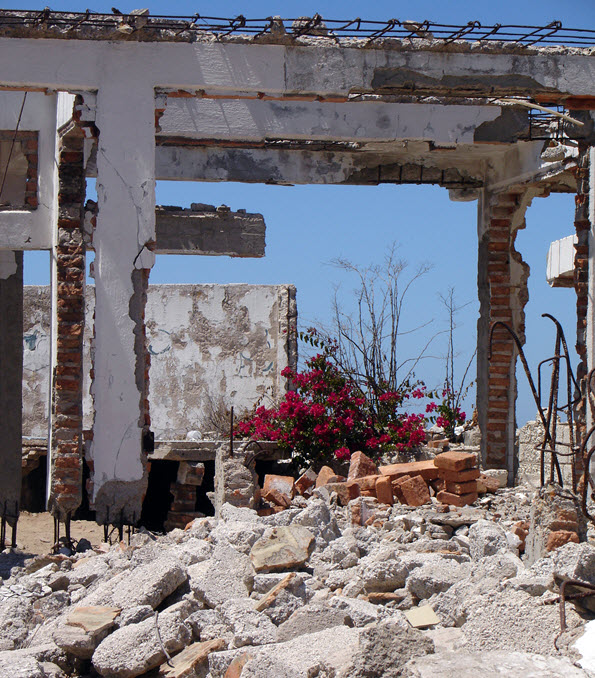
 

WHEN YOU’RE GOING THROUGH HELL, KEEP GOING

Desolation
Desolation

I wrote this piece to examine how we respond to traumatic, life-altering events—specifically, how we might remain engaged after irrevocable change disrupts our intended path, and whether such turning points are accidental or purposeful. I aim to explore how we maintain meaning and agency in the face of unforeseen upheaval.

The following discussion is limited in its exploration of these ideas, but it provides a starting point.

**~**~**~**

If I do what I agreed to do (follow my soul’s intentions), will my life unfold smoothly?

This is not the astral plane where injury can’t happen. On the physical plane, your intentions often clash with others’, leading to conflict and even destruction. These obstacles don’t mean you’re on the wrong path; instead, they illustrate that purpose does not guarantee ease. The main question persists: how do we stay connected to our purpose when our path meets resistance? Stay committed to what you believe is your unique purpose, even in the face of external challenges.

In other words, following your intentions doesn’t mean you’re not going to have to work hard. When tracking your purpose, your choices and actions will align with your beliefs and goals, not with what others expect of you. When you are true to yourself, you gain clarity and the deep satisfaction that comes with being on the right path.

Your soul intentions will cause discomfort.

Indeed, following your soul’s intentions often brings discomfort, which is necessary for growth and change. Discomfort forces us to seek solutions and propels us from inertia. While seeking comfort won’t automatically lead to fulfillment, it can spur the necessary action. The essential argument: Creation and meaning arise from tension; discomfort reignites our engagement and creativity, demanding we actively shape our path even when security is lost.

What if my world explodes even though I’m doing what I agreed to do by following my soul’s intentions?

Now and then, life throws us serious curve balls—unexpected shifts that derail our plans. The 2000 film Cast Away, starring Tom Hanks, exemplifies this: Chuck Noland faces total upheaval after an airplane crash leaves him stranded. With his established life destroyed overnight, he is forced to confront whether and how he can rebuild his sense of meaning and agency. This story illustrates the fundamental question: how do we respond when our lives change in ways we did not choose?

A hypothetical exploration of Chuck’s soul choices.
Holding up a lens that looks at the events in a life as the direct result of soul choice, some questions (far from exhaustive) come to mind about Chuck’s life-transforming event:

1. Was he following his original soul’s agenda before he crashed into the ocean, and was the course of his life untimely ripped by an unforeseeable accident?
2. Was he forcefully reminded to return to his original intentions, and if so, what might those have been?
3. Or, was his ordeal on the island always meant to be the next phase in his unfolding life plan?

Before I proceed, I would like to clarify that I do not offer definitive answers, but rather ask these questions to illuminate how we can find meaning and agency in the aftermath of life-altering, unexpected events. The process of grappling with these questions may offer insight into how trauma helps us regain purpose and direction.

**~**~**~**

Question 1: Was Chuck following his original soul’s agenda before he crashed into the ocean, and was the course of his life untimely ripped by an unforeseeable accident?

Scenario 1: As an employee of an international company, Chuck was doing what he came here to do. He was developing leadership skills, including those in managing others, time management, and relationship-building with coworkers, supervisees, friends, and intimates. He was successful at his job – he accomplished his goals, and he was competent, trustworthy, and reliable.

He planned to get married, have children, and support his family both emotionally and financially. He handled stress and responsibilities maturely. Conscious of time as a resource, he lived a deliberate life with clear plans.

Then his tightly crafted, intentionally designed life was completely derailed by a horrific accident.

The accident destroyed his old agreements. He had to reinvent his life, creating it one moment at a time. What did he bring to this sudden shift? Everything he knew and was capable of.

Chuck could have died in the ocean, but instead, his life raft drifted to an uninhabited island. Perhaps he was guided there, or maybe it was just luck.

If he were guided, there was a higher intention for his life to continue despite it being thrown so completely off course. If it was an accident that he landed on a shore, he was still faced with the choice to give up on his life or to do whatever he could to survive and find a way to return to the life that had been ripped from him.

Do we choose to give up or persevere?

Whether or not there was a higher force that guided Chuck to the island shore, he still had a choice to make. He could continue living or find a way to exit.

When stranded and isolated, we can either give up or surrender, or we can engage fully with the unknown. Isolation and scarce resources can break the faint-hearted or push you to find courage and embrace life, even with no idea what it may look like.

Although Chuck’s ordeal was unplanned, he had to decide what to do with it. Creating his life alone, he faced the challenge of building from scratch—drawing on his inner resources without support from others. He had to become the creator of his own survival.

**~**~**~**

Question 2: Was Chuck reminded, by harsh intervention, to route back to the original intentions for his life? In which case, what might they have been?

Scenario II: Chuck wasn’t living his true purpose, just relying on existing skills. He was competent but not working on what he was meant to do. He had already mastered these skills and was avoiding the effort needed to grow in new ways.

Sometimes we ask for wake-up calls.

The truth was that Chuck had resisted taking on new skills and relationships in his previous incarnations, and now his resistance had come back to haunt him. In fact, he had asked that this time around, if he failed to track his original purpose, that he be reminded in no uncertain terms that a change of course was required. Enter a horrific accident. Now his tightly crafted life was completely and intentionally derailed – by his own design.

The accident ended his stale patterns. Forced to improvise and adapt, Chuck was pushed to develop new skills and a fresh mindset. Only by losing old comforts did he find the drive to evolve into who he needed to become.

Ultimately, the soul seeks not only survival but growth, meaning, and transformation. No matter how disruptive or unplanned the detours may be, it is through these challenges that we find both our resilience and our purpose. Our task is to keep moving forward, to reinvent ourselves if necessary, and to trust that even in times of upheaval, our lives can evolve into something meaningful. By embracing each twist in the journey, we discover new dimensions of ourselves and our path.

Who was this person that Chuck needed to become? It was the person his soul required him to become. The soul wants to be fully present and engaged. The soul needs to have experiences that challenge it to expand and develop new aspects of itself. It is inherent to the soul to be creative and to be dynamic. As sparks of God, we are each a god in our own right. God is the mastermind par excellence of Exploration and Creation. When his/her incarnational expression spends too much time going over the same lesson plan, the soul will endure boredom only so long.

What was included in Chuck’s new lesson plan?

Self-reliance.
The courage to persevere in the face of an unknown future
The courage to persevere without external aid from tools or others.
The courage to tend his own wounds.
Profound creativity in designing new applications for otherwise mundane objects.
Learning to deal with and accept severe restrictions and limitations.
Learning new skills.

What else did he learn? He came to know his heart’s desires. He understood what was truly meaningful to him now that he was removed from the din of his former noisy and hurried life. He came to be in far greater alignment with his soul.

**~**~**~**

Question 3: Was the life-changing event of living on the island simply the next phase in the story of his unfolding life plan?

Scenario III: As an employee of an international company, Chuck was doing what he came here to do, but there was more he had agreed to. He was developing leadership skills, including those in managing others, time management, and relationship-building with coworkers, supervisees, friends, and intimates. He was successful at his job – he accomplished his goals, and he was competent, trustworthy, and reliable.

The truth was that Chuck had resisted taking on new skills and relationships in his previous incarnations, and he had asked for an intervention that would require him to make a radical departure from life circumstances that no longer offered his soul either challenge or excitement. However, he still wanted to polish his abilities to handle the challenges of high-level leadership demands, and so included those in the first part of his life. When the time came for him to achieve sufficient mastery, he wanted to be allowed to step up to new life skills. And so it came to pass.

When Chuck was finally returned to his former life, he had a medicine bag bursting with new skills and self-knowledge. With these hard-won and intrepid tools under his belt, his capacity to handle whatever life brought him had increased by magnitudes. Whether or not he had asked for training in new levels of mastery, he was nonetheless given a stark and unprecedented opportunity to do so.

**~**~**~**

Additional Reflections
Sometimes life takes unexpected twists and turns, getting out of hand. Sometimes we don’t have much in the way of resources or know-how to deal with unknown territory. What can we do? We can find help where help is available – usually in unexpected places. We now have a genuine opportunity to reach deep within ourselves and beyond to seek solutions that will give us the momentum to move forward and escape from dark places. Not only do we seek solutions, but we also strive to find the courage to face our fears. We find hope in each breath, and we receive messages and guidance from sources that were previously hidden from us. In extremity, our senses intensify, giving us the ability to understand the language of signs and symbols that were previously invisible and incomprehensible.

Aligning with our Souls
There are some exquisite gifts to be attained in the process of standing for our lives. The more difficult the challenge, the more ferocious we must be in our resolve because that is what is required if we are going to live. The more difficult the challenge, the more determined we must be in our intentions to live the lives we have agreed to live. The more difficult the challenge, the greater the demand to find creative solutions that will get us clear of the breakers. And why should we live? We must live so that our souls can continue to experience more love, more beauty, more joy, more knowledge, more connection, more excitement, and more anticipation of what is yet to come and what we can yet become. There are some exquisite gifts to be attained in the process of standing for our lives. The biggest one is that we become more aligned with our own soul. And when we are aligned with our souls, we know intuitively what our right lives should look and feel like.

We often forget or fail to truly grasp the reasons behind life’s reversals. While we may have asked for intervention on behalf of our souls, it is also possible to be thrust helplessly into irrevocable life shifts that were not part of the original plan for our lives. Despite being cast away – whether or not of our own choice and design – we can still forge our way forward in reliance on the most powerful intrinsic attribute each one of us possesses. And that is our legacy, as chips off the old block that is God, to be the Creators of a new life.

When you express your unique piece of the Tao, your life will be a beautiful reflection of who you are, because you will be being who you came here to be and doing what you came here to do.


© | Gloria Constantin | All Rights Reserved |

Need help or have questions? Contact Me

GETTING BACK YOUR GRACE: CONNECTING TO YOUR ORIGINAL WHOLENESS DESPITE ACTS OF TERRORISM

Finding Hope Again

Carry on my wayward son
There’ll be peace when you are done
Lay your weary head to rest
Don’t you cry no more

Carry on, you will always remember
Carry on, nothing equals the splendor
The center lights around your vanity
But surely heaven waits for you

~ Kansas

You are already whole. The physical you, manifesting now, is a smaller but still beautiful version of your entire self. Whether you are thriving or struggling, remember: what you see is just one piece of the whole you.
No matter your situation, only a part of your spirit is present here. Your essence, or higher self, never incarnates but watches over your experiencing self and remains whole, no matter what happens. 

You might wonder how wholeness is possible in a world filled with suffering and atrocity. How can we consider ourselves whole in the face of personal and collective pain? How can anyone believe that wholeness or grace can persist even amid evil and suffering?

Let’s take a moment to reflect on the human spirit, which remains resilient and indomitable even in the face of unbearable circumstances. History provides numerous examples of such courage and resilience, including figures such as Harriet Tubman, Susan B. Anthony, Martin Luther King Jr., Mahatma Gandhi, Nelson Mandela, and Mother Teresa. These individuals did not succumb to despair; instead, they held firmly to their beliefs and pursued the truth, despite facing overwhelming opposition and suffering.

How did they do this? What kept them going?

They believed in a cause greater than themselves, took action to change conditions, and remembered their original purpose, even if only as a deep compulsion for truth.

How do you keep going if it’s just you?

You cannot take on every cause. Follow your own guidance and stay on your path by living your unique soul purpose—your dharma. You aren’t expected to work alone. Seek organizations working for causes you care about, and find your mission mates there.

How do I discover my dharma?

What do you love? What do you care about? Look there for your dharma. Use your gifts for the benefit of everyone. You received these to help you fulfill your dharma. What calls you to bear witness or speak truth? There lies your dharma.

To strategize social justice work, regularly meet with a supportive community to uplift one another as channels for mutual support and grace. You can’t face evil alone; grace supports your spiritual immune system and acts through you when you respect your sacred mission.

It’s all an illusion anyway.

Since we are already whole, is it correct to conclude that the horrors of the world are an illusion? Some new age schools of thinking answer, “It’s all an illusion, anyway; everything is perfect as it is.” This prompts a difficult transition from personal and spiritual wholeness to confronting real suffering.

Tell that to the Syrians who are being turned out of their homes and massacred.
Tell that to the victims of Sandy Hook.
Tell that to the 27 million women and children who endure bestial treatment in the enforced slavery of sex trafficking.
Tell that to the victims of the Holocaust.
Tell that to the Vietnamese who were decimated by the murderous ideology of “Kill Anything that Moves.”
Tell that to the women of India, who have been raped and murdered, many generations over.
Tell that to the Native Americans.
Tell that to the Native Americans who walked the Trail of Tears.
Tell that to the slaves of African ancestry.
Tell that to the undocumented workers.
Tell that to women who have been subjected throughout history to violence against their gender.

It’s a worthless debate. This question becomes even more apparent when we consider what happens to our understanding of wholeness when we are the ones experiencing great suffering. Here, the philosophical notion of illusion clashes with lived human pain.

How can you be whole and maimed at the same time?

Your ultimate self is always whole. The part of you in this world may be wounded. Connect with your Spirit Body to heal your Physical, Emotional, and Mental Bodies. Remember your promise and why you came here. What contribution are you withholding by forgetting your courage?

You can use the tools that will bring heaven to your aid. You are already holding them. What are these tools?

Grace. Prayer. Community. Friendship. Self-reflection. Self-care. Connect with your heart. Remember. Bend, don’t break. Stay strong. With abundant energy, it’s easier to face adversity.

Grace encourages us to live boldly, even in the face of fear. Will Grace shield you? Not from every challenge, but enough to guide you toward your soul’s intentions. The field of Grace is always present and active in the world. You are still here, aren’t you?

What if you’re too depressed to take further action? What if you’ve given up in overwhelm? How do you transform your condition?

At this point, the fundamental question shifts from personal pain to a broader consideration: how do we transform the darkness in the world?

Refuse to surrender to the belief that darkness is more powerful than light.
Refuse to surrender because you do not accept that darkness, no matter how powerful, how painful, or how savage, is the ultimate reality.
Refuse to believe that you have nothing of value to contribute.
Bear witness to your own suffering.
Continue to act on what you believe is the greater truth.
Connect to the eternal flame of the peace within, the peace that passes all understanding.
Stick to your dharma.

Know that your spirit has what it takes to be in this world. You would not have been put here otherwise. 

Choose actions that serve humanity, as this aligns with your higher self. Setting intentions and following through allow you to realize your full potential. Develop your gifts to the fullest extent and utilize them for a meaningful contribution. You have the capacity to fulfill your purpose.

© | Gloria Constantin | All Rights Reserved |

Need help or have questions? Contact Me

NO INDIVIDUAL INSURANCE PLAN WILL COVER THIS KIND OF THING

Do they have insurance on us?

The title of this article is inspired by a statement Liza Long made in her post of December 16, 2012, at Gawker.com: “I am Adam Lanza’s mother. No insurance plan will cover this kind of thing.” In a lyrical and riveting narrative on the troubling spectrum of her son’s behaviors, Ms Long writes about the December 14 tragedy at the Sandy Hook Elementary School. Raising her brilliant and disturbed child was a profound challenge for her. She goes on to say, “This problem is too big for me to handle on my own. Sometimes there are no good options. So you pray for grace and trust that in hindsight, it will all make sense.”

On Sunday, December 16, in a presentation at an interfaith vigil in the town of Newtown, Connecticut, the President said, “These tragedies must end, and to end them, we must change. We will be told that the causes of such violence are complex, and it is true. No single law, no set of laws, can eliminate evil from the world or prevent every senseless act of violence in our society. But that can’t be an excuse for inaction. Surely we can do better than this.”

When Caroline Myss, a New York Times best-selling author and dynamic teacher of spiritual psychology, is asked for her insight on the cause of illness or the reason for tragedy, she admonishes that there is never any one cause that leads to a specific result. There are always many causes or reasons that are ultimately behind any situation or effect.

As long as we believe that others who are “high maintenance,” that is, the poor, the mentally ill, the homeless, the uneducated, the chronically depressed, the elderly, the jobless, the terminally ill (and the list goes on), are not deserving of compassionate and ongoing intervention and assistance (because they should somehow have done something to have helped themselves), we will only have inefficient and inadequate social programs to address these issues. And there will be no reason to have insurance plans that cover the gaps or pick up the slack of inadequate social programs – because we don’t think they’re necessary. As long as we believe that any underachiever, addict, or down-on-their-luck person needs to exercise more self-responsibility and all will be well, I assert that we also need to have programs and funds and housing and food and transportation and clothing to assist them with climbing out of their pit. Human beings cannot improve their lives and develop greater sufficiency without resources. Period. How long would any of us last in the desert without food, water, and a tent? Or how about just without our current utilities infrastructure? As long as we expect that the burden of care for the high maintenance among us must be borne solely by individuals and their families, whose tents are only so big, we will collectively continue to pay dearly. It’s worth stating here that any misconceptions, and even arrogance, we have regarding the “lessons” of those in trouble should consider that there is never a single cause for a single effect, and that we are all subject to the same physical laws.

Mental illness, like poverty and accidents, will likely always be with us. It is inherent in our lesser nature to default to an incomplete and imbalanced understanding of all the factors that create these conditions, and to understand justice through the lens of polarity rather than through the heart of compassion. When we understand and accept that we are all in life together, we realize that it is our divine obligation to care for those with whom we do not share familial DNA. We can build a vision of a collective family. From this vision, different structures, legal processes, and programs can emerge.

What can we do that is undoubtedly better than what we have done? We can create new systems, but to do so, we will need to step outside our known experiences. Perhaps what we need is to create new paradigms that take us to places in our consciousness that we have never been to before – to think way out of the box in the most extraordinary and exalted ways!

I believe it’s possible to call in a future that’s far more aligned with the real values many of us subscribe to. If we believe that everyone should have a roof over their heads and be able to pursue the education that will develop their innate talents and build their ability to contribute, then we find or create the means to make this happen. If we believe in universal health care, we envision the systems that will bring it into being. And while we do so, let us not ignore the organizations already in place, which depend heavily on donations. We can get these into the mainstream, making them an integral part of the culture. The shift here is that these organizations can be empowered to be far more than charities.

Let us put on our best strategic minds in service of a more beautiful and just worldone that engages our many different skills and talents. It is our collaborative and cooperative efforts that are the insurance plan that can cover many different kinds of claims. The vision and the value are this: each one of us has the right to claim, and indeed must claim, their highest and best expression. Imagine a community where everyone is contributing at their peak! In the meantime, we can continue supporting organizations that support others and continue reaching out to each other in humility and without judgment, as none of us has been deprived of the foundation of support that enables us to become who we are now.


© | Gloria Constantin | All Rights Reserved |

Need help or have questions? Contact Me

SPIRITUAL DNA: AN INTRODUCTION

I wrote this piece to explore Spiritual DNA. It was from the Creator that all things emerged, as s/he was the One who breathed into life innumerable aspects of his/her Divine Being. Our spiritual inheritance is older than the dust of ages. The term “Spiritual DNA” itself reveals an evolution in our understanding of the nature of the soul. This article reflects my personal thoughts and should not be considered a definitive understanding of Spiritual DNA or proof that it exists.~ Gloria

~ *~* ~

What is Spiritual DNA?

Just as our biological DNA transmits physical traits to the body, spiritual DNA transmits certain essential elements of your Soul to your soul. Spiritual DNA is where our soul’s history is stored. It transfers its aspects to you, but it activates only some of those elements in each incarnation. These contain the gifts and purpose to carry out the intention for a particular life. Each life has a role in your evolving consciousness. The trajectory of your soul, that which is described by the journey of your incarnations, and how you have carried out your soul’s agenda, reveals your evolving consciousness.  

Your spiritual DNA will ignite in you excitement and desire for specific experiences. This is your cue that you’re on the right track! The combination of soul traits and personality is unique to each lifetime because the purpose of each lifetime varies. Thus, you have the aspects of DNA that are optimal for carrying out that purpose. Your spiritual DNA is encoded with the information you need to live your best life.

We incorporate the experiences gathered from each lifetime into our ever-evolving consciousness. Each lifetime offers a unique education. For example, you might have the opportunity to understand what it is to be black, female, or gay in a time and place in history where these classifications are seen as inferior. How we interpret and receive the impact of our classroom time also informs our beliefs. We form beliefs around our experiences of rejection and hostility as well as acceptance and opportunity.

What is the mechanism of transfer of Spiritual DNA?

The Soul has its own genome; that is, it carries a template of traits of its unique identity. The Soul genome contains, in the form of quanta of energy, innumerable bytes of information. Spiritual DNA imprints itself onto physical DNA, imprinting those attributes necessary for the soul to fulfill its contract for an incarnation. These attributes guide the person via the steady influence they exert. We will be drawn to be and do those things that are encoded in our DNA, both physical and spiritual. The energetic forms and specific mechanisms of transfer of the Soul’s genome to the physical is unknown. It seems likely the substance is not material as we understand that; it is perhaps a biofield inherent to a Soul’s unique make-up.

Your Spiritual DNA compels you.

There’s a force inside you that compels you. Joseph Campbell said that we should follow our bliss. Following your bliss helps you find fulfillment. It is the force that compels you to seek your purpose, that is, your reason for being.

Why is exploring Spiritual DNA important?

Your spiritual DNA drives you. The more you understand what drives you, the greater your grasp of your special role in the history of consciousness. Your spiritual DNA is a vast living library of information about who you are, including where you’ve been and the impact you’ve had on others and your own evolution.

When you become aware that you carry within you, via your spiritual DNA, the answers to your questions, you become aware that your life has a specific design and purpose. Your soul’s intentions are encoded in your spiritual DNA.

Spiritual DNA does not have to be directly inherited.

Spiritual DNA is not solely inherited through your Soul’s genome. We may choose to associate with groups that are aligned with specific teachings and perspectives. Thus, spiritual DNA can be absorbed through immersion in other cultures. We also transmit spiritual DNA, in the form of ideas, values, and culture, to others when we educate, teach, and mentor them. Just as the biological components of genes are passed from body to body, understandings received through mentoring and group experiences can become encoded into spiritual DNA.

The consequences of accessing your Spiritual DNA.

It can be terrifying to realize that we have the power to create our lives. This power is encoded in us via our DNA. Caroline Myss says that every human being is terrified of becoming empowered. We fear this, she says, not because we fear success, but because in becoming more conscious of who we are, we will have to take responsibility for what we create. We will see more clearly what we are here to do, and realize that we can no longer hide our yearnings or pull the blinds down and say that what is happening outside is not our problem.

When you accept who you are and accept that it is you who manages your life, you will also be able to identify the agenda for your life.  You will know what motivates you to get out of bed. When you become empowered, your relationship to life changes. You are now the one calling the shots.

~ *~* ~

© | Gloria Constantin | All Rights Reserved |

Need help or have questions? Contact Me

HOW MUCH IS YOUR SOUL WORTH?

This conversation is a continuation of a previous discussion titled Are You Living Life Too Small?. In that essay, I challenged the notion that living a “small” life means not living your purpose. In this reflection, I address the confusion many of us feel about the connection between the money we earn or have and how it is often held up as a mirror of our value.

There is an overwhelming cacophony of voices challenging us — almost accusingly — that we may be living small lives. These voices are most recently found in the superabundance of coaches and mentors to coaches. Their question, “Are you living your life too small?” seems to declare that if we are living a small life, we are not living our purpose. We are, they say, born to express our greatness. The obvious implication is that if a life is small, then we are not being all we can be. It is the life of “greatness” that we should pursue, and that is worth living. But what if you don’t have the desire to pursue greatness? Is it possible that a “small life” can be capable of giving expression to its dharma and expressing its greatness in that way? And how does a person measure whether or not they are living their life in just the right size? To begin answering this, it is helpful to consider what living one’s greatness might really mean.

Is it about living an exalted life, that is, one where you are famous and glamorous and impressive and influential and make lots of money? Or could it be about what your life looks like when you authentically follow your bliss?

Living your greatness may mean living a celebrity-style life. It may mean that you share your gifts in a very public arena. It may also mean that you share your gifts in smaller, simpler, quieter, and less visible ways. Maybe you do your best work as an anonymous guardian angel. Being human, we tend to be literal in how we evaluate acts of benevolence, measuring their greatness directly in proportion to their size. But consider how grateful we are when we are offered a glass of water when we are thirsty, or a piece of fruit when we are hungry. Think of the deep nurturing we experience when we are listened to and seen for who we are. Reflect on how important it was for you to be cared for as a child or when you were sick. Reflect on the fullness you feel when you nourish the grieving and hungry.

Could living your greatness be about carrying out your soul’s intentions, in other words, your soul’s purpose?

Everyone Has a Unique Purpose
Each person has a unique purpose that is encoded within them. Bear in mind that if what we do does not come from the heart, we can get hooked by our negative ego, which wants plenty of worldly recognition. As you know, purpose is not limited to what we do; purpose is also about being, about presence, and reflecting your light. We come in with different agendas – some large, some small. We will not have exalted agendas in every life. Some lives are meant to be quieter; some lives are lives of rest. Our work is to give our gifts to those who need them. Our specific gifts are inherent to our soul’s life purpose. Whatever our gifts, they will always improve another’s condition or situation. Living our lives in just the right size comes with the appropriate giving of our gifts. Spirit will take care of the size of the venue or arena in which you are to express and contribute your unique gifts.

Be the person that you were meant to be. You do this by paying attention to your desires. These desires hold the clue to your soul’s intentions. Fulfillment comes when you create from your heart. You will know your purpose when you experience a deep sense of personal fulfillment; you will know, from your sense of accomplishment and satisfaction, that this is what is right for you. Your soul intentions are not about a career; they are not about making lots of money or being famous. Your purpose is something you do whether you get paid for it or not. Your soul’s need to carry out its intentions is the motivation.

Your Soul Purpose is your True Calling
Your soul’s purpose is your true calling, and when you are aligned with that calling, you will find the level for its appropriate or natural expression. It’s mythical thinking that you can find your soul purpose by listening to other people’s ideas or opinions about what that should look like! Be wary of claims and suggestions that the VALUE of your soul’s work is directly tied to the amount of money you make.

Your Soul Has Its Own Signature
Everything has its own rhythm, and moves and breathes according to its own nature. Everything contains its own unique spiritual signature. You are unique. You come from the Tao; you are a unique aspect of the Tao. Now, what would you like to do as Tao? Do you want to rest? Do you want to sit in the garden? Do you want to make soup? Do you want to provide a home for a shelter dog or cat? Do you want to explore the mysteries of the quantum field? What do you, as the Tao, need to create to express your unique “greatness?”

You’re here to manifest your unique spiritual signature, whatever that is, whatever it looks like. To believe that you first have to be great or “live your greatness” before you can express your uniqueness can be confusing and misleading – not to mention, it can ultimately stop you dead in your tracks. Forget about being “great;” focus instead on getting in touch with your unique spiritual signature and then expressing it. When you are expressing your unique piece of the Tao, your life will be a beautiful reflection of who you are, and you will be living who you came here to be, and doing what you came here to do, and the “size” of that expression will be in sync with your soul’s intentions. That size could well change over time, but to attempt to create a size based on pressure from gurus who tell you that you are living your life too small, that living your soul purpose is directly tied to your income, and that the size of your income is a direct reflection of whether or not you’re living your purpose, is to ignore your own soul completely and to buy into a false understanding of what it means to live your greatness.

Assigning Value to a Soul
The notion that the size of your income is a direct reflection of being true to your soul’s intentions is based on assigning a VALUE to SOUL. Let’s go ahead and do that. What is the dollar amount your soul is worth when it is fully expressing? Is it $50 an hour? $450 an hour? Is it 400K a year? 5 million? Since we are pieces of God’s own Soul, perhaps it would help to consider the value of God’s handiwork. What is God’s value? How much is s/he worth? If God were to demand an annual salary for maintaining and sustaining the Universe, what would that come to? What amount should be awarded to God for having created the Universe? And since God has been working for an eternity, what is s/he retroactively owed, including interest and those well-deserved bonuses?

It’s impossible to answer these questions. We can see how ridiculous it is to try to assign value to your soul or its purpose. On the other hand, I believe that we can, with complete conviction, state that when we’re aligned with our soul intentions, we are as powerful as God. Because God is in all of us, we are all uniquely qualified to express his/her purpose. How we give expression to God-in-us is inevitably sacred and holy. How can we judge the value of what is sacred and divine? Acts of service to others are acts of service to God. And if these are all worthy before God, how do we begin to define what a life of greatness looks like?

Maybe your soul purpose is to make money, or maybe your soul purpose will have the outcome of making money, but don’t assume that making a buck is the soul’s primary purpose for being in a physical vehicle. What is most important is that you create a life that satisfies your soul, provides you with a sense of genuine accomplishment, and makes you happy. That life may be quiet and obscure or in front of thousands, or even millions. The goal is to allow your soul to step forth and express its uniqueness. That uniqueness includes the style, manner, and size with which it communicates. Soul intentions are not tied to the material world, though they will inevitably express themselves within it. The soul is not about hierarchy or ego or competition. The soul is about sharing, about giving and receiving. It is about coming from love and being fully present in love.

Be Present to the Moment
Focus on being present in the moment – to yourself, to your guides and Higher Self, to those around you, and to the Earth and all her inhabitants. When you are present, you are in tune with all that is, and can far more readily act in alignment with your dharma and be available to respond to the needs of the moment. When you are fully present, connected with your Higher Self, and consciously following your guidance, you are being true to your soul’s purpose. Deep satisfaction comes from the benefit to others of the natural flow of your gifts. When you are in flow, you can see your purpose in action. When you are expressing your soul, you have found your true identity, and there is no longer any reason to compare yourself to others or to pursue activities that do not fulfill you. At this point, you are present in your life and fully engaged, and your very presence uplifts others simply by being yourself.

Follow your true nature to find out what size life is right for you. Congruency is attained when who you are, what you say, and what you do are in alignment. When you are aligned in thought, word, and deed, you have mastered how you direct your energy. When you have mastered how you direct your energy, you can fully manifest who you are in the world. You are powerful.


© | Gloria Constantin | All Rights Reserved |

Need help or have questions? Contact Me
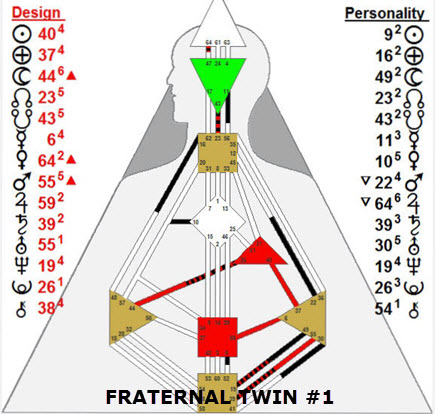
ARE YOU LIVING LIFE TOO SMALL?

These days I hear a great deal about living life too small. I have come across it again and again, mostly from the plethora of coaches and mentors for those seeking to find their purpose. The question, “Are you living your life too small?” has impressed me at times as almost accusatory, as if we may not be doing everything we can to be the best we can be, and perhaps even hints that if we are living a small life we are not living our purpose. The not-so-embedded implication is that if a life is small, then it has lesser value than a life that is big and attention-getting. It might also be implied that you are lazy or lack drive and focus. If we accept as a truth that life can be lived too small then we must find ways to make life bigger!

We live in a culture that values, with perhaps the exception of body size, more and bigger over lesser and smaller. Stronger and flashier is definitely better. Power over many is regarded highly, and revered – as well as – feared. Be that as it may, the word on the street is if you’re not making a six figure income from your God-given talents, then you may not be living your life purpose, and you’re likely living life too small.

A life lived small is conventionally characterized by its lack of notable achievement. A small life may (or may not) be dazzlingly creative or well-funded, and the thinking is that it probably doesn’t contribute much to the advancement of the person or society – because – well, it’s small. A big life is pretty much identified via status, visibility, ample financial resources and a significant following. It requires focus, drive, and continual marketing. While it may not be exactly restful, I’ve been told that living your life in this dynamic state is exciting and exhilarating. There will definitely be challenges along the way – issues of self-doubt will come up and those nagging false beliefs that you aren’t worthy — but if you can stay the course despite the challenges of seeking your greatness, then go for it.

On the other hand, you may not have any desire to pursue greatness. Then what? A question that comes to mind for me is – despite its bad press – is a small life nevertheless capable of giving expression to its dharma? And how does a person measure whether or not they are living their life in just the right size?

Perhaps the answer is found in the identification of your soul intentions. I believe that your yearnings assist with identifying your soul intentions. Some examples of yearnings include: a yearning for strength, a yearning for love, a yearning for beauty, a yearning for achievement, a yearning for creativity, a yearning for adventure, a yearning for structure, a yearning to fit in, a yearning to be different, a yearning to be of service, among so many other yearnings.

Your yearnings are very useful pieces of information. It’s important to know what will give you emotional satisfaction. If you want to be happy, you’ve got to tune into your yearnings and follow them. I believe that if you follow your yearnings and also allow for their expression, they will, because they demand a certain kind of focus and experience, lead directly to your appropriate way of being (or expressing) in the world. In fact, whether or not you are conscious that you carry an internal agenda for your life, you will connect more and more to your soul intentions as an inevitable act of following your yearnings (or bliss).

If you follow your yearnings, then you may find yourself shaping a right-sized life in sync with your soul intentions. When you follow your authentic yearnings, the shape and size of your life will gradually come into congruence with your soul intentions. The size of your life is completely unique to you and will be found by following your heart; in each moment act on what calls to you. As you consistently do what feels right, you will find that you are living out your soul intentions or your life purpose – in all its appropriate dimensions, and in all its greatness.

Did you enjoy this post? Subscribe to my newsletter and get much more!


Copyright © | Gloria Constantin | All Rights Reserved |

SOUL INTENTIONS, PART II – A REFLECTION ON SOUL PROGRESSION

(This is a continuation of a discussion that began with Soul Intentions, Part I – A Reflection on Soul Purpose. Part I can be found in the November archives.)

What is Soul History?  How Soul History and Soul Intentions create your Soul Trajectory

Soul History is the record of what you have been up to in each of your incarnations. Your Soul History also includes your role within your originating group and the groups your Soul has associated with over its many incarnations. These groups are formed around a larger vision that require everyone’s cooperation. That larger vision encompasses an aspect of Divine Evolutionary Intention that is beyond our ability to truly grasp.  We can, nonetheless, try to guess at what that larger intention might be through the part we play in it. Soul groups themselves create trajectories for better or for worse, and your various incarnations will move between different groups, learning from the primary focus, or dharma, of each one.

Some groups focus on breaking down what no longer serves; others have agreed to create what sustains all, and yet others will preserve and protect what sustains all; others build bridges that connect cultures to each other. These are just some of the foci that groups  rally behind; there are many more. Over time, soul group intentions (or their failed expressions) make their mark in history, and where they have failed, much work and attention is required to repair, reinvigorate, or even create new forms that will support the original intentions. These experiences inform and define your own trajectory.

A trajectory is the arc described by the progress of your soul as it creates, with each incarnation, its unique history across time and space. Your trajectory is characterized by how you have lived your life. If we were to assign a thick ribbon of light to a life well lived and a thinner ribbon to a life handled less well, a soul trajectory could show increasingly thick ribbons connected to thinner ribbons and then again to thicker ribbons, as it etches its record through time. Or, we could graph a trajectory using a 100-point system with the highest points given to lives well lived and fewer points for lives handled less well. The graphed trajectory for a life that went back and forth could show some dramatic rises and dips. We can do well in some lives and then find ourselves taking the proverbial two steps back in subsequent lives.

Of course, one could reasonably argue that if one does well in a life, overcoming desires for revenge, for example, and generally rising above most fears, the trajectory should improve, arcing higher with each life. In lives where the heart expanded with unconditional love and a person’s actions were informed by that expansion, the graph would spike. Or, using the ribbon of light analogy, the ribbons would increase markedly in thickness. It is true that some life circumstances will be far more challenging and require more “light” to manage, but over time your soul’s trajectory will reveal its unique pattern.

A trajectory is not created randomly. It is created by the Soul’s Intentions. Soul intentions are created for the purpose of fulfilling your agreements to your self and to others. These intentions compel us to take on incarnate form, for life is required to fulfill them. Their agenda is driven by what your soul desires to experience, and also what you may need to release or delete from a former life.

We do not always live out our Soul Intentions; there are many lives in which we become decoupled from them, in whole or in part. This can happen because we choose to “go our own way,” rather than follow the original life plan. It can also happen through interference from external factors. When we lose our connection to our Soul intentions, life can become more confusing and even difficult.  

One Soul’s history and how that history demonstrates how a soul might seek to express its intentions

Now we will look at the trajectory of a young woman, Emily, who sought to understand the origin of the pain in her heart. Emily is seated before her Council of Elders. She is deep inside Spirit territory, in a regression process that has already taken her through a past life in which she died by her own hand. Emily tells the Council she is experiencing pain in her heart. She believes this pain is from her attachment to a man she loves. This man, Brian, is much older than she is, and he is also married. The Council is gathered in what appears to be a bright open meadow. Emily is feeling optimistic. She knows that she is going to get the answers she seeks.

Emily asks how she can let go of the powerful attachment she has to Brian, and how she can fulfill her highest purpose. The Council tells Emily that Brian is connected to her purpose, but she has to be patient. There are things yet to unfold. She asks again about the pain and wants to know – what did she agree to do with this life? First, the Council begins with a review of her past life connections to this man.

A Council Elder speaks: This soul is not a member of your originating soul group. He belongs to a “mate” soul group. You first met approximately 4,000 years ago. This took place in the desert; it looks like Saudi Arabia. You were a member of a nomadic tribe that lived in the desert, moving from time to time when the water sources dried up. The tribe had sheep and goats. You were a small girl when a group of marauders traveling on horseback raided the camp dwellings. Their way of life was to plunder and destroy, to take what they wanted of supplies, food, and women. The man you are currently involved with was a young teen then, and his heart did not truly embrace the violence of this way of life. Nevertheless, it provided him with survival, skills, and companions. The young teen intervened on your behalf, saving your life and henceforth, he cared for you. This was the beginning of the love that grew between you, although it was not an easy love. This young man did the best he could to raise you, but it was a hard life for a woman, and you died at an early age, still filled with grief. This is the originating source of the pain in your heart.

The next life where Emily and Brian meet is in Oregon, in the late 1700’s. They were siblings. She and her brother were very young. They were playing by a creek when they were shot with arrows by an Indian who was angry about the white “invaders” who were settling in Oregon in greater numbers. As the souls of Brian and Emily departed, they promised to be there for each other the next time they incarnated together.

Emily and Brian meet again in rural England, in the early 1800’s. Retaining the same gender as before, they marry and live out their lives on a small farm. They have two children – a boy and a girl. They live a happy, though hard life, caring for each other and their children, and they die in their 50’s. They had a strong and loyal connection, and supported each other in every way. The heart bond between them increases with each successive life they share.

The Elder shows Emily one more life where she and Brian again find each other, this time in London. Brian is well-off and entitled. Emily is poor, and lives outside the city. They occasionally see each other when Emily goes to the city to purchase supplies. When they first see each other on the streets, they experience a sense of familiarity and are drawn to each other, but do not act on this. Their interaction consists solely of glances. Emily, ten years younger, would love to approach Brian, but she cannot do this outside of an appropriate social context. And given that she is not his equal, the meeting will never happen. Not having much to do, Brian hangs out in the saloons, drinking and gambling. To Emily’s sorrow, Brian eventually marries someone of his social standing. He later dies in a saloon brawl, shot through the chest. Emily sees him in his last moments, as he lies dying in the streets. This life where each was forced to keep their distance, not able to explore their real connection, added to the pain in Emily’s heart.

Emily’s and Brian’s heart connections to each other were initially forged from circumstances that were deeply painful for her, while at the same time Brian experienced an opening to compassion despite his warrior-marauder perspective. The plight of the small girl whose parents were murdered offered him the opportunity to rise above the lawless, insensitive ways of his band. As the Elder revealed, Emily’s heart-pain around Brian had its origins in that life. After that life, the souls of Emily and Brian saw a spiritual opportunity to apply the lessons of the open heart and so made the decision to explore these through incarnating together. As we can see, the pain in Emily’s heart is complex. It began with great anger towards him for 1) what he did to her desert tribe so long ago, and is also complicated by her appreciation of his efforts at saving her life. In summary, Emily’s heart bonds to Brian further include: 2) her love for her little brother, 3) her love for her husband, 4) the unrequited love from the London life and 5) the current situation in which Brian is not available to live his life with her.

In this trajectory, successive incarnations between Emily and Brian do not necessarily create increasingly better connections – at least as we understand these from the level of personality and what most of us would like to see happen. There is a difficult beginning through forced contact where Emily learns to love her enemy and then a series of lives where there is familial bonding. However, in their most recent lives they are prevented from sharing the profound affection they genuinely have for each other. Personality would much prefer a story where the lovers are happily and permanently reunited each time, but the soul – like the heart – has its own logic and more importantly, its own higher purposes.

Now the Council is ready to answer Emily’s question about why she chose the current incarnation. Don’t you remember? You came here to be a peacemaker. We have formerly told you the best way to bring peace to this world is to help individuals find it inside themselves. You are going through this struggle with Brian so that you can learn peace in the midst of personal turmoil and uncertainty. The best thing you can do at this time is to stay connected to spirit, to trust the process, and to be joyful.

Emily is also told that each of their souls is working to manifest their individual purpose. She is told that the path of joy and love is the one that she needs to commit to. If she can do this, her attachment to Brian will diminish as her focus turns more and more to accomplishing her unique soul intentions. She is encouraged to pursue her studies in psychology and meditation. They tell her: Yours is a peace-making soul; it is also an illuminator for love. Healing vibrations for others emanate from your heart when it is open, and you are following your path. These soul gifts are able to be expressed through the venues you seek to study and work in. When Emily asks again about the possibility of a future with Brian, she is again reminded that it is the path of love and joy that she must pursue. It is best to understand that this is the highest approach to living your life. The path of heart is the path of wisdom. The future cannot be foretold; you make your destiny by the choices you make in each moment. The more your choices are informed by your soul’s intentions, the more joy and fulfillment you will have.

Through her incarnations, Emily’s soul was specializing in the path of the open heart. A heart that is open will be broken, but the power of a broken heart that is navigated well is its ability to create an expansiveness that can hold space for the brokenness of others. It also teaches by example that the gifts of an open heart lead to wisdom and compassion. The cumulative influence of her incarnations created a gentle, approachable personality that others find safe and welcoming, and her successful passage through some difficult experiences gave her the insights and tools for showing others how they can do the same for themselves.

Understand the ways in which we can recognize our soul intentions

Emily’s need to understand the purpose of her current life is indicative of her desire to align with her original soul intentions. Emily’s natural interests in meditation, psychology, reincarnation and harmonious connections with others have been persistent and strong this life. She received validation from her Council that these are areas where she could fruitfully focus her professional efforts, but they also observed that while these approaches to fulfilling her purpose are appropriate, there are other ways she could express her soul gifts, and suggested that she might want to further explore this. In other words, Emily should follow the general warp and weft of what she seeks to accomplish because this will allow her to discover additional ways her objectives can be satisfied. She will be surprised and delighted to find that the spiritual path she is committed to is richer than she realizes.

“What is it I need to do in order to fulfill the requirements of my intentions, and what is my next step to getting there?”

Pay attention to experiences with which you especially resonate as this will assist you to identify and remember what you agreed to show up for. Pay attention to your emotions as these will guide you. Letting go of the paths not taken and the roads not fully traveled, begin here: live each day as if it were your calling. Without excessive attention to detail and over-thinking, choose those activities that seem the most right or important. And instead of demanding immediate results, revel in the quietly unfolding intrigue of each moment. Take small steps, one at a time. There is no need to offer up arguments or resistance; simply do each step, improvising as you go. You do not need to know the next step or the next action – by responding to the choices that call to you, to those impulses that seek expression – your life plan and purpose will reveal itself.

As you faithfully listen to the call of your intuitive knowing, you will become more adept at discerning the next right action. You do not need to wait for inspiration. Simply take actions that reflect best what you know to be true for yourself, and you will steadily regain footing on your course as you remember your passions, which will re-connect you to your soul intentions.

© | Gloria Constantin | All Rights Reserved |

Need help or have questions? Contact Me
 

SOUL INTENTIONS, PART I – A REFLECTION ON SOUL PURPOSE

Soul intentions refer to plans you made before incarnating. These are created to fulfill agreements to yourself and others, rooted in your soul history. Their purpose is shaped by your past, not by whim or chance.

A soul intention is not about simply asking, “What would I like to do next?” or considering breakfast options. Soul intentions are driven by deep, inner directives to pursue specific goals. Notice which information resonates strongly with you; it can remind you what you agreed to do.

To help clarify your path, let us rephrase the crucial question: “What is it I need to do in order to fulfill the requirements of my intentions, and what is my next step to getting there?” Before discussing this further, it is important to consider the origins of soul intentions, which will provide helpful context for understanding the steps ahead.

Each time you incarnate you choose a series of tasks which are aligned with what you plan to accomplish for the life. How do you decide what you will focus on for a particular life? This is the million-dollar question, so to speak, but it is not actually that much of a mystery. Your life plans are based in what you have previously experienced and assimilated – as well as what you did not complete. Those experiences with which you feel complete – that is – those in which you mastered, for example, a certain skill, or where you came to know the painful limitations and joyous capacities of the body, and where you incontrovertibly understood the extent to which your assumptions expanded or contracted your opportunities and choices, etc., will not call to you in the same way they did when you were eager to test your mettle in these areas. Once you have gained depth knowledge in a curricula and the critical self-knowledge that comes with exploring the unknown, you are ready to move into a different arena.

At this juncture you will want to review the actions you took to master various skills and have certain experiences. On the way to mastery, actions are sometimes taken that are detrimental to another’s choices. As you can see, the purposes behind re-entry into the physical form of existence are complex. Let us examine an actual past life and review the original plan, the goals of the plan that were actually accomplished, the actions still needing to be taken because of lack of completion, and the desire to explore new territory.

PORTRAIT OF A SOUL

Here is a brief portrait of a young woman who lived in Kansas in the early 1900’s. As the scene to memory opens, Helen, about 31 and petite, is driving a buggy along a dirt road in the country. She is wearing a plain black dress and a white scarf. The horse is dark chestnut with red tones. The landscape is flat, but the surrounding fields abound with growing crops. A storm is coming; she hurries. She is carrying a small bottle of medicine. It is for her elderly father, who is ill. She drives past a round barn to the house, and is greeted by her teenage son Eli. Her father, Elijah, is in bed. She gives him several spoonfuls of the medicine.

Next we find Helen at her father’s burial, out on the farm. Several farmhands are assisting with lowering the casket into the ground. It is raining out, and the ground is extremely muddy. The farmhands’ clothes are soiled and worn. Eli is weeping. Helen does not seem to feel much of anything.

In the next scene, Helen is talking with a tall, gaunt man who appears to be a caricature of someone in the legal profession. He is formally dressed, and Helen is arguing with him about being forced out of her home. Apparently she is going to be turned out because of unpaid rent on the land. Despite what seems inevitable, Helen is arguing confidently and seemingly holding her own – for the moment.

Helen has taken residence in a boarding house where she works long hours at grueling labor to earn her keep. She spends her days washing, cooking, and cleaning. It is hard work, and though she is only 33, her body is breaking down. Her son attends a one-room school where she wishes she could teach.

Helen finds some peace through reading, and keeping a journal. Some of her journal entries comment on the lack of opportunities for women. Helen recalls her experiments with humane farming, and how her neighbors looked upon her and her family with suspicion. They kept to themselves as they did not resonate with the community. Helen also had an interest in astronomy and owned a telescope. She and her father were kindred spirits.

The boarding house is located in a town that is essentially lawless and dangerous. Men ogled her as she walked by, and they were base and ill-intentioned; an appropriate husband was not to be found among them; not that she sought one. She kept to herself, and her primary concern was caring for her son.

Her son is scapegoated and hung in public for a crime he did not commit. After, his corpse is tied to a horse and dragged through the town to hostile jeering. These were deeply disturbing brutal acts, and they drove Helen to suicide. The hostility of that lawless community was not surprising, given that she and her son were never accepted, again being seen as suspiciously eccentric.

** ** ** **

REFLECTIONS ON HELEN’S LIFE

In Helen’s original soul intentions for this life, an unusually active and inventive mind was integral to what she wanted to accomplish. This goal is also a carry-over from a previous life in which she, then male and an extremely talented musician, had planned to spend most of his time composing epic works for orchestra and piano. However, that goal was short-circuited when family business matters unexpectedly demanded that he take the lead in running them, effectively thwarting his intentions. In the life as Helen, she would apply her creativity to inventing useful objects that would have positive impact on her rural society. This setting would not support a musical life, but it offered sufficiently compelling components to make it a life worth living. She could, in another life, follow up on her intentions to compose. In reviewing her agenda with her guides for the Kansas life, it was additionally thought that a greater challenge would be had if this task was undertaken in the body of a woman. It was felt that, given Helen’s advanced soul level, she would benefit from the challenge. Helen was also to experience the lifelong love of her husband and son. Helen’s husband was to have lived a longer life and to have provided her with protection. She also did not plan to wear herself out in the dreary boardinghouse, nor was it in her plan to witness such a heinous end to her son’s life, another soul who had agreed to be in her support system.

The aspects of Helen’s life plan that were met, at least in part, involved the execution of some of her inventiveness. She was handy. She made lightning rods that were unique in design and highly ornamental. She designed humane environments for the farm animals and treated them well. She was also an accomplished, if unknown, amateur astronomer. The plans for this life were interrupted when her husband died, leaving her with fewer resources and without the protection he would have provided. Her son was brutally murdered, a karma-making act that would later need to be paid back to her and her son, and that also led to unbearable grief and the decision to take her own life – which was not part of Helen’s original soul intentions.

PLANS FOR THE FUTURE

As the intentions for this life were severely abbreviated, Helen’s essence will likely want to create another life in which there are opportunities for the experience of loving, lifelong relationships, a friendlier neighborhood, more time for creating, and a stronger probability for remaining in the home of her choosing. Other situations that now need to be worked into future life plans will involve the healing of severe emotional trauma. Some of the trauma will also be addressed in the between-life state. In fact, shortly after Helen’s arrival at the Gateway (immediately after her death), she was met by a Specialty Guide who showered her with healing light.

Prior to this life, Helen did agree to allow her creativity to be on open display in a society where intelligence from a woman was frowned on. It turned out poorly, and she will likely wait for a better setting before she again attempts to push this far into conservative mores. Helen also understood that part of the challenge of her life would be to offer her soul the opportunity to forge a path through obstacles, and despite them, find a way to navigate a course for the most positive outcome. Because there are no guarantees once we are in body, we are encouraged to flow with the unpredictability of the way a life can unfold, and to understand that the choices of others will also have an impact on our capacity to carry out our soul intentions. Much growth and wisdom can be gained from this, and will also subsequently inform the soul intentions that we create, as well as the circumstances we set up to support them. Please note that your plans are made not just for the next life, but for the current life in progress. It is not at all uncommon for a life to be lived in ad hoc fashion when the supporting structures you planned for have failed to materialize, or when you are (for a variety of reasons) cut off from them. Even when support systems are in place, it is often necessary to make adjustments on-the-fly to compensate for unplanned situations. This is the challenging, exciting, and sometimes hazardous nature of fulfilling soul intentions inside of palpable dimensionality – but where else to fulfill these? Most importantly, do not forget that you are never left without guidance for the shoals.

For her next life, Helen chose to surround herself with a loving family and with opportunities to allow the intrinsically inventive nature of her soul to express itself in a far less limiting environment. With the assistance of friendly souls with who she has a successful history, she was able to create a home with a higher probability of remaining there for the rest of the life. In this way, she was able to carry on her soul intentions. Helen had wanted to positively impact her society, and in the new life she has been able to do that by providing forums where many can meet to share ideas and information. In addition, while Helen’s soul was healing and planning the next life, she decided to expand her interests in creative writing and try her hand at novels that challenge prevailing mores with provocative and controversial leading edge themes. This time Helen returned as a male.


 © | Gloria Constantin | All Rights Reserved |

Need help or have questions? Contact Me

** ** ** **

Next month, in SOUL INTENTIONS, PART II – A REFLECTION ON SOUL PROGRESSION, we will

• look at soul history and how history and intentions create soul trajectory;

• review another soul’s previous history and how that history illustrates how the soul expresses its intentions through a life;

• understand the ways in which we can recognize our soul intentions, and

• conclude with reflections on the query “What is it I need to do in order to fulfill the requirements of my intentions, and what is my next step to getting there?”

LOVE ASKS GREAT THINGS OF US

Love asks great things of us.

This is not so much about your willingness to sacrifice the ego’s demands

for certainty and reassurance, or

for validation of personal worthiness.

This is not really about giving up your shirt or sandwich, your plate of pasta, or even your bed.

It is about saying yes and stepping into the wilderness with open arms and

 no guarantee.

Love asks us to show up and do what needs to be done. Spend more time with those we love. Listen to what others are asking of you. Pay attention to what others need. How can you be of service? Pay attention. The information is in the request. Pitch in at the homeless shelter or the humane society. Volunteer to deliver a meal. It doesn’t matter if you feel ready, or if you believe that you have prepared sufficiently. Your willingness to do what needs to be done, to be directed if and as necessary, to welcome the experience of a learning curve, and the courage to engage the curve, are some of what becoming an activist for love needs and requires.

Love asks us to show up and do what needs to be done. The Occupy Wall Street revolution in Zuccotti Park is a profound example of this. Love one another; Love thy neighbor as thyself; Do unto others as you would have others do to you, and Whatever you do for the least of these, you do for me are some of the phrases that precisely describe the phenomena of love manifesting now in New York and as well in dozens of other cities across the United States. Thousands are showing up to do what needs to be done. And what needs to be done? We need to pick ourselves up from the floor of our despair and shake off the trance of powerlessness. We need to stand up to injustice and to those who have benefited from it. We need to organize around fairness. We need to be selfless, offering our skills and talents to each other. We need to share our shelter, and our food. We need to re-vision ourselves and our paradigms, not just for our sake, but for the sake of the world – our world. Personal sacrifices may be necessary to alleviate the tremendous injustices that are all around us, inside of every minute of every day, but with perseverance, we will succeed. Love is and always has been on our side.

For I was hungry, and you fed me. I was thirsty, and you gave me a drink. I was a stranger, and you invited me into your home. I was naked, and you gave me clothing. I was sick, and you cared for me. I was in prison, and you visited me.

Love demands courage. Love demands that we connect to each other. We are required to be brave in the face of uncertainty. When we give of ourselves, we do not know how we will be received. We do not know if the outcome we seek will come to pass. We do not engage out of love because we have a stake in glorious end-results; rather, we actively engage our minds, hearts, and bodies to the extent of what we have been called to do, using every ounce of our gifts, talents, and endurance to bring to bear what love requires. When love calls, you will not always feel ready. You may feel that your research is incomplete or that you have not spent enough time practicing. Sometimes we feel deficient; we are not quite up to the task. Sometimes we are literally deficient, but not necessarily in a way that would prevent us from showing up and participating.

Here is one example. At youtube you can find the story of a young Iraqi man, a hopeful singer, who was made an Australian citizen through adoption. He and his brother were found in a park, in a shoebox, by nuns who then delivered the babies to an orphanage not far from the war-ravaged area in which they had been found.

Neither of these infants had identification. Moreover, they were deformed and maimed, as both were missing substantial portions of their arms, and at least one of them was also crippled in both legs. Even so, because of the love of their adoptive mother, an Australian woman, they were nourished in both heart and body, and released to express the gifts of their souls. In the interview that precedes his audition, Emmanuel tells his story. When he speaks, his face is radiant. It is only as he walks the wings of the stage to center that the camera reveals the rest of his body. His arms are stumps, his legs are not the same length, and his walk is crooked.

It doesn’t matter. Emmanuel is filled with hope, with possibility, and with the love of his art. He has been immeasurably nurtured by the love of his mother. Though Emmanuel is physically not whole, love has made him whole. And here is the magic of love: showing up does not require that you arrive on the scene perfectly polished and complete. It is in the process of opening yourself to love that you are healed. Love itself heals you.

For his audition, Emmanuel chose John Lennon’s Imagine. This song expresses a vision for a world in which the circumstances of Emmanuel’s early life, the same circumstances that countless live in, cannot exist because the fear and greed that created them do not exist. A world in which there is nothing to kill or die for is a world that has been transformed by love. Emmanuel made of his personal story and condition of body a powerful and moving icon for the truth that love does not require our perfection, but only our willingness to show up on love’s behalf. I do not know if Emmanuel went on to win fame and fortune, but the brave work he did, of showing up as he was, no doubt inspired many to reach for their potential. This is what love, allowed to express through imperfection, can do.

The greatest thing that love asks of you and that you can do on behalf of love is to show up and participate. You don’t have to look good. You don’t have to be good. You do not have to be perfect in your delivery; you just need to show up. So you don’t achieve all your goals one day. So you didn’t execute perfectly. Don’t let that stop you. Don’t give up. Do not seek personal rewards. Do not look for pre-conceived results. Be patient with yourself and others. Be kind to yourself and others. Love is, after all, patient and kind. You will, through the humble act of opening your heart so that love can work through you, make the personal discovery that love bears all things, believes all things, hopes all things, and endures all things. You will find strength you did not know you had. Come as you are, and get ready to receive the blessings of love: when you open to love you reconnect to who you are, you are connected to others, and you will remember your purpose. Love asks great things of us but also gives them back.


Did you enjoy this post? Subscribe to my newsletter and get much more!


Copyright © 2011-Current | Gloria Constantin | All Rights Reserved

WHAT IS PAST LIFE REGRESSION?

Looking back
Looking back

I have been drawn to understand who I am through the journey of my own soul. I still vividly recall standing in front of a mirror when I was four and the awareness that took me by surprise that the little girl reflected there was a mere aspect of a much larger self. That was the beginning of my personal journey to uncover the mysteries that were hinted at in the mirror. As a result, I pursued formal and informal studies and systems which I hoped would give me information on who I was, what I was about and for, and how that person was connected to everything and everyone else. This was no small journey as you can imagine, and has ever been the underlying thread and motivation of my life, regardless of what I’ve needed to do to keep body and soul together, and has also influenced how I’ve conducted my relationships and the life choices I’ve made – particularly as I’ve grown older and gained greater insight.

Speaking as someone who has certified in Regression Therapy, I will begin with observing that the function of Past Life Regression (PLR) isn’t to find out if you were famous back when. Additionally, the role of the regressionist is not to tell you who you were. The regressionee does that, for himself or herself. The regressionist may or may not be a decent psychic, but feeding information to the regressionee about who they were is a completely different process and modality than PLR, and in my opinion, has NO place in it. Instead, the regressionist holds the space by creating a container of emotional and psychic safety, and then by guiding the regressionee’s journey with a meditation or induction and appropriately focused questions. The journey belongs to the person experiencing the PLR – no one else. The regressionist’s only motive and interest should be to provide the support and conditions for someone to be able to enter into past life recall. Most of the time regression journeys are sought to obtain additional insight and information about issues that are currently affecting the person. Students of the soul’s journey understand that our current incarnations often carry over themes from past lives that are seeking clarity and resolution, and that may require us to do more work in a certain area.

PLR allows a person to relax into their deeper self, which allows the life themes they are currently dealing with an opportunity to arise to conscious awareness, and as a result, to take on clarity. It assists us with getting in touch with what’s going on for us now, for what is asking for our attention. If those themes come through in a story about a life that may not be completely accurate in every detail, it doesn’t matter. The details don’t matter. Not that you would necessarily know if you were making it up, but that’s not the point. What is important is the emotional truth that we experience – the insights we receive about self. We inevitably get a sense of the bigger picture that we are always living from, and this helps to contextualize things for us – no small boon. If these insights come to us in the form of a myth or allegory or fairy tale, then we can consider ourselves blessed. In my experience, Spirit often speaks to us in symbols rather than literal pictures, as symbols are far richer in what they can convey, and are actually more in concert with our multi-dimensional makeup. The insights we receive via a PLR can help validate our taking a course of action that is appropriate for us now. Of course, in many, many cases, there is a strong sense that the memories are real, and we want to honor this as well.

Our historical trajectory is the story of the development of our soul, and taking the time to explore this history offers us tremendous opportunities to embrace and refine our life tasks for the current incarnation, and to get a sense of our broader overarching mission as the unique sparks of Tao that we are. This mission includes not just who we are individually, but who we are in the far larger context of everyone and everything else. Ultimately, these cannot be separated. Our actions and interactions are our contributions, for good or ill, to the course and development of humanity and I also believe, affect as well the course and development of other dimensional and non-dimensional worlds. For me, the aphorism that we are all in this together has a vastly encompassing reach.

In sum, I believe that the purpose and function of PLR has to do with attaining clarity about our life path through the insights and emotional truths we receive inside a journey, and from this, we are encouraged to take responsibility for not just the course of our lives, but for the universal impact that our choices and actions have on the flourishing of life and consciousness everywhere.


Did you enjoy this post? Subscribe to my newsletter and get much more!


Copyright © 2011-Current | Gloria Constantin | All Rights Reserved

THE LIVES OF GOOD AND BEAUTIFUL SOULS

beautiful souls
The lives of good and beautiful souls, those who strive daily for authenticity, accountability, and integrity, are nevertheless peppered with disappointment and loss. A deeply developed capacity to integrate a broad spectrum of experience does not mean we won’t feel tremendous pain when our good intentions and open hearts are met with scathing and ridicule. But we understand that all is not as it seems. We know we are always inside a much larger context: that of our higher selves. Because of this, our resources are great.

Although this is a plane of illusion, we recognize that the illusion has an impact. Its power lies in its ability to create separation between persons, tribes, and nations. Its tools are the tools of the false ego and its false beliefs: beliefs that would have us bow down before the hierarchies of better than, smarter than, more beautiful than, richer than, and therefore, more deserving than those deemed ‘lesser’ in these and other categories. Once we give our allegiance to separation, we are forced to operate from the belief that there is only so much of—anything—to go around. Therefore, we cannot ever truly let our guard down. We cannot ever truly trust in life. Coming from a place of scarcity, it is hard to see our purpose for being here or our unique path to follow. The most debilitating separation that illusion creates is its capacity to separate us from our own souls.

Despite the pain living with an open heart can bring, we have no choice if we are to remain consciously evolving. We must fully express ourselves as embodied souls. We do not want to live from a place of limitation, believing we are only our bodies, our relationships, or our current life situation. There is much terror in holding a lens that equates what seems to be with what is, so we can have compassion for those who cannot see beyond it. It has been said that when we reach the end of our mind’s capacity to strategize our way out of a challenge, it is a prime opportunity to remember innocent curiosity and to expect miracles. From nothing, everything comes.

To take radical responsibility for our own transformation and healing, we must have compassion for those who choose to act from the weakest parts of themselves and for the pain they cause by doing so. We must have compassion for those perpetually stuck in dynamics that obstruct their ability to receive. As you know, we can only take responsibility for our own emotional responses and physical actions; there is nothing we can do to convince a closed heart to accept our desire for right relationship. We cannot control the choices other people make. Surrendering to the highest good will make us more spiritually powerful. Continue to honor who you are and why you are here so that your special light radiates love, joy, and compassion. These are the lives of good and beautiful souls.

 © | Gloria Constantin | All Rights Reserved |

Need help or have questions? Contact Me

IMMIGRANT SOULS

Each of us began our immigration from places unknown, vaguely remembered at best. We may not recall our origins, but those beginnings follow us in dreams and imagination. They sometimes haunt us like a forgotten melody. They sometimes spur us to reach beyond the horizon. These experiences remind us that our search for identity and meaning is ongoing.

Just as the pulse of our first heartbeat continues to thrum its way through each of our incarnations, our beginnings are never separate from us. That long-ago first coming into consciousness propelled us unerringly forward into the exploration of myriad unknowns – beautiful and ugly, ecstatic and painful – all of which push us to define who we are. In this way, our journey becomes one of discovering, shaping, and naming our soul.

With our souls shaped by both memory and experience, questions naturally arise: What’s the next step? Where do we go from here, and who do we need to be to get there?

These questions are a constant for me – they have no end; only beginnings. As soon as I’ve rounded the corner of what was once teasingly distant and mysterious, the questions return afresh. No matter what I’ve learned or sought to overcome, there is always more unknown to explore – infinite, ever-revolving facets of self, soul, and consciousness. The universe is infinitely available to share its secrets as long as I am willing to continue this quest for personal growth and understanding, even in the face of fear. Facing the unknown allows me to develop the resources I need; I am equipped with the capacity for possibility and transformation.

The blueprint for our lives is not set in stone, and we are encouraged to re-create our irrepressible divinity as we go. At the heart of this is our central talent and birthright: to continually refine ourselves, evolve, and adapt as our journey unfolds, shaping who we will become.


 © | Gloria Constantin | All Rights Reserved |

Need help or have questions? Contact Me

INDELIBLE MARKERS

The dominant cultural message tells us our worth is based on appearance, status, success, and recognition, making life harsh for many. This world is marked by limitation. Here, actions have consequences, and choices yield results; therefore, we naturally seek ways to gain positive recognition and security.

Physical life is enjoyable when our basic needs are met. When they aren’t, feelings of worthlessness arise, but facing these challenges may reveal the potential for inner fulfillment.

Some believe that life divides us into winners and losers, attributing success solely to individual choices and efforts. This mindset overlooks individual contexts and experiences.

Wait a minute. Are you suggesting that I must earn my worthiness or right to be here, and that the only way to do this is to attend the best schools, wear the finest clothes, possess an Ivy League degree, and have a substantial income? Are you saying that if I don’t have the right stuff, I might as well slide under a rock, curl up in a ball, and wait for death to take me?

Many accept their personal truths, but mine is different. My life, shaped by my unique path and purpose, diverges from the mainstream. I am not alone in this.

Everyone faces different limitations, which can create confusion and questions about survival and worth, urging us to rise or fall.

What appears true may not be; your experience, actions, and meaning-making define your life. Live with authenticity.

While we are connected, we are also diverse. We are none of us the same. We are profoundly unique and individual, and what we have to offer is exceptional as well.

We each have unique contributions. Not everyone is destined for conventional achievements; all are called to meaningful journeys that leave a lasting impact on others.


© | Gloria Constantin | All Rights Reserved |

Need help or have questions? Contact Me

 

HOW CAN I FIND MY SOUL’S PURPOSE?

Heaven will let me know!

I lived with this question for years, but I didn’t know I was asking it. Later, in my studies of transformational tools and principles, I was told that “Something unique wants to express itself through you – something that only you can give birth to.”  I thought this was, at best, a nice sentiment. It was very egalitarian as it left no one out, and it even made everyone special. But I had also heard the phrase often enough, expressed somewhat less loftily: You are special. There is no one like you. By the time I heard it again, I was already seriously inured to it and perhaps even somewhat cynical. Of course, we’re unique; who isn’t? And that’s where, for me, the whole concept of personal uniqueness distilled itself to not having any significant meaning.

So, for quite a while, I succumbed to the enervating perception that uniqueness in and of itself is not unique. Since we are all uniquely distinguished from each other, what’s the big deal? You’re tall; I’m short. You’re muscular; I lack definition. You have red hair; I have black hair. Your eyes are green, and mine are brown. You excel in tennis, but I can sing. You’re great at math, and I write more clearly than you. What’s to get excited about? Now, if you’re handy, I’m feeling a bit of excitement. But I digress.

At some point, it occurred to me that I was looking in the wrong direction, on the incorrect concept, and that I was stubbornly myopic. I decided to challenge my habitual perception of uniqueness by changing my stance that uniqueness is a common attribute with no benefits. In a departure from my earlier state of jadedness, I asked: What exactly is it that makes each of us unique? In no time, a realization asserted itself with incontrovertible clarity: It is our soul’s longing and the agenda contained in that longing that leads us to our purpose. Our specific longings show us the paths we need to take and who we can become. So what makes us unique? What makes us who we are?

Brihadaranyaka Upanishad IV. 4.5 tells us that it is our deep, driving desire:

You are what your deep, driving desire is.
As your desire is, so is your will.
As your will is, so is your deed.
As your deed is, so is your destiny.

Here is the beginning of discovering your soul’s purpose: identifying your more profound truths through your deepest desires. Our uniqueness and destiny lie in our desires and in what awakens our passion. When we act on these unique desires, we are compelled to seek what is right for us, which in turn nourishes us. Following true desires attracts what we need to become who we are meant to be. Ultimately, by honoring our soul’s longing, we express our purpose and find fulfillment.

© | Gloria Constantin | All Rights Reserved |

Need help or have questions? Contact Me

HOW TO NAVIGATE THE PAIN OF DEEP DISAPPOINTMENT, LOSS, AND BETRAYAL

lonely shore

No matter how much we strive to live with integrity, we will inevitably face challenges and setbacks. Even if we become fully self-actualized and have various tools to help us regain our balance, we will still experience pain from time to time. It’s simply a part of life that we cannot avoid. To address this, I have developed a process for navigating through pain, and I hope you find it helpful.

* * * * * * *

While we recognize that our ability to empower ourselves and undergo transformation stems from truly loving ourselves and establishing healthy boundaries, merely standing up for our right to exist and to co-create with all of life won’t eliminate life’s painful experiences or quickly resolve the pain we inevitably have to process afterwards. Here are some suggestions for navigating the intense emotional pain that will occasionally invite itself into our lives for an often unpredictable duration:

• Stand before the pain; see it and feel it without resistance, and create a container that is deeper and wider than the pain itself so that you encompass it. From here, embrace it, pulling it deeply into yourself. Allow yourself to experience the pain fully.

• Acknowledge pain as a distinct entity, separate from yourself, possessing its own vital, energetic existence, purpose, and evolutionary process.

• Do not judge the pain; have compassion for it, if you can. If you can, express love to it.

• Do not judge yourself for having the experience of deep, and seemingly endless, pain.

• Recognize that pain serves a purpose greater than itself and beyond your individual experience.

• Anticipate discovering valuable insights by embracing and acknowledging your pain.

• Trust that Divine Grace can encompass all of you and your pain.

• Embrace the creative opportunities that can arise from profound disappointment.

• Trust that life is on your side and that creation loves you. From here, gently anchor yourself in the belief of a bright and happy future.

You are encouraged

    • To develop a self strong enough to hold your pain, try expanding your personal energy field to the boundaries of the room you’re in, and even beyond, into the world, as much as you feel comfortable doing so. Your energy field can stretch as far as you allow it to. There are no limits in this process.
    • Make a profound connection to the Source — Mother/Father/God who created you — can begin with prayer. Talk to God/Tao/Highest Source. Open the line of communication through an audible conversation, which is easier than quieting the mind.
    • Connect to your Divinity.
    • Discover how expansive and big you really are inside the context of your past, present, and future.
    • Realize your connection to all of life.
    • Acknowledge your unique place in the web of life.
    • Develop a deepening sense of the fragility, tenderness, and profound beauty of life.
    • See your connection to the remarkable capacity of life to remake itself and to transform any experience into something more/ higher.
    • Develop a capacity to see pain as the spice among the many ingredients of which the delicious soup of your life is made.
    • See your capacity to see the fruits that can be harvested from the pain.
    • Develop the skills and capacities that will keep your life aligned with your North Star (that is, your highest, overarching intention for love and service).
    • Find your capacity to be still and to be silent.

It is also important to talk to your trusted friends. They see you and love you, and they will witness your pain with you.

You might consider engaging a professional counselor, therapist, or coach.

Be aware that devas, elementals, and spirit guides are available to assist you. They are masters of energy and can help transmute it. Allow them to aid in your transformation with their specialized knowledge. You can speak to them out loud, expressing your gratitude and sharing your concerns. Ask for their help and let them know how you would like to utilize their unique resources. After that, pay attention to your intuition and be on the lookout for signs and messages. These can come from various sources, often in unexpected ways.

Soul retrieval can help recover fragmented pieces of yourself. If you do not know how to journey, it’s recommended that you have a Shaman do it for you.

Energy work (chi gong, Reiki, massage, etc.) can break the stagnation of stuck energy; movement and flow will restore happiness.

Focus on creating happy experiences—spending time with those who see and love you; doing things that bring you joy, such as your personal forms of creative expression, your fun activities, and your service to others.

Repeat this healing HO’OPONOPONO mantra:

I’m sorry, [your name] Please forgive me
Thank you
I love you

AND

I’m sorry, [the name of another person, others, or situation] Please forgive me
Thank you
I love you


 © | Gloria Constantin | All Rights Reserved |

Need help or have questions? Contact Me
Translate »